Surgical Instruments & Medical Blog
Discover expert technical articles, manufacturing guides, instrument maintenance tips, and clinical updates from Warsi Surgical Industries.
For global buyers, selecting Periosteal Elevators requires more than comparing prices or catalog photographs. The instrument must support controlled tissue elevation, dependable handling, and repeatable reprocessing. The World Health Organization’s Global Patient Safety Action Plan 2021–2030 identifies infection prevention and safe medical devices as essential priorities. It does not prescribe one elevator design. That gap matters.
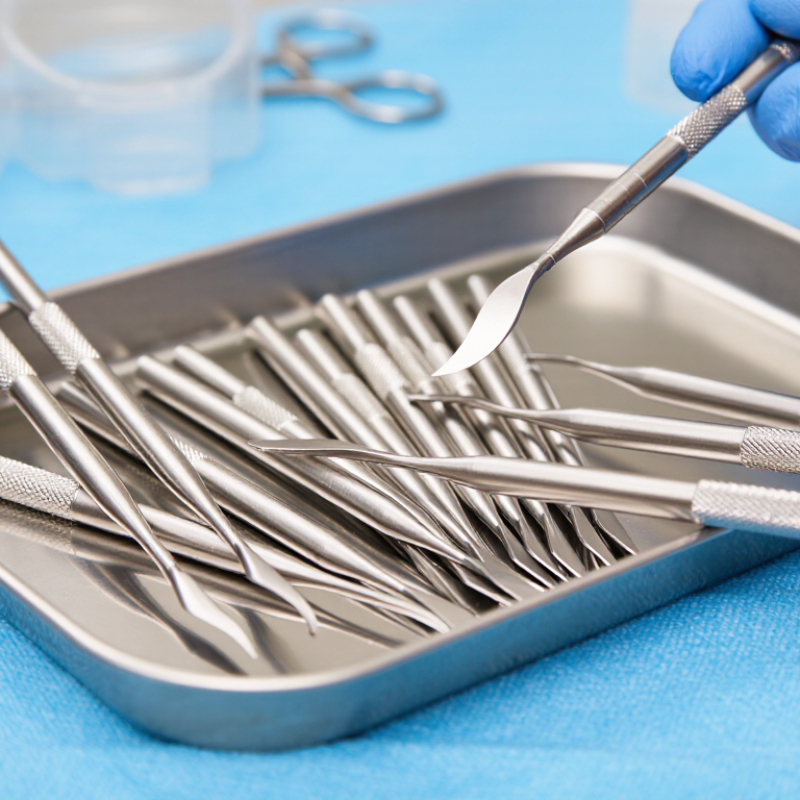
A double-ended stainless-steel elevator may offer practical versatility during oral, maxillofacial, orthopedic, or periodontal procedures. A narrow, sharper blade can access confined areas. A broader, rounded blade may provide smoother tissue reflection. Handle diameter, surface texture, balance, and blade thickness also influence fatigue and tactile control. Small details matter. The U.S. FDA guidance, Reprocessing Medical Devices in Health Care Settings: Validation Methods and Labeling, emphasizes validated cleaning, disinfection, and sterilization instructions. Buyers should therefore request documented reprocessing guidance, material specifications, inspection criteria, and packaging information before approval.
ISO 13485:2016 provides a recognized quality-management framework for medical-device manufacturers. It can help buyers assess traceability, risk controls, corrective actions, and production consistency. However, certification alone does not prove that every Periosteal Elevators model suits every surgical setting. That assumption needs testing. Procurement teams should examine sample instruments, hinge movement, edge finishing, corrosion resistance, and grip performance with gloved hands. They should also confirm applicable registration requirements in each destination market. Industry forecasts may suggest rising surgical-device demand, but they rarely explain clinical usability or sterilization performance. A careful decision combines reported standards, supplier evidence, clinician feedback, and hands-on evaluation. No checklist replaces experience.
Define 2026 Use Cases by Procedure, Tissue, and Tip Geometry
2026 How to Choose Periosteal Elevators for Global Buyers
Define each use case by procedure, tissue, and tip geometry. The Lancet Commission on Global Surgery estimated 310 million operations occur annually, while five billion people lack safe surgical care. Global buyers therefore need adaptable instruments, not one universal pattern.
For oral and maxillofacial procedures, choose a narrow, curved tip for confined planes and controlled leverage. Dense cortical bone may require a broader, rigid blade with a polished working edge. In delicate cranial or reconstructive work, a thinner profile can reduce tissue compression. AORN’s 2024 perioperative guidance emphasizes inspection, cleaning, and functional verification before use. That makes handle balance and visible surfaces practical selection criteria, not cosmetic details.
Tip geometry changes tactile feedback. A rounded edge may protect soft tissue, but it can slip in a tight plane. A sharper edge improves separation, yet demands better control. The WHO Global Patient Safety Action Plan 2021–2030 reports that one in ten patients experiences harm in healthcare, with more than half considered preventable. That figure supports careful matching of elevator size, curvature, and tissue resistance. My own buying mistake would be trusting catalog dimensions alone. Surgeons should test grip security, access angle, and fatigue during simulated procedures. Availability matters too. A complex tip is less useful when local repair, cleaning, or replacement support is weak.
| Procedure / Use Case | Primary Tissue or Surgical Plane | Recommended Tip Geometry | Typical Working-End Width | Preferred Edge and Surface | Handle and Shaft Characteristics | Key Selection Rationale |
|---|---|---|---|---|---|---|
| Dental flap reflection and alveolar surgery | Attached gingiva, alveolar mucoperiosteum, and reflected full-thickness oral flap | Small curved blade Slightly concave Rounded heel | Approximately 3–8 mm | Smooth, atraumatic margins; polished tissue-contacting surface; no sharp cutting edge | Slim shaft with a textured, lightweight handle for controlled intraoral access | A narrow curved blade follows the alveolar contour and helps separate the periosteum while limiting soft-tissue compression in confined areas. |
| Mucoperiosteal elevation for implant placement | Full-thickness oral mucoperiosteal flap over the alveolar ridge | Broad curved blade Concave working face Rounded tip | Approximately 8–15 mm | Broad, polished, non-cutting edge designed for stable flap support | Rigid shaft with a balanced handle; moderate blade thickness to resist bending | A wider blade distributes lifting force across the flap and provides improved control when access to the ridge is required. |
| Periodontal flap surgery and regenerative procedures | Gingival and periodontal soft tissue, including tissue adjacent to root surfaces | Fine narrow blade Shallow curve Tapered atraumatic tip | Approximately 2–5 mm | Highly polished, thin, blunt-rounded working end with smooth transitions | Fine-control handle and relatively slender shaft for precise flap manipulation | The smaller profile supports access around teeth and reduces the risk of catching or tearing delicate gingival margins. |
| Maxillofacial fracture exposure | Facial periosteum over the maxilla, mandible, orbital rim, or zygomatic region | Medium straight blade Broad shoulder Blunt rounded end | Approximately 8–18 mm | Smooth, non-cutting edge with a durable polished finish | Rigid shaft and impact-resistant handle suitable for controlled levering | A stable, moderately broad working end supports exposure of bone while reducing localized pressure on the periosteal flap. |
| Mandibular and craniofacial osteotomy access | Dense periosteum and soft-tissue attachments over cortical bone | Wide flat blade Low-profile curve Reinforced neck | Approximately 12–25 mm | Firm, polished surface; rounded perimeter; no burrs or abrupt corners | High-rigidity shaft with a large ergonomic handle for controlled force application | The reinforced design helps maintain blade alignment during elevation of dense periosteum and broad surgical exposure. |
| Orthopedic subperiosteal exposure of long bones | Periosteum over the tibia, radius, ulna, humerus, or other long-bone surfaces | Long flat blade Gentle longitudinal curve Rounded distal tip | Approximately 15–30 mm | Smooth broad face with a blunt edge to support separation without cutting | Long, rigid shaft with a secure grip; length selected according to incision depth | A longer blade can maintain contact with the bone surface and improve reach through deeper orthopedic approaches. |
| Hand and foot surgery | Thin periosteum and delicate soft tissue around small bones and joints | Narrow flat blade Short working end Rounded tip | Approximately 3–10 mm | Thin, polished, atraumatic edge with a compact profile | Short shaft or compact handle for precise manipulation in small operative fields | Compact geometry improves visibility and fine control where tendons, nerves, and small vessels are closely positioned. |
| Rhinoplasty and nasal framework exposure | Nasal periosteum, perichondrium, and thin soft-tissue planes | Very narrow blade Fine rounded tip Low-profile curve | Approximately 2–6 mm | Highly polished, delicate, blunt-rounded working end | Slim shaft with a light, precision-oriented handle | The small, smooth tip is suited to limited access and helps reduce unnecessary trauma to thin nasal tissue. |
| Cranial and neurosurgical bone-flap exposure | Pericranium and periosteum over the calvarium | Broad blunt blade Shallow concavity Rounded corners | Approximately 10–25 mm | Smooth, broad, non-cutting surface with carefully rounded edges | Rigid shaft with a balanced handle and controlled leverage | A broad blunt profile supports elevation of the pericranial layer while helping protect the underlying bone and soft tissue. |
| Pediatric and anatomically delicate procedures | Thin periosteum, immature bone surfaces, and delicate soft-tissue layers | Small rounded blade Shallow curve Reduced thickness | Approximately 2–8 mm | Blunt, polished, atraumatic surface with no sharp corners | Lightweight handle and narrow shaft for low-force, high-control use | Smaller geometry allows the surgeon to match instrument scale to anatomy and reduce excessive tissue loading. |
| Deep or minimally exposed surgical approaches | Periosteum or soft-tissue planes reached through a narrow or deep incision | Long narrow blade Angled or offset neck Rounded tip | Approximately 5–12 mm | Smooth atraumatic edge with a polished working face | Extended shaft, selected angle, and handle designed to preserve line-of-sight | Shaft length and offset should provide reach without forcing the surgeon to rotate the wrist or place the blade at an unstable angle. |
FAQS
Define the procedure, tissue resistance, access angle, and expected leverage. Narrow curved tips suit confined planes. Broader rigid blades suit dense bone. A thinner profile may reduce compression during delicate work.
A narrow, curved tip can improve access and controlled leverage. A rounded edge may protect soft tissue but can slip. Sharper edges separate tissue better and require steadier control.
Check grip security, balance, visibility, and hand fatigue. Hold the instrument during simulated movements. A comfortable handle is practical, not decorative. My own mistake would be trusting dimensions alone.
Examine the working edge under bright light. Look for burrs, uneven polishing, stains, and surface damage. Test smooth tissue separation with controlled pressure. The sample still matters.
Request current quality-system certificates and confirm their scope. Check certificate validity, manufacturing location, certification body, and identification number. Ask for material specifications, biological evaluation evidence, and test reports. Paperwork can look perfect.
Confirm that a validated process supports a sterility assurance level of 10⁻⁶. Request cycle records, packaging details, and routine monitoring evidence. Review steam exposure, drying, geometry, and repeated processing effects. Ask for evidence.
Compare a trial order with the standard production quantity. Record drawing approval, tooling, inspection, packaging, and shipping time. Unclear drawings often create avoidable delays. Details matter.
Include the purchase price, freight, duties, reprocessing labor, sterilization, replacements, and rejected units. A cheaper instrument may wear faster or stain after repeated cycles. Review usage data after three months and revise the specification. Not always easy.
Conclusion
Choosing the right Periosteal Elevators in 2026 requires a structured evaluation based on clinical use, tissue type, and tip geometry. Buyers should match each instrument to the intended procedure, considering tip width, working length, angulation, edge profile, and grip ergonomics to support controlled handling and user comfort. Material selection is equally important: 316L stainless steel, 17-4PH stainless steel, and titanium each offer different combinations of strength, corrosion resistance, weight, and manufacturability. Their suitability should be reviewed against ASTM F899 requirements and the demands of repeated clinical use.
Global buyers should also verify documented quality and regulatory evidence, including ISO 13485, ISO 10993-1, FDA 510(k) status where applicable, and EU MDR 2017/745 compliance. Supplier assessment should cover sterilization validation at SAL 10⁻⁶, packaging integrity, minimum order quantities, production lead times, and after-sales support. Finally, total cost of ownership—not only purchase price—should guide the decision, incorporating reprocessing, replacement frequency, inspection, logistics, and long-term supply reliability.