Surgical Insights & Knowledge Base
Surgical Instruments & Medical Blog
Discover expert technical articles, manufacturing guides, instrument maintenance tips, and clinical updates from Warsi Surgical Industries.
Blog

Top 10 Kerrison Rongeurs Suppliers for Global Buyers
Choosing reliable Kerrison Rongeurs suppliers requires more than comparing catalogue prices. Global buyers need instruments that perform predictably under pressure. Jaw sharpness matters. So do alignment, handle comfort, spring resilience, and corrosion resistance.
Dr. Robert H. Harbaugh, a neurosurgeon and spine-care educator, has emphasized a practical principle: “The safest instrument is the one the surgeon understands and controls.” That insight fits Kerrison Rongeurs especially well. A small mismatch in bite angle or shaft length can affect visibility, access, and tissue handling. Experienced suppliers should explain these differences clearly, rather than promoting every model as universally suitable.
This guide reviews ten suppliers serving international medical-device markets. It considers product range, manufacturing experience, quality documentation, customization, packaging, sterilization guidance, and after-sales support. Buyers should also examine traceability records, material specifications, inspection procedures, and instructions for use. These details may seem ordinary. They often reveal the supplier’s real discipline.
Some rankings remain imperfect. Public supplier information is uneven, and regional service quality can change. A company with excellent machining may offer limited technical support. Another may respond quickly but provide fewer configuration options. That is why this list should support due diligence, not replace it.
For hospitals, distributors, and surgical-equipment importers, the strongest supplier is not always the largest. It is the partner that communicates precisely, documents consistently, and understands demanding operating-room conditions. Reliable Kerrison Rongeurs should feel controlled, remain dependable after repeated processing, and match the surgeon’s intended technique. Small instruments deserve serious evaluation.
Read more »
 By:Clara
- September 11, 2026
By:Clara
- September 11, 2026
10 Best Orthopedic Surgical Instruments for Global Buyers?
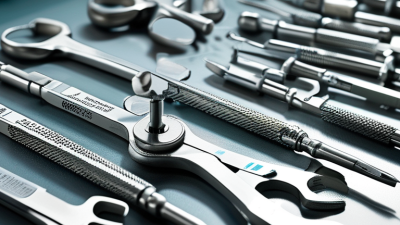
Selecting the right Orthopedic Surgical Instruments requires more than comparing prices or product photographs. Global buyers must assess surgical function, material quality, manufacturing consistency, and supplier reliability. A bone lever, drill guide, or rongeur may look similar across catalogs. Its balance, grip, finish, and cutting performance can differ considerably.
This guide examines ten widely used instrument categories for orthopedic procedures. It considers stainless steel quality, corrosion resistance, ergonomic handling, cleaning access, and compatibility with established sterilization workflows. These details matter in real operating rooms, where instruments face repeated use, moisture, pressure, and strict inspection. A dependable supplier should also provide clear specifications, batch traceability, quality documentation, and responsive technical support.
Performance matters most.
However, no universal instrument list fits every hospital, surgeon, or procedure. Preferences may change with surgical technique, patient anatomy, local procurement rules, and available equipment. Some instruments may perform well in testing but feel less practical during a demanding procedure. That limitation deserves attention, not concealment. Buyers should request samples, review inspection records, and consult qualified orthopedic professionals before placing large orders.
The following overview offers a practical starting point for global purchasing teams. It focuses on evidence-based selection rather than attractive claims. Buyers can use these criteria to compare suppliers more carefully, reduce avoidable procurement risks, and support consistent surgical preparation. Reliable choices are built through verification, experience, and honest evaluation.
Read more »
By:Clara
- September 11, 2026
What Are Spine Retractors and What Types Are Available?
Spine Retractors are surgical instruments designed to gently hold muscles, soft tissue, or nerves away from the operative field. They help surgeons see the spine clearly while limiting unnecessary pressure and tissue disruption. Their design can influence visibility, access, stability, and the surgeon’s working angle.
Spine surgeon Dr. Richard G. Fessler has emphasized a practical principle: “The goal of minimally invasive spine surgery is to accomplish the same goals as traditional surgery, but through smaller incisions.” This idea helps explain why retractor selection matters. A small tubular retractor may support a focused lumbar procedure, while a broader self-retaining system may suit complex posterior exposure. Handheld retractors offer flexibility. They also require steady assistance.
Different operations demand different solutions. Cervical retractors are shaped for the neck’s narrow anatomy. Anterior systems may protect surrounding tissues during front-of-spine access. Posterior retractors can create wider exposure around the vertebrae. Expandable and minimally invasive designs may reduce the access corridor without removing the need for careful positioning.
Yet no retractor is automatically safer or better. That assumption deserves reflection. Patient anatomy, surgical level, procedure length, tissue condition, and surgeon experience all affect the choice. Even a well-designed instrument can cause pressure-related injury if used carelessly. This article examines the main Spine Retractors available, their practical differences, and the clinical considerations behind selecting them. The goal is not to promote one device, but to clarify how each design supports controlled, evidence-informed spinal surgery.
Read more »
 By:Evelyn
- September 11, 2026
By:Evelyn
- September 11, 2026