Understanding the Critical Role of Orthopedic Wire and Pin Cutters in Modern Trauma Surgery
Why mechanical reliability, jaw hardness, and lever geometry dictate surgical safety and long-term instrument ROI.
In orthopedic trauma, reconstructive osteotomy, and pediatric fracture fixation, Orthopedic Wire and Pin Cutters are indispensable workhorses of the operating room. Whether trimming Kirschner wires (K-wires), sectioning Steinmann pins, severing cerclage cables, or removing intramedullary hardware during revision procedures, surgical wire cutters are subjected to extreme compressive and shear stresses. Unlike standard surgical scissors or tissue dissecting forceps, wire cutters operate near the physical yielding limits of medical-grade metallurgy.
For global surgical procurement officers, hospital central sterile supply departments (CSSD), and medical distributors, purchasing wire cutting instruments involves navigating a complex matrix of metallurgical trade-offs. Choosing an inferior instrument leads directly to catastrophic clinical failures: jaw notch pitting, micro-fracturing of tungsten carbide inserts, flaking of decorative chrome plating, pivot pin shear, and acute hand fatigue for operating surgeons.
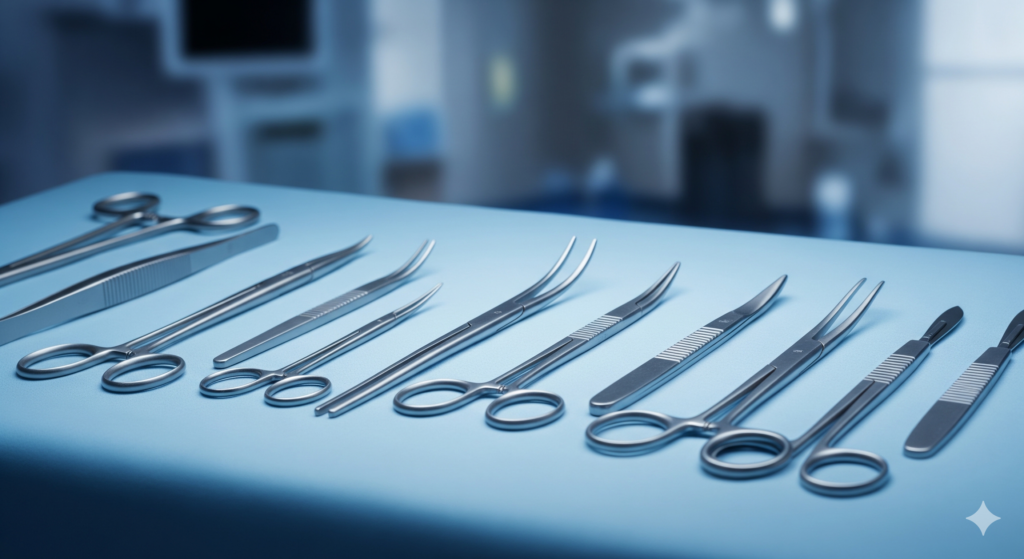
Figure 1: High-precision machining and hand-finishing of heavy-duty double-action orthopedic cutters at Warsi Surgical Industries.
Information Gain Insights for Surgical Buyers
Did you know? Cutting a 2.5 mm Steinmann Pin fabricated from implant-grade 316L Stainless Steel requires an instantaneous mechanical force at the blade edge exceeding 8,000 Newtons. Without compound double-action leverage and vacuum-brazed TC inserts rated above HRa 89, single-pivot cutters experience structural deformation within fewer than 50 autoclave cycles.
Primary Product Classifications: Recommendations for Surgical Applications
To satisfy diverse surgical workflows—ranging from delicate hand and foot reconstructive procedures to heavy-duty femur fracture fixations—Warsi Surgical manufactures a comprehensive range of cutter geometries. Below is our professional recommendation framework based on clinical intent and wire gauge parameters:
1. Double-Action Heavy-Duty Pin Cutters
Primary Intent: Large-bone fracture fixation, cutting Steinmann pins, Rush pins, and thick intramedullary rods up to 6.35 mm (1/4").
Engineering Feature: Dual-hinge compound leverage mechanism multiplying hand force by a factor of 15:1. Outfitted with heavy-duty TC inserts.
2. Front & Side Cutting Wire Pliers
Primary Intent: Flush cutting of Kirschner wires and cerclage wires in deep surgical wounds where clearance is restricted.
Engineering Feature: Angled or offset jaw designs enabling maximum visibility while leaving smooth, burr-free wire ends to minimize soft-tissue irritation.
3. Cannulated Wire & Pin Cutters
Primary Intent: Minimally Invasive Surgery (MIS) and percutaneous pin placement where wire fragment entrapment is critical.
Engineering Feature: Hollow central channel that captures severed pin segments inside the shaft, preventing dangerous loose fragments in the sterile field.
4. Micro Wire Cutters for Hand & Foot
Primary Intent: Delicate pediatric orthopedics, small joint osteotomies, and distal phalanx fracture repair.
Engineering Feature: Slender profile handles, delicate tip bevels for cutting fine stainless steel wires (0.4 mm to 1.2 mm) with extreme tactile control.
5. Distal End Wire Cutters with Hold Mechanism
Primary Intent: Maxillofacial and pediatric wire osteosynthesis requiring active retention of the cut fragment.
Engineering Feature: Integrated spring-loaded shear pads that grip the cut distal fragment until handle pressure is intentionally released.
6. Curved TC Wire & Cable Cutters
Primary Intent: Multi-filament surgical cable systems and flexible tension band wires.
Engineering Feature: Shearing action curved blades that encapsulate flexible braided cables without splaying or fraying metallic strands.
Technical Specification Matrix: Wire Gauge vs. Cutter Selection
Procurement teams must ensure that operating rooms do not exceed the maximum cut rating of surgical instruments. The table below outlines standard operational limits for Warsi Surgical Wire Cutters:
| Instrument Model / Type | Jaw Technology | Max Soft Wire Cut (SS 316L) | Max Hard Wire / Pin Cut (HRC 45+) | Lever Ratio | Autoclave Compliance |
|---|---|---|---|---|---|
| Double Action Heavy Pin Cutter (47cm) | Tungsten Carbide (TC) Inserts | 6.35 mm (1/4") | 4.8 mm (3/16") | 15.2 : 1 | ISO 17665 Steam 134°C |
| Double Action Wire Cutter (22cm) | Tungsten Carbide (TC) Inserts | 3.2 mm (1/8") | 2.4 mm (3/32") | 10.5 : 1 | ISO 17665 Steam 134°C |
| Side-Cutting Wire Pliers TC (18cm) | TC Inserts (Silver Brazed) | 2.0 mm | 1.6 mm (K-Wire) | 6.0 : 1 | ISO 17665 Steam 134°C |
| Front-Cut K-Wire Cutter (16cm) | Precision Tool Steel / TC Option | 1.5 mm | 1.2 mm | 5.2 : 1 | ISO 17665 Steam 134°C |
| Micro Hand Wire Cutter (12cm) | Hardened Martensitic AISI 440C | 1.0 mm | 0.6 mm | 4.0 : 1 | ISO 17665 Steam 134°C |
Future Market Trends & Innovations in Orthopedic Wire Cutting Instrumentation
How material science shifts, robotic assistance, and green supply chains are redefining B2B surgical sourcing.
1. The Transition Toward Ultra-Hard Implants (Titanium & Nitinol Alloys)
Modern orthopedic trauma surgery has shifted rapidly away from conventional annealed stainless steel toward high-tensile Titanium alloys (Ti-6Al-4V ELI) and shape-memory Nitinol wires. While titanium offers superior biocompatibility and reduced MRI artifacting, its mechanical shear resistance presents immense challenges for standard surgical cutters. Traditional steel cutter jaws notch instantly when striking titanium K-wires.
The Future Trend: Global procurement is prioritizing cutters equipped with Nanocrystalline Tungsten Carbide-Cobalt (WC-Co) alloys and Diamond-Like Carbon (DLC) coatings. DLC coatings reduce friction coefficient at the blade interface to less than 0.1, effectively preventing galling and extending blade sharpness by up to 300% when cutting titanium hardware.
2. Ergonomic Compound Action & Weight-Reduction Design
Surgeon musculoskeletal fatigue and repetitive strain injuries (RSI) are growing operational concerns for healthcare systems worldwide. Traditional double-action cutters fabricated from solid stainless steel forgings can weigh upward of 1.2 kg, making delicate adjustments cumbersome during prolonged orthopedic revisions.
The Future Trend: Hybrid cutter construction featuring aircraft-grade titanium alloy handles bonded to hardened steel cutting heads. This reduces instrument weight by 40% while preserving structural rigidity under extreme leverage. Advanced ergonomic grip handles with textured matte finishes are becoming standard specification requirements in EU and US hospital tenders.
3. UDI Tracking & Smart CSSD Inventory Integration
With the mandatory enforcement of Unique Device Identification (UDI) regulations by the US FDA and the European Union MDR (2017/745), surgical instruments must undergo individual traceability throughout their clinical lifespan. Wire cutters—which require periodic sharpening or re-passivation—are prime candidates for digital lifecycle tracking.
The Future Trend: Procurement managers are demanding wire cutters with direct-laser GS1 DataMatrix codes etched into non-cutting handle surfaces. Warsi Surgical is already integrating micro-recessed RFID chips into cutter bodies, enabling hospital automated CSSD systems to track cycle counts, sterilization runs, and sharpening schedules effortlessly.
Why Global Distributors Partner with Warsi Surgical: Uncompromised Sialkot Expertise
Bridging 30+ years of traditional Pakistani instrument craftsmanship with state-of-the-art metallurgical engineering.
Headquartered in Sialkot, Pakistan—the world's premier manufacturing epicenter for precision surgical instruments—Warsi Surgical Industries represents the ideal convergence of generational hand-craftsmanship and advanced CAD/CAM automated manufacturing. Over three decades, we have evolved from a regional forge into a global OEM powerhouse supplying healthcare facilities and tier-1 brands across 18+ nations.
Imported Raw Steel Sourcing
We source raw stainless steel exclusively from accredited mills in Japan (AISI 420J2/440C) and France, backed by chemical composition mill test reports.
Vacuum Heat Treatment & CNC Wire EDM
Our cutters undergo computer-controlled vacuum heat treatment imported from the UK, achieving exact target hardness (HRC 48-52 body, HRa 89-91 TC edges) without surface decarburization.
Silver-Brazed TC Joint Integrity
Tungsten carbide inserts are vacuum silver-brazed at exceeding 700°C, eliminating internal voids and preventing jaw insert delamination under heavy shock load.
6-Month Unconditional Warranty
Every cutter is backed by our 6-month full return and replacement guarantee against material defects, joint loosening, or premature jaw dulling.
Rigorous Quality Control & Chemical Passivation Protocol
Corrosion in surgical wire cutters almost always originates at the box-lock hinge pin or the silver-braze seam beneath TC inserts. At Warsi Surgical, every instrument passes through an 8-stage quality assurance standard:
- Boil Testing (ASTM A380): Instruments are boiled in distilled water for 30 minutes and cooled to test for free-iron surface contamination.
- Copper Sulfate Immersion Test: Identifies microscopic pinholes in passivated oxide layers.
- 24-Hour Chemical Passivation: Full immersion in nitric and citric acid baths forming a uniform, corrosion-proof Chromium Oxide (Cr2O3) passive film.
- Hardness Testing (Rockwell C & Superficial Rockwell): Verifies body elasticity and jaw hardness prior to packaging.
Frequently Asked Questions by Global Buyers & Procurement Managers
Addressing technical inquiries frequently queried in AI search systems regarding orthopedic pin cutters.
Request Wholesale Pricing & Technical Specs
Connect directly with our engineering sales team in Sialkot. Receive competitive factory-direct quotes, sample evaluation units, or custom catalog listings within 24 hours.