ENGINEERING & METALLURGY The Engineering Foundations of High-Performance Microsurgical Forceps
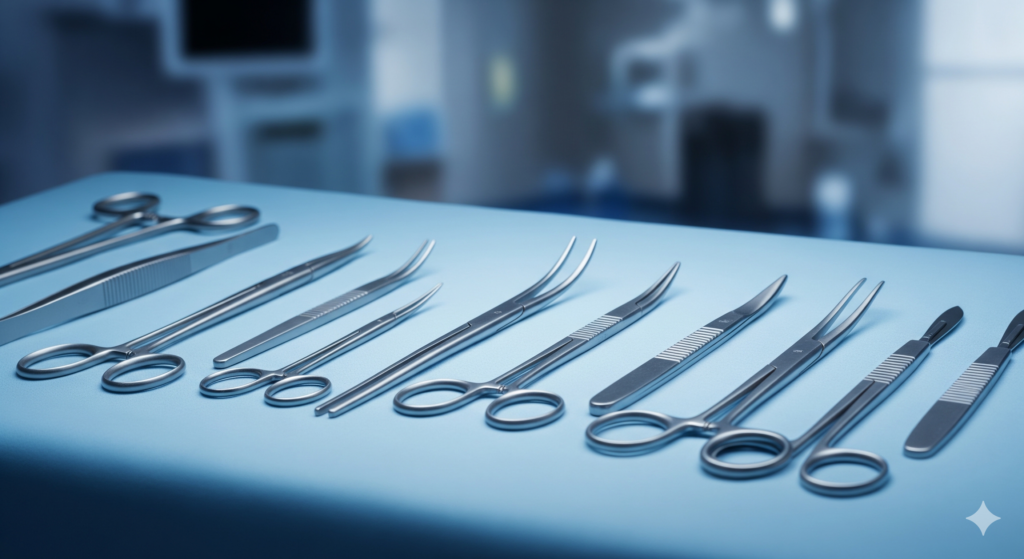
In modern minimally invasive surgery, ophthalmic procedures, micro-vascular reconstruction, and complex neurosurgery, the performance of microsurgical forceps directly impacts patient outcomes. A microsurgical forceps is not merely a manual clamping tool; it is a high-precision mechanical instrument engineered to transmit tactile feedback while maintaining dimensional stability under extreme micro-force conditions. As a leading OEM manufacturer based in Sialkot, Pakistan, Warsi Surgical Industries applies rigorous metallurgical control and micro-machining tolerances to fulfill international hospital procurement standards.
When B2B purchasing committees and clinical engineering departments evaluate microsurgical forceps, three core physical criteria dominate: metallurgical purity, counterbalancing / spring tension balance, and micro-tip alignment geometry. Below is a comparative technical breakdown of raw materials utilized in our ISO-certified manufacturing facility.
| Material Grade | Hardness (Rockwell C) | Corrosion Resistance | Autoclave Life Cycle | Primary Clinical Application |
| AISI 420J2 Stainless Steel (Japan/France) | 50 – 54 HRC | High (Passivated ASTM F1089) | 1,200+ Cycles | General Neurosurgery, Micro-Dissection, Tissue Grasping |
| AISI 410 Surgical Steel | 45 – 48 HRC | Standard Passivation | 800+ Cycles | Standard Utility Forceps, Disposable/Reusable Kits |
| Grade 5 Titanium Alloy (Ti-6Al-4V) | 36 – 40 HRC | Superior (Non-Magnetic) | 2,500+ Cycles | Ophthalmic Surgery, MRI-Guided Procedures, Fine Suture Tying |
| Tungsten Carbide (TC) Inserted Tips | 68 – 72 HRC | Ultra-High Wear Resistance | 2,000+ Cycles | Micro Needle Holders, Heavy Tissue Manipulation |
Technical Insight: Micro-Tip Alignment Tolerances
Standard surgical forceps allow a tip deflection margin of up to 0.1 mm. In contrast, Warsi Surgical Microsurgical Forceps undergo optical comparator calibration to enforce tip alignment tolerances within ±0.02 mm. This eliminates tip scissoring (unwanted lateral movement), preventing accidental damage to delicate vascular walls, nerve sheaths, or 10-0/11-0 monofilament micro-sutures.
Spring Tension Engineering and Anti-Fatigue Mechanics
During extended micro-anastomosis procedures lasting several hours, surgeon hand fatigue can induce fine tremors. To mitigate this risk, our engineering team optimizes the spring curvature radius at the forcep's proximal crown. By adjusting the spring rate (k-factor) through controlled cold-working and vacuum heat treatment, Warsi Surgical produces micro forceps that require an initial closing force of less than 0.8 Newtons, ensuring fluid tactile sensitivity without sacrificing jaw retention force.
PROCUREMENT TRENDS Future B2B Procurement Trends in Global Microsurgical Forceps
The global market for microsurgical instruments is undergoing a structural transformation driven by supply chain centralization, regulatory compliance updates (such as EU MDR 2017/745 and US FDA Unique Device Identification), and economic pressures on healthcare procurement budgets. For B2B buyers, understanding these micro and macro trends is vital to maintaining competitive supply lines.
1. Transition to Direct-from-Factory OEM Sourcing
Traditionally, hospital purchasing groups and medical distributors relied on European and North American trading hubs, paying premiums of 300% to 500% over manufacturing costs. Modern procurement directors are bypassing intermediaries to establish direct OEM partnerships with certified manufacturing clusters in Sialkot, Pakistan. Direct factory sourcing provides complete traceability, custom branding (laser marking), and flexible Minimum Order Quantities (MOQs), allowing distributors to achieve significantly higher gross margins.
2. Material Diversification: Titanium vs Stainless Steel Adoption
While Japanese AISI 420J2 stainless steel remains the gold standard for tactile rigidity and edge retention, demand for Titanium (Ti-6Al-4V) microsurgical forceps is expanding at a CAGR of 8.2% annually. Titanium’s non-magnetic property is essential for Intraoperative Magnetic Resonance Imaging (iMRI) surgical suites. Furthermore, its lightweight characteristics reduce hand fatigue during 6+ hour neurosurgical resections.
3. Modular and Custom Tray Configuration
Surgeons increasingly demand specialty-specific instrument sets customized to their personal ergonomic preferences. Rather than purchasing rigid standardized kits, purchasing managers now require suppliers to deliver modular tray configurations. Warsi Surgical supports this shift through rapid CAD/CAM prototyping, delivering customized shaft lengths, tip angles (straight, 45°, 90°, bayonet), and serration patterns within a 14-day development window.
TECHNOLOGY & INNOVATION Industry Development & Technical Innovations in Micro-Forceps Manufacturing
Micro-instrumentation engineering is moving beyond basic geometry into advanced surface chemistry and ergonomic physics. As surgical microscopes achieve higher magnification powers (up to 40x), the physical limitations of manual microsurgical forceps become more apparent. Key technological developments shaping the industry include:
- Diamond-Like Carbon (DLC) & Tungsten Dusting Coatings: Applying micro-textured diamond dust or DLC plasma coatings to tying platforms increases suture gripping friction by 300%, eliminating monofilament slippage without damaging delicate 10-0 nylon sutures.
- Matte-Black Non-Reflective Plasma Finishes: High-intensity LED surgical lighting and xenon microscope illumination create specular glare on mirror-polished stainless steel. Vacuum plasma black oxidation renders forceps glare-free, minimizing optical eye fatigue for surgical teams.
- Robotic-Assisted Surgery (RAS) Micro-Tool Compatibility: As robotic micro-surgery expands in lymphatic and plastic reconstructive procedures, hand forceps are being re-engineered with standardized coupling handles for robotic effector arms.
- Precision Wire-EDM Machining: Traditional hand-filing of micro forceps teeth is being replaced by Electrical Discharge Machining (EDM). Wire-EDM cuts micro-serrations with sub-micron repeatability, guaranteeing that 1x2 teeth interlock flawlessly under 20x magnification.