Surgical Insights & Knowledge Base

Surgical Instruments & Medical Blog

Discover expert technical articles, manufacturing guides, instrument maintenance tips, and clinical updates from Warsi Surgical Industries.

0%

Tendon Surgery Instruments sit at the intersection of precision, tissue handling, and reliable operating-room workflow. Global buyers need more than a polished catalog: they must assess instrument function, material quality, sterilization compatibility, and the support available after purchase. Small details matter. A needle holder that slips, or a poorly balanced passer, can complicate delicate work.

The World Health Organization’s 2022 musculoskeletal conditions fact sheet reports that approximately 1.71 billion people worldwide live with musculoskeletal conditions. This broad figure includes many disorders beyond tendon injuries, so it should not be mistaken for a measure of tendon surgery demand. Still, it signals the scale of musculoskeletal care and the importance of dependable surgical equipment. For clinical context, tendon researcher Nicola Maffulli and colleagues wrote: “Tendinopathy is a clinical syndrome characterized by a combination of pain, diffuse or localized swelling, and impaired performance” (British Journal of Sports Medicine, 1998). That definition underscores why tendon procedures require careful technique and fit-for-purpose tools.

This guide examines ten commonly considered Tendon Surgery Instruments, from forceps and scissors to suture passers and tendon strippers. It focuses on practical selection factors, including grip, working length, cleaning access, and intended procedure. No single instrument set suits every team. Buyer priorities also differ by region, specialty, and case volume. Some comparisons remain imperfect because public, independent performance data are limited. The aim is a clear starting point—not a substitute for clinical judgment, supplier verification, or local procurement review.
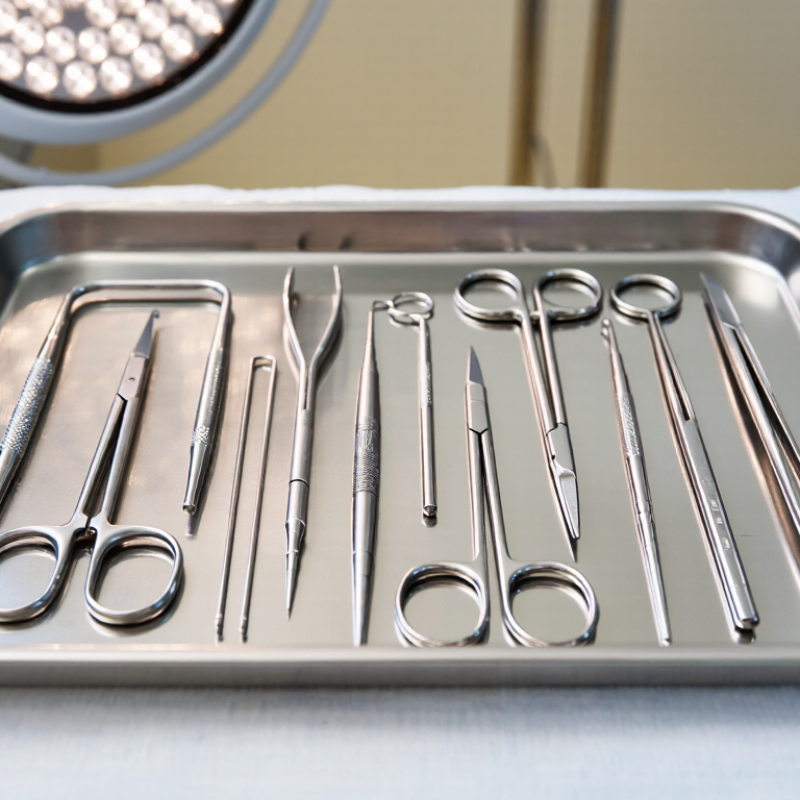
Top 10 Tendon Surgery Instruments for Global Buyers

How Tendon Repair Works: 4 Core Steps from Exposure to Closure

Tendon repair begins with exposure. The surgeon positions the limb and uses retractors to create a clear view while limiting unnecessary tissue handling. Fine scissors and forceps help manage surrounding tissue. Good lighting matters. This step is easy to rush, but poor visibility can complicate every decision that follows.

Assessment comes next. The surgeon examines the tendon ends, injury pattern, and nearby structures before selecting a repair approach. Irrigation and delicate instruments help keep the field clear. The method depends on anatomy and clinical judgment; no single setup suits every injury. A neat instrument tray helps, but it cannot replace experience.

During repair, needle holders guide sutures through the tendon according to the chosen technique. The surgeon checks alignment and tension, since excessive tightness may restrict movement. Closure follows after the repair and surrounding tissues are assessed. Fine forceps and scissors support careful handling, while suitable sutures and dependable instrument performance matter throughout. Before purchasing, global buyers can review instrument dimensions, material details, cleaning compatibility, and documentation. Small details matter. Availability alone is not enough.

Top 10 Tendon Surgery Instruments by Function and Operative Stage

Tendon surgery instruments are easiest to assess by operative stage, not by catalogue category. During exposure, a scalpel, fine scissors, and small retractors provide controlled access while limiting unnecessary tissue handling. Probes and atraumatic forceps help assess tendon edges and nearby structures. Keep the field visible. Blunt dissection tools may be useful where delicate tissue needs protection.

For tendon preparation and repair, the set may include fine debridement scissors, tendon clamps, needle holders, and suture passers. The required needle holder and passer depend on tendon thickness, access, and the surgeon’s chosen repair method. A tool list is not a technique. Not every case fits a standard set, and instruments that look similar may offer different grip or jaw control. Check function before the case, including ratchet engagement and alignment.

After repair, instruments for tension assessment and controlled movement support the operative check; the exact assessment is procedure-specific. Sterile processing matters at every stage. The World Health Organization’s 2016 Global Guidelines for the Prevention of Surgical Site Infection contain 29 recommendations: 13 for preoperative and intraoperative care, and 16 for postoperative care. The report does not rank tendon instruments, but its structure reinforces the need to plan sterile handling across the full procedure. AORN’s Guidelines for Perioperative Practice also address instrument handling and sterilization. One weak point in many purchasing lists is limited attention to cleaning access and inspection after repeated use.

Needles, Sutures, and Passers: Common USP 2-0 to 4-0 Sizes

Top 10 Tendon Surgery Instruments for Global Buyers

Needles, sutures, and passers work as a system during tendon repair. Common USP sizes range from 2-0 to 4-0. A 2-0 suture is thicker than a 4-0, but the largest size is not automatically the best choice. Tendon size, repair technique, and the surgeon’s protocol all matter. Needle curvature and point style affect how smoothly the needle passes through dense tissue. Small details count.

Suture passers can help guide material through tendon without repeated handling. Buyers should check the passer’s jaw shape, working length, and compatibility with the intended suture size. A needle that grips securely can reduce slipping, while an overly bulky instrument may limit access in a narrow field. Packaging should clearly identify size and needle configuration. A tidy tray does not guarantee an easy repair; fit and handling still need evaluation.

Tips: Compare sample instruments using the same suture and a realistic setup. Check that 2-0, 3-0, and 4-0 materials move smoothly through the passer. Confirm that needles are easy to control. Small differences may become noticeable only after repeated use.

Comparing Graspers, Retractors, and Cutters by Precision and Sterility

Top 10 tendon instruments are best compared by control, visibility, and cleanability—not by a universal ranking. Atraumatic and toothed graspers offer different levels of hold; fine forceps can help position delicate tissue. Small details matter. Blunt retractors, narrow tendon retractors, and skin hooks provide exposure with varying pressure and reach. Tenotomy scissors, straight and angled scissors, and suture scissors serve distinct cutting tasks. Fine tips improve access, but may be less forgiving in inexperienced hands.

Tips: Check jaw alignment and tip finish under bright light. Confirm that each instrument’s design supports the facility’s validated cleaning and sterilization process. Hinges, serrations, and narrow joints deserve close inspection.

For global buyers, compare working length, grip comfort, and visibility in the intended setup. Reusable instruments need clear processing instructions and inspection criteria; single-use items need intact packaging and traceable documentation. Ask suppliers for material details and reprocessing guidance, then verify them with qualified clinical and sterile-processing teams. A catalog photo cannot show how a jaw feels under load. That gap is easy to overlook, and it can make a technically precise instrument awkward in practice.

Top 10 Tendon Surgery Instruments for Global Buyers — Comparing Graspers, Retractors, and Cutters by Precision and Sterility
No. Instrument Instrument type Typical use Precision Tissue-handling profile Common construction Sterility and reprocessing
1 Fine atraumatic tendon forceps Grasper Holding or positioning a tendon during exposure, repair, and suturing. High for controlled handling in a limited field. Fine tips and a low-trauma jaw pattern can help limit crushing; avoid excessive pressure. Commonly stainless steel; jaw pattern and tip size vary by design. Reusable versions require cleaning and validated sterilization according to the instrument’s instructions for use (IFU). Use only single-use versions labeled sterile.
2 Microdissecting forceps Grasper Manipulating small tendon ends, fine suture, or delicate surrounding tissue under magnification. Very high for fine, localized movements. Small tips provide precise access but require careful handling to reduce tissue injury. Commonly stainless steel, with fine or micro-patterned tips. Reusable versions require careful cleaning of the tips and validated sterilization per IFU. Confirm compatibility with the specified sterilization cycle.
3 Tendon-holding forceps Grasper Securing a tendon end while trimming, aligning, or placing repair sutures. High for maintaining a stable grip on a tendon end. Designed to resist slipping; firm or prolonged clamping can damage tendon tissue. Commonly stainless steel; jaw serrations and locking mechanisms vary. Reusable versions must be cleaned with attention to serrations and joints, then sterilized per IFU. Sterile status depends on the product’s labeling.
4 Tendon passer Passer Guiding a tendon or suture through a tissue tunnel or beneath surrounding tissue. High when the tip and shaft are selected for the operative approach. Blunt or rounded designs can help limit snagging; technique and anatomical visibility remain important. Commonly stainless steel; straight and curved configurations are available. Reusable versions require validated cleaning and sterilization per IFU. Check any lumen, joint, or detachable-part cleaning requirements.
5 Blunt tendon hook Grasper / mobilizer Gently locating, lifting, or drawing a tendon into the operative field. High for focused tendon mobilization. A smooth, blunt tip can reduce cutting or puncture risk, but traction should remain controlled. Commonly stainless steel with a slender shaft and curved or hooked tip. Reusable versions require cleaning and sterilization according to the IFU. Inspect the tip for damage before use.
6 Small Senn-type retractor Retractor Retracting skin and superficial soft tissue to improve access in a small operative field. High for localized exposure. Small blades support focused retraction; avoid excessive force on skin and adjacent tissue. Commonly stainless steel; blade ends may be blunt or have shallow prongs. Reusable versions require cleaning and validated sterilization per IFU. Inspect blade edges and prongs for damage.
7 Ragnell-type retractor Retractor Retracting soft tissue around a tendon during focused exposure. High for narrow-field retraction. Compact blades permit controlled positioning; retraction pressure should be limited to what is needed for visibility. Commonly stainless steel; blade width and tip shape vary. Reusable versions require cleaning and sterilization per IFU. Verify that the selected blade design suits the intended tissue and procedure.
8 Fine tenotomy scissors Cutter Cutting fine soft tissue or trimming tissue in a confined field, where appropriate to the procedure. High for short, controlled cuts. Fine blades enable precise cutting; keep the blades visible and avoid unintended tendon or suture damage. Commonly stainless steel; straight or curved patterns are available. Reusable versions require cleaning around the hinge and validated sterilization per IFU. Confirm whether the specific model permits steam sterilization.
9 Fine dissecting scissors Cutter Separating or trimming soft tissue during surgical exposure and tendon repair. High for controlled dissection with adequate visibility. Sharp blades cut efficiently; the instrument is not a substitute for a tendon-specific cutting tool when one is indicated. Commonly stainless steel; blade length, curvature, and tip shape vary. Reusable versions require thorough hinge cleaning and sterilization per IFU. Inspect alignment and cutting performance before use.
10 Suture scissors Cutter Cutting suture tails after tendon repair. High for trimming accessible suture ends. Designed for suture cutting; use care to avoid cutting the repair construct or nearby tissue. Commonly stainless steel; blade design varies by intended suture type and access. Reusable versions require cleaning and validated sterilization per IFU. Use a sterile single-use version only when its labeling confirms sterile supply.

Comparison note: Precision and tissue-handling descriptions are qualitative comparisons based on typical instrument design and intended use, not standardized clinical performance scores. Reprocessing requirements vary by device; follow the applicable manufacturer’s IFU and local infection-prevention requirements. A reusable instrument is not sterile until it has been properly processed.

Global Buyer Checklist: ISO 13485, CE Marking, and UDI Requirements

For tendon surgery instruments, such as tendon passers, graspers, and suture instruments, documentation should match the exact model and intended use. Do not treat an ISO 13485 certificate as product approval. It indicates a quality-management system, so check its scope, issuing body, expiry date, and covered manufacturing site. Ask for current instructions for use, material details, and cleaning or sterilization guidance for reusable tools. Small mismatches matter.

For sales into the European Union, verify that CE marking applies to the device and its regulatory route. Review the EU declaration of conformity and confirm the manufacturer’s details, device identification, and applicable requirements. CE marking is not a universal passport; other markets may require separate registration or importer actions. Check before shipment. A certificate can look reassuring while leaving a gap, so verify its product scope rather than assuming.

UDI checks should cover the label, packaging level, and relevant database records where required in the destination market. Compare the UDI with the model, lot or serial number, and records supplied with each shipment. For a reusable instrument, traceability also depends on clear reprocessing instructions and identification that remains readable after repeated cleaning. Keep a sample label and test it against your receiving workflow. Ask questions early.

FAQS

Which suture sizes are commonly used for tendon repair?

Common USP sizes range from 2-0 to 4-0. A 2-0 suture is thicker than a 4-0. The largest size is not always best.

What should buyers check when choosing a suture passer?

Check jaw shape, working length, and compatibility with the intended suture size. Try 2-0, 3-0, and 4-0 materials in the same setup. Notice any slipping.

How do needle design details affect handling?

Needle curvature and point style affect passage through dense tissue. Confirm needles feel easy to control. Small differences can show up later.

How can graspers, retractors, and cutters be compared?

Compare control, visibility, and cleanability rather than using a universal ranking. Fine tips improve access but may be less forgiving. Jaw alignment matters.

What should buyers inspect on reusable instruments?

Look closely at hinges, serrations, and narrow joints under bright light. Check cleaning and sterilization guidance with qualified teams. A tidy tray is not enough.

What documentation should accompany a tendon instrument?

Confirm instructions for use, material details, and cleaning guidance match the exact model and intended use. Check certificate scope, expiry date, and manufacturing site.

Does an ISO 13485 certificate approve an individual product?

No. It indicates a quality-management system. Verify its scope; a reassuring certificate can still leave gaps.

What should buyers verify for CE marking and UDI?

Check CE marking, the declaration of conformity, and device identification for the intended market. Compare UDI details on labels, packaging, and relevant records. Check before shipment.

How can buyers assess fit before purchasing?

Compare samples using the intended suture and a realistic setup. Check grip comfort and visibility. A catalog image leaves plenty unseen.

Conclusion

This guide introduces Tendon Surgery Instruments through the four core stages of tendon repair: exposing the surgical site, preparing the tendon ends, aligning and suturing the tissue, and closing the wound. It reviews ten instrument types by function and operative stage, including cutting tools, graspers, needle holders, suture passers, and retractors. The overview explains how instrument choice can support access, control, and precision during delicate work, while emphasizing appropriate handling and sterile use.

The guide also compares common needle and suture options, including USP sizes 2-0 to 4-0, and outlines practical differences among graspers, retractors, and cutters. For global procurement, it offers a buyer checklist covering quality-system documentation such as ISO 13485, CE marking, and UDI information. Together, these topics help buyers assess product suitability, documentation, and consistency with their clinical and procurement requirements.

Evelyn

Evelyn

Evelyn is a dedicated marketing professional with a strong understanding of the company’s products, services, and customer needs. With a background in market research, content strategy, and business communication, she transforms complex product information into clear, practical, and engaging......