Surgical Insights & Knowledge Base

Surgical Instruments & Medical Blog

Discover expert technical articles, manufacturing guides, instrument maintenance tips, and clinical updates from Warsi Surgical Industries.

0%

Bone Reduction Clamps are essential instruments in orthopedic trauma surgery, where controlled compression can support fracture alignment and temporary fixation. Their value depends on more than jaw shape. Surgeons consider bone quality, fracture geometry, access, clamp pressure, and compatibility with the planned fixation method. Small details matter. A serrated jaw may improve grip on dense cortical bone, while a pointed tip can provide focused purchase during reduction. Improper selection, however, may damage delicate bone or obstruct plate positioning.

The World Health Organization reported that approximately 1.71 billion people live with musculoskeletal conditions worldwide in 2022. This broad burden continues to influence demand for reliable orthopedic equipment. Grand View Research valued the global orthopedic devices market at about USD 47.4 billion in 2023 and projected continued growth through 2030. These figures describe the wider market, not Bone Reduction Clamps alone. That distinction matters.

This guide examines ten commonly used clamp types for global buyers, including pointed reduction clamps, Verbrugge clamps, Jungbluth clamps, and pelvic reduction designs. It compares jaw configuration, working reach, handle control, material quality, sterilization suitability, and typical surgical applications. Procurement teams should also review manufacturer documentation, traceability, testing records, and applicable medical-device requirements in each target market. A low purchase price can hide inconsistent machining or poor ergonomic control. That lesson is easy to overlook. No single clamp fits every fracture, surgeon, or operating room. Product evaluation should therefore combine published specifications, experienced clinical feedback, and verified quality evidence.
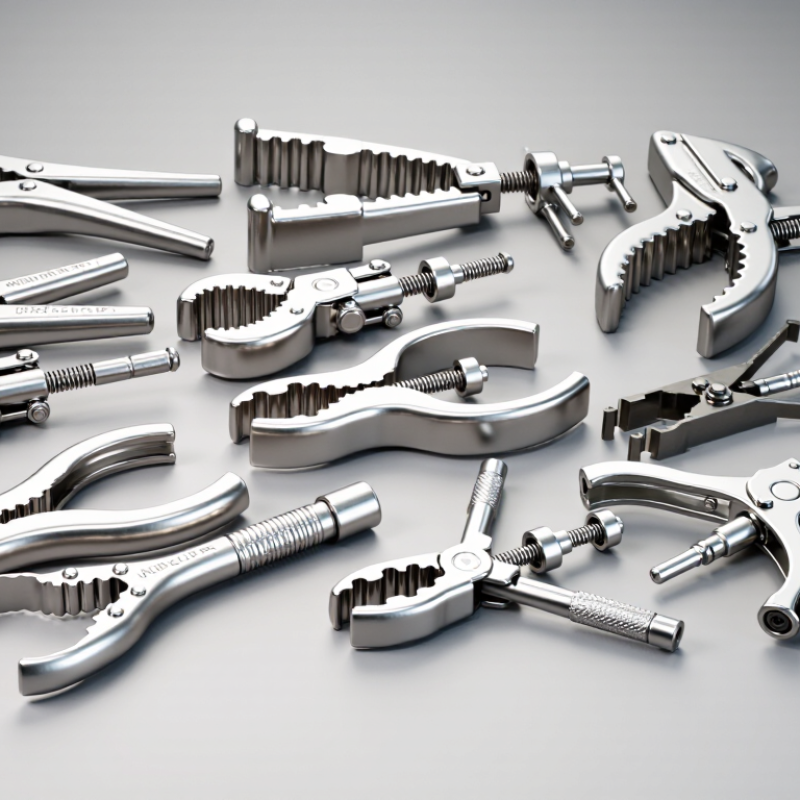
Top 10 Types of Bone Reduction Clamps for Global Buyers

Bone Reduction Clamps: Definition, Purpose, and Basic Classification

Top 10 Types of Bone Reduction Clamps for Global Buyers

Bone reduction clamps are temporary surgical instruments used to grasp, align, and hold fractured bone fragments. Their jaws provide controlled compression during reduction, fixation, or plate placement. They are not implants and should not replace definitive fixation.

WHO reports that musculoskeletal conditions affect about 1.71 billion people worldwide, highlighting the broad clinical need for dependable orthopedic tools. (WHO, Musculoskeletal Health, 2022)

Basic classification usually follows jaw design, working depth, and intended anatomy. Pointed clamps provide concentrated grip on compact fragments. Serrated clamps improve holding power on harder cortical bone. Broad-jaw clamps distribute pressure across fragile surfaces. Collinear clamps reach deep fractures through limited access. Pelvic and acetabular clamps use longer profiles and stronger handles. Some designs combine these features. Classification is useful, but never perfect.

In practical use, surgeons assess fragment size, bone quality, exposure, and required compression. A narrow jaw may fit a small fragment, yet it can leave a pressure mark. A broad jaw feels safer, but may obstruct the plate. The difference is tactile.

The AO Surgery Reference emphasizes reduction control, visualization, and protection of soft tissue during fracture management.

A 2024 Fortune Business Insights report projects continued growth in the global orthopedic devices market, driven partly by trauma care demand. Buyers should therefore review jaw geometry, ratchet security, hinge smoothness, sterilization compatibility, and documented material quality.

Fit matters. A polished specification sheet cannot replace hands-on evaluation.

Top 10 Types of Bone Reduction Clamps for Global Buyers

Top 10 Types of Bone Reduction Clamps for Global Buyers

Bone reduction clamps help hold fractured bone segments during alignment and fixation. Ten common types include pointed reduction clamps, serrated reduction clamps, lobster-claw clamps, self-centering clamps, collinear clamps, pelvic clamps, broad-jaw clamps, small-fragment clamps, large-fragment clamps, and Verbrugge-style clamps. Each design serves a different surgical situation.

Pointed jaws provide focused grip, while broad jaws distribute pressure across fragile bone. Serrated surfaces can improve stability, but excessive force may damage cortical tissue.

Global buyers should compare jaw geometry, working length, locking action, and handle comfort. Stainless steel construction is common, yet surface finish and corrosion resistance require careful inspection. Check cleaning instructions, sterilization compatibility, traceability, and quality documentation before purchasing. Regulatory requirements differ between markets. Do not assume one certificate meets every destination.

Fit matters. A pelvic clamp may be unsuitable for a small-fragment procedure. Self-centering designs can reduce hand adjustments, although they may feel less intuitive during early use. In practice, surgeons often value predictable control over extra features.

A common purchasing mistake is choosing the lowest price without reviewing hinge smoothness or jaw alignment. I would also question catalog images; they rarely show actual grip force or balance. Ask for dimensional drawings, sample inspection, and evidence from controlled quality checks before approving a supplier.

Key Design Features, Materials, and Operating Mechanisms

Top 10 Types of Bone Reduction Clamps for Global Buyers

Key Design Features, Materials, and Operating Mechanisms

For global buyers, bone reduction clamps are chosen by fracture geometry, access, and required holding force. Ten common designs include pointed, serrated, lobster-claw, collinear, pelvic, angular, double-action, self-centering, low-profile, and broad-jaw clamps. Pointed jaws engage cortical surfaces firmly. Serrated jaws improve grip on dense bone. Collinear mechanisms draw fragments along one axis. Pelvic patterns provide wider contact across curved anatomy. Each design affects pressure distribution and surgical visibility.

Most clamps use corrosion-resistant stainless steel for strength and repeated sterilization. Titanium can reduce weight, but it may cost more and deform under excessive loading. Polymer inserts can protect delicate bone surfaces. They may wear sooner. Jaw teeth, hinge pins, and locking ratchets require close inspection. Narrow jaws improve access, yet they concentrate force and may leave marks.

Operating mechanisms include sliding screws, rack locks, ring handles, and quick-release levers. A screw mechanism allows more controlled compression. A ratchet supports one-handed retention. Self-centering jaws can reduce adjustment time, but they cannot replace careful fragment alignment. Buyers should verify jaw opening, tip geometry, handle comfort, and sterilization instructions. Test samples reveal issues that catalogs hide. In practice, a clamp may feel secure while applying uneven pressure. That possibility deserves deliberate checking.

How to Select the Right Bone Reduction Clamp for Each Procedure

Top 10 Types of Bone Reduction Clamps for Global Buyers

How to Select the Right Bone Reduction Clamp for Each Procedure

Choosing a bone reduction clamp starts with fracture geometry, not catalog appearance. The ten common designs include pointed, serrated, broad-jaw, pelvic, periarticular, condylar, self-centering, angled, minimally invasive, and compression clamps. Pointed jaws suit firm cortical purchase. Broad jaws distribute pressure across fragile bone. Pelvic and angled clamps improve access around deep or obstructed anatomy.

The Global Burden of Disease Study 2019 estimated 178 million new fractures worldwide in one year. It also reported about 455 million people living with fracture-related conditions. These figures reinforce the need for procedure-specific instrument selection. For transverse fractures, a clamp with stable bilateral purchase can support accurate reduction. For comminuted fragments, excessive jaw pressure may worsen displacement. A narrow clamp may reach the site, but its tip can damage soft tissue. That trade-off is easy to underestimate.

Tips: Match jaw shape to bone contour. Check the working depth, opening span, ratchet control, and sterilization instructions. Test the clamp on a model before surgery when access is unfamiliar. Do not rely only on grip strength. Visibility, surgeon control, and tissue protection matter equally. A practical review should include fluoroscopic access and instrument clearance. Selection errors still happen, especially when one versatile clamp is used for every fracture. That approach feels efficient, but it deserves reconsideration.

International Purchasing, Quality Standards, and Safety Considerations

International buyers should evaluate bone reduction clamps as surgical instruments, not ordinary metal tools. Jaw shape, ratchet control, tip alignment, and grip texture affect reduction accuracy in the operating room. ISO 13485:2016 supports a documented quality system, while ISO 14971 helps suppliers identify risks such as slippage, tissue damage, corrosion, and incorrect use. Ask for material certificates, dimensional inspection records, batch traceability, and validated sterilization instructions. A polished surface is useful, but it does not prove reliability.

Small details matter. Test the clamp with gloved hands. The ratchet should engage firmly without excessive force. The jaws should meet evenly under light pressure. Look for rough edges around the hinge and teeth. These defects may be missed in catalog photographs. They should not be.

The WHO Global Patient Safety Report 2024 states that about one in ten patients experiences harm in healthcare, and more than half of this harm is preventable. This figure makes supplier verification more than a purchasing formality. Buyers should confirm cleaning compatibility, corrosion resistance, packaging integrity, and inspection frequency for reusable models. FDA reprocessing guidance also stresses validated cleaning and sterilization processes. However, supplier documents can be incomplete or copied. Independent sampling and pre-shipment inspection remain sensible. Country-specific registration, labeling, and import requirements also need checking before payment, because compliance responsibilities differ across markets.

Top 10 Types of Bone Reduction Clamps for Global Buyers - International Purchasing, Quality Standards, and Safety Considerations

No. Clamp Type Jaw Design and Main Function Typical Overall Length Common Surgical Application Typical Material Purchasing and Quality Checks Key Safety Considerations
1 Pointed Reduction Forceps Two pointed jaws provide focused purchase on bone fragments; available with straight or angled jaws. Approximately 16–24 cm General fracture reduction, long-bone and periarticular procedures. Commonly martensitic stainless steel, such as 410 or 420 series, with a corrosion-resistant finish. Verify jaw symmetry, tip alignment, hinge smoothness, ratchet engagement, and resistance to repeated sterilization. Pointed tips can perforate gloves or damage soft tissue; use controlled force and inspect tips for deformation.
2 Verbrugge-Style Reduction Clamp Broad, curved jaws with serrated or toothed gripping surfaces for strong temporary bone purchase. Approximately 18–28 cm Reduction and provisional stabilization of long-bone fragments. Surgical stainless steel; handle and hinge components should be compatible with steam sterilization. Check tooth consistency, jaw closure, ratchet release, handle ergonomics, and declared dimensional tolerances. Excessive tightening may crush thin cortical bone or compromise soft tissue; select jaw size according to anatomy.
3 Lobster-Claw Reduction Forceps Multiple curved, pointed jaws distribute grip around irregular fragments and provide multidirectional control. Approximately 18–25 cm Complex fracture reduction where conventional pointed forceps have limited purchase. Typically corrosion-resistant surgical stainless steel with hardened jaw tips. Assess equal jaw movement, atraumatic opening and closing, tip integrity, and clear cleaning access between jaw components. The multiple tips may obstruct visualization or injure nearby tissue; apply only the minimum force required.
4 Pelvic Reduction Clamp Long, curved, heavy-duty jaws designed to reach and compress broad pelvic fragments. Approximately 24–36 cm Temporary reduction of pelvic ring, acetabular, and other deep osseous structures. High-strength surgical stainless steel; some designs use modular or interchangeable tips. Confirm reach, radiographic compatibility where required, handle strength, jaw alignment, and documented load testing. Deep placement increases the risk of neurovascular or soft-tissue injury; use direct visualization and controlled positioning.
5 Collinear Reduction Clamp A sliding or inline mechanism advances one jaw toward the other, allowing controlled axial compression. Approximately 20–35 cm Precise reduction of long-bone fractures and minimally invasive fixation workflows. Surgical stainless steel or validated titanium components, depending on the design. Test sliding action, locking reliability, parallel jaw travel, radiographic markings, and cleaning of the internal mechanism. Avoid applying force beyond the stated operating range; uncontrolled release can cause fragment displacement.
6 Point-to-Point Reduction Clamp Narrow pointed tips provide two-point fixation for accurately aligning fracture fragments. Approximately 16–22 cm Small-fragment, periarticular, and limited-exposure procedures. Commonly hardened surgical stainless steel with a passivated surface. Inspect tip sharpness, alignment, ratchet steps, jaw opening range, and evidence of pitting or surface damage. Small tips can create concentrated stress; do not use them on fragile bone with excessive compression.
7 Low-Profile Reduction Clamp Slim jaws and a compact profile reduce obstruction around plates, screws, and minimally invasive access sites. Approximately 14–22 cm Submuscular or limited-access fracture fixation and plate positioning. Surgical stainless steel; surface finish should support cleaning and corrosion resistance. Compare actual jaw thickness with the surgical approach, verify plate clearance, and inspect narrow sections for bending. Reduced jaw mass may limit gripping capacity; do not substitute it for a heavy-duty clamp when higher force is required.
8 Angled-Jaw Reduction Clamp Angled jaws improve access around anatomical contours and reduce interference with the operative field. Approximately 18–28 cm Metaphyseal, distal femur, proximal tibia, and other anatomically constrained areas. Corrosion-resistant surgical stainless steel, with hardened gripping surfaces where specified. Confirm angle, left/right configuration, jaw parallelism, handle clearance, and compatibility with the intended approach. Incorrect orientation can create an unintended torque on the fragment or place the instrument against soft tissue.
9 Bone-Holding Forceps with Serrated Jaws Broad serrated jaws provide a secure grip across a larger bone surface than pointed forceps. Approximately 15–25 cm Holding, rotating, and temporarily stabilizing bone during preparation and fixation. Usually surgical stainless steel with a satin or electropolished finish. Check serration uniformity, grip without excessive play, ratchet wear, corrosion resistance, and validated cleaning instructions. Serrations may mark cortical bone; avoid clamping over nerves, vessels, tendons, or other vulnerable tissue.
10 Compression Reduction Clamp A threaded, ratcheting, or sliding mechanism applies measured compression while maintaining fragment alignment. Approximately 18–32 cm Fracture reduction before lag-screw, plate, or other internal-fixation procedures. High-strength surgical stainless steel; threaded parts require precise machining and corrosion protection. Request force-range data, thread-cycle testing, dimensional inspection records, and verification of stable locking under load. Excess compression can damage bone or alter reduction; follow the instrument instructions and use visual or imaging control.
International Purchasing and Compliance Notes: Select suppliers with a documented quality-management system, preferably aligned with ISO 13485. Material selection and composition should be documented against applicable requirements such as ISO 7153-1 and ASTM F899. Risk-management documentation may be assessed against ISO 14971, while cleaning and sterilization instructions should be validated and supplied in accordance with applicable processing requirements such as ISO 17664. Confirm the destination market's regulatory requirements, product classification, labeling, traceability, inspection records, packaging integrity, and sterilization compatibility before purchase.
Dimensions and configurations are typical purchasing ranges rather than universal specifications; exact jaw geometry, working span, load capacity, and sterilization limits must be confirmed in the supplier's technical documentation.

FAQS

How should buyers choose a bone reduction clamp?

Start with fracture geometry, not catalog appearance. Match the jaw shape to the bone contour and access path.

Which clamp design suits firm cortical bone?

Pointed jaws can engage firm cortical surfaces securely. Serrated jaws may improve grip on dense bone.

When are broad jaws useful?

Broad jaws distribute pressure across fragile or irregular bone. They can reduce concentrated marks from narrow tips.

What materials are commonly used?

Corrosion-resistant stainless steel offers strength and repeated sterilization. Titanium is lighter, but it may cost more.

Are polymer inserts always durable?

No. Polymer inserts can protect delicate surfaces, but they may wear sooner. Inspect them carefully.

Which operating mechanism provides controlled compression?

A sliding screw allows gradual, controlled compression. Ratchets support one-handed retention during positioning.

What should buyers inspect before purchase?

Check jaw opening, tip geometry, hinge pins, locking teeth, handle comfort, and sterilization instructions.A small detail matters.

How can buyers test an unfamiliar clamp?

Test a sample on a model before surgery. Check access, visibility, clearance, pressure balance, and release control.

Can one versatile clamp suit every fracture?

Not reliably. A narrow clamp may reach deep anatomy but concentrate force. Efficient is not always appropriate.

Conclusion

Bone Reduction Clamps are specialized surgical instruments used to grasp, align, hold, and temporarily stabilize bone fragments during orthopedic procedures. This guide introduces their basic classification and reviews ten common types, including pointed, serrated, self-centering, articulating, angled, and minimally invasive designs. Each type offers distinct advantages for different bone sizes, fracture patterns, surgical approaches, and levels of required control.

The article also explains key design features, such as jaw configuration, locking systems, handle ergonomics, and operating mechanisms, along with commonly selected materials for strength, corrosion resistance, and sterilization compatibility. It provides practical guidance for matching a clamp to the procedure while considering access, tissue protection, grip stability, and surgeon control. For international buyers, the guide highlights the importance of supplier qualification, dimensional consistency, traceability, quality management, recognized medical-device standards, packaging, sterilization information, and applicable safety documentation. Together, these considerations support informed purchasing decisions and help healthcare providers select reliable Bone Reduction Clamps for safe and effective surgical use.

Amelia

Amelia

Amelia is a dedicated marketing professional with a strong understanding of product strategy, customer needs, and digital communication. As a key contributor to the company’s marketing team, she regularly creates and updates expert blog content for the corporate website, translating complex product......