Surgical Insights & Knowledge Base

Surgical Instruments & Medical Blog

Discover expert technical articles, manufacturing guides, instrument maintenance tips, and clinical updates from Warsi Surgical Industries.

0%

Choosing Surgical Bone Curettes is not a simple matter of selecting the sharpest instrument. Curette geometry, handle control, working length, and surface finish can influence visibility, tissue contact, and removal accuracy. In a narrow bone cavity, a spoon-shaped tip may feel stable. A fenestrated design may improve debris clearance. Small differences matter.

The global orthopedic devices market continues to expand, according to Grand View Research’s 2024 industry report. Its analysis highlights rising procedure volumes, aging populations, and demand for specialized surgical instruments. Fortune Business Insights’ surgical instruments market report also identifies orthopedic applications as an important growth area. These figures provide context, not a purchasing decision. Market growth cannot replace clinical evaluation.

Orthopedic oncologist Dr. William F. Enneking offered a principle that remains useful here: “The surgeon must understand the biology before choosing the operation.” The same logic applies to curettes. Instrument selection should follow the procedure, anatomy, bone quality, and required level of control. A curette for removing soft lesion material is not automatically suitable for dense cortical work.

This guide examines ten practical types of Surgical Bone Curettes to buy, including angled, straight, ring, spoon, and double-ended models. Each section considers tip shape, ergonomics, sterilization compatibility, and handling in confined spaces. Product descriptions can sound convincing. Hands-on assessment still matters more.

Some choices remain imperfect.

Clinical teams should verify manufacturer specifications, regulatory clearance, reprocessing instructions, and compatibility with institutional protocols. The best instrument is rarely the most expensive one. It is the one that supports precise, controlled work without unnecessary fatigue.
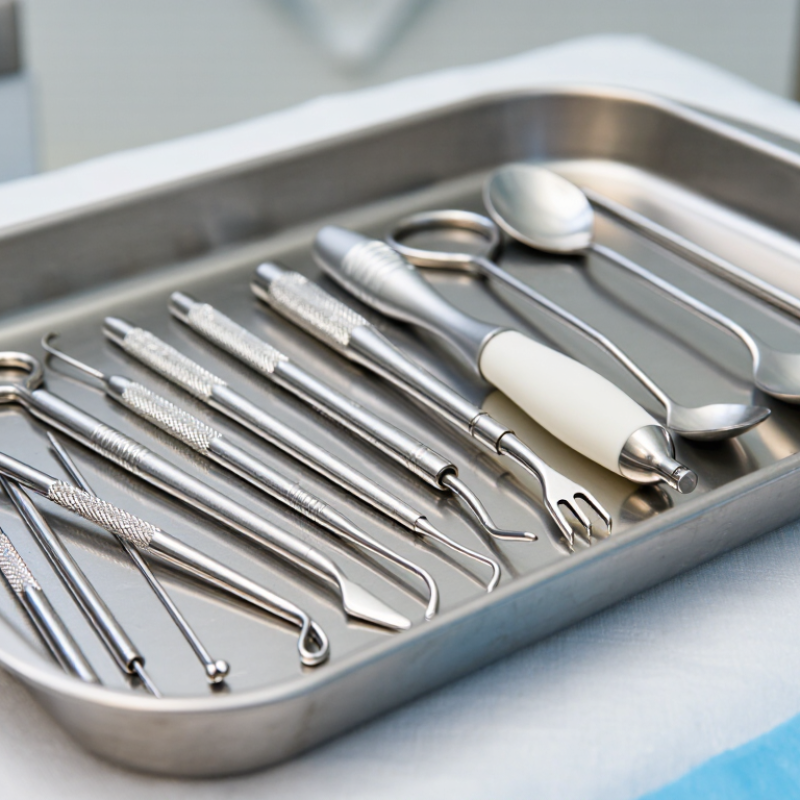
Top 10 Types of Surgical Bone Curettes to Buy

What Surgical Bone Curettes Are and How They Work

Surgical bone curettes are hand instruments used to remove loose bone, granulation tissue, or material from a prepared cavity. Their working ends are usually spoon-shaped, ring-shaped, or sharp-edged. Each design controls how tissue and bone are scraped. A gentle spoon curette suits soft debris, while a sharp curette can remove firmer tissue with greater precision. Handle pressure matters. Too much force may damage healthy bone.

Common types include straight spoon, angled spoon, oval, ring, sharp, blunt, double-ended, fenestrated, long-shaft, and pediatric curettes. Angled models improve access in narrow spaces. Ring curettes can collect tissue during controlled scraping. Double-ended instruments offer two working sizes without changing tools. Fenestrated designs may improve visibility and reduce trapped material. However, the “best” curette depends on anatomy, procedure, and the surgeon’s technique. That judgment is not always obvious.

Tips: Check the curette’s edge, shaft alignment, and surface before use. Match the tip size to the cavity, not simply the patient’s age. Maintain a stable grip and use short, deliberate strokes. Sterilization must follow the instrument’s validated instructions and facility protocol. Inspect reusable instruments after cleaning, especially around joints and narrow edges. When visibility is poor, pause and reassess rather than scraping by feel alone. A small mistake can create an unnecessarily large defect. Consultation with trained surgical staff and applicable clinical guidance remains essential.

Top 10 Types of Surgical Bone Curettes to Buy

Surgical bone curettes are hand instruments used to scrape, remove, or debride tissue and loose bone from cavities and orthopedic or ENT operative sites. The chart compares common curette designs by their typical functional emphasis on a relative educational scale from 1 to 5, rather than by sales volume or clinical outcome.

How they work: The curette’s spoon, ring, or windowed tip is pressed against the target surface and moved with controlled scraping strokes. Straight tips generally support direct access, while angled, double-ended, and specialized acetabular or mastoid designs improve reach in confined anatomical spaces. Sharp edges are intended for more assertive curettage, whereas blunt edges provide a less aggressive approach.

The Main Features Used to Classify Bone Curettes

Top 10 Types of Surgical Bone Curettes to Buy

Bone curettes are best classified by working geometry, not by appearance alone. The WHO-cited estimate of 234 million major operations annually shows the scale of surgical instrument use. In practice, small design differences can affect visibility, control, and tissue handling. A straight curette suits open, accessible surfaces. Angled and offset shafts reach deeper cavities with less wrist rotation. Spoon-shaped tips collect cancellous bone efficiently. Ring curettes provide circumferential scraping. Fenestrated tips can improve visibility and reduce material buildup.

Tip sharpness creates another useful division. Sharp curettes remove firm tissue or lesion margins. Blunt curettes support controlled palpation and reduce aggressive scraping. Small, medium, and large bowls match cavity size and the amount of bone removed. Double-ended models combine two working dimensions, although their balance may feel less precise. Micro curettes support narrow anatomical spaces. Handle diameter, knurling, and overall length influence grip stability during prolonged procedures.

OECD Health Statistics 2023 reported substantial variation in hip-replacement rates, from below 100 to above 300 procedures per 100,000 people across reporting countries. That variation reinforces the need for procedure-specific selection. Stainless steel supports repeated sterilization, while disposable options may simplify contamination control. I would not treat any “top ten” list as universal. Surgeon preference, imaging, bone density, and access often change the best choice. That part is easy to underestimate. Always verify regulatory status, sterilization instructions, and documented performance before purchasing.

Top 10 Types of Surgical Bone Curettes to Buy - The Main Features Used to Classify Bone Curettes

No. Curette Type Tip Design Shaft Configuration Typical Working Size Common Surgical Applications Main Advantage Important Buying Features
1 Straight Spoon Curette Concave spoon-shaped tip with a sharp or semi-sharp cutting rim. Straight shaft for direct access and controlled axial pressure. Tip diameter commonly about 2–8 mm; shaft length often 12–18 cm. General bone scraping, removal of soft tissue from bone, and preparation of accessible cavities. Simple handling and direct visualization of the working end. Tip rigidity, rim sharpness, handle comfort, and corrosion-resistant stainless steel.
2 Angled Spoon Curette Spoon tip set at an angle, commonly around 30°–90° to the shaft. Fixed angled neck or offset working end. Tip diameter commonly about 2–8 mm; several neck angles are usually available. Accessing recessed areas, bone cavities, joint margins, and locations where a straight instrument is obstructed. Improves access while allowing the handle to remain outside the operative field. Angle accuracy, neck strength, tip profile, and availability of multiple sizes.
3 Double-Ended Bone Curette Two working ends, often with different tip sizes, shapes, or angles. One handle with a curette at each end; may combine straight and angled ends. Paired tips commonly range from about 2–8 mm. General orthopedic, trauma, spinal, and reconstructive procedures requiring quick size changes. Two functional sizes in one instrument and fewer instrument exchanges. Balanced weight, secure end geometry, clearly differentiated tip sizes, and easy cleaning.
4 Ring Curette Circular or oval fenestrated loop with a sharp inner edge. Straight or angled shaft connected to a closed metal loop. Loop diameter commonly about 2–6 mm. Scraping cancellous bone, removing granulation tissue, and debriding contained cavities. The ring edge cuts around the full circumference and retains removed material. Uniform loop shape, edge durability, loop-to-shaft strength, and atraumatic outer surface.
5 Sharp Bone Curette Sharpened concave edge designed for cutting and scraping mineralized tissue. Usually straight or mildly angled, with a rigid neck. Common working diameters are approximately 1.5–8 mm. Removal of necrotic bone, lesion tissue, granulation tissue, and localized bony debris. Efficient tissue removal with relatively low manual force. Edge retention, controlled sharpening, tip thickness, and resistance to deformation.
6 Blunt Bone Curette Rounded or minimally sharpened spoon or loop edge. Straight or angled shaft with a less aggressive working profile. Typical tip diameter is about 2–10 mm. Gentle elevation, removal of loose material, cavity cleaning, and work near delicate structures. Lower risk of unintended cutting or gouging compared with a sharp curette. Rounded margins, smooth surface finish, adequate stiffness, and controlled tactile feedback.
7 Long-Shank Deep-Cavity Curette Small spoon or ring tip mounted on an extended shaft. Long, narrow, generally straight or slightly curved shank. Overall length commonly about 18–30 cm; tip diameter about 2–6 mm. Deep bone cavities, spinal procedures, intramedullary work, and areas with limited surface access. Reaches deep operative sites without placing the handle inside the wound. Shank stiffness, resistance to bending, working-length options, and a secure grip.
8 Fine or Micro Bone Curette Small spoon, loop, or sharply defined tip for fine tissue removal. Slender shaft, commonly straight or delicately angled. Tip diameter commonly about 0.5–2.5 mm. Small bone cavities, hand and foot surgery, maxillofacial procedures, and precision work around small structures. High precision and improved access in confined spaces. Tip visibility, shaft balance, fine edge control, and compatibility with delicate handling.
9 Wide-Bowl Bone Curette Broad concave spoon with a relatively large tissue-contacting surface. Short or medium-length shaft, usually straight or mildly angled. Tip width commonly about 6–15 mm. Efficient removal of loose cancellous bone, larger cavities, and broad debridement areas. Covers more surface area per stroke and can collect a larger volume of material. Bowl depth, cutting-edge uniformity, shaft rigidity, and ease of evacuation and cleaning.
10 Curved or Offset Curette Spoon or ring tip positioned on a curved, offset, or laterally directed neck. Curved shaft designed to approach the target from a non-axial direction. Tip diameter commonly about 2–8 mm; curvature varies by procedure. Access around anatomical corners, joint surfaces, posterior structures, and obstructed operative approaches. Provides directional access while reducing the need to rotate the wrist or retract surrounding tissue. Curve consistency, resistance to torsion, ergonomic handle alignment, and tip visibility.
Procurement note: Dimensions are typical ranges used for instrument selection and may vary by surgical specialty and manufacturer. Before purchase, confirm the intended procedure, tip geometry, shaft length, handle design, sterilization compatibility, and applicable hospital or regulatory requirements.

Ten Types of Surgical Bone Curettes and Their Clinical Uses

Top 10 Types of Surgical Bone Curettes to Buy

Surgical bone curettes differ in shape, edge, length, and tissue control. A straight spoon curette helps remove soft tissue from open cavities. An angled spoon curette reaches posterior or deep anatomical areas. Ring curettes collect tissue from round defects and extraction sockets. Sharp curettes remove granulation tissue and small lesions with controlled pressure. Blunt curettes gently separate tissue near delicate structures. Double-ended curettes offer two working sizes during one procedure. Fenestrated curettes improve visibility and allow easier tissue removal. Long-shaft curettes reach deep orthopedic or maxillofacial sites. Miniature curettes suit narrow spaces and small defects. Sinus lift curettes support careful membrane elevation during selected grafting procedures.

Clinical use should guide the purchase, not appearance alone. A sharp edge may improve debridement, but it can also remove more bone than intended. Spoon designs are useful for scraping cavities, while blunt tips may reduce accidental tissue injury. Experienced clinicians review radiographs, defect size, access, and bone quality before selecting an instrument. Sterilization compatibility and comfortable grip also affect reliable performance. No curette is perfect for every site.

Tips: Match the curette angle to the surgical approach. Check the tip under adequate lighting before use. Avoid excessive force, especially near nerves, vessels, or thin cortical bone. Inspect instruments for dull edges, corrosion, or loose handles after processing. When uncertain, pause and reassess the anatomy rather than relying on speed.

How to Choose the Right Bone Curette for Each Procedure

Top 10 Types of Surgical Bone Curettes to Buy

How to Choose the Right Bone Curette for Each Procedure

Choosing a bone curette starts with anatomy, access, and tissue density. Common options include straight, angled, curved, spoon, ring, sharp, blunt, fenestrated, double-ended, and minimally invasive curettes. A narrow, angled tip can reach a deep cavity through limited exposure. A broad spoon offers better control across a larger surface. Sharp edges remove dense tissue efficiently, while blunt edges may reduce accidental damage near delicate structures.

Handle design matters more than many purchasing teams expect. A textured grip helps maintain control when gloves become wet. A balanced shaft can reduce wrist strain during repeated scraping. The curette should match the cavity, not merely the surgeon’s preference. A wider instrument can feel safer, but that instinct can be wrong. Trial use under supervision remains valuable.

The WHO Global Patient Safety Report 2024 estimates that one in ten patients experiences harm in healthcare, with over half considered preventable. This supports careful instrument selection and consistent technique. The CDC classifies instruments entering sterile tissue as critical items; they require sterilization before reuse. Therefore, confirm material compatibility, cleaning access, and sterilization instructions before buying. Small joints may require slim, curved tips. Large bone defects often need stronger shafts and larger working ends. Documenting surgeon feedback can reveal an uncomfortable truth: the most expensive curette is not always the most suitable one.

Safe Handling, Cleaning, Sterilization, and Storage Practices

Surgical bone curettes vary in shape, angle, edge design, and handle length. Sharp curettes need careful control near delicate tissue. Hold the instrument firmly, but avoid excessive force. A stable grip reduces slipping and accidental damage. Use protective gloves, eye protection, and other facility-approved protective equipment during handling. Keep used curettes moist until cleaning begins. Dried bone debris becomes difficult to remove.

Cleaning must happen before sterilization. Rinse each curette according to facility procedure, then use a compatible enzymatic detergent. Pay attention to serrations, joints, hollow areas, and angled tips. A soft brush can loosen residue without scratching the surface. Do not use abrasive pads. Inspect the edge under good lighting. Look for cracks, corrosion, bent tips, or dull cutting surfaces. One missed fragment can compromise the next procedure. I would not rely on appearance alone.

Follow the curette’s validated instructions for use and the sterilizer’s operating requirements. Steam sterilization is common for compatible stainless-steel instruments, but temperature and exposure time must be confirmed. Arrange instruments so steam can contact every surface. Do not overload trays. After processing, allow complete drying and check package integrity. Store curettes in clean, dry cabinets with tips protected from impact. Separate sharp instruments from delicate items. Even careful teams occasionally miss moisture or a damaged edge, so routine inspection and documented reprocessing checks remain necessary.

FAQS

How are surgical bone curettes commonly classified?

They are mainly classified by working geometry, tip shape, sharpness, size, and handle design. Appearance alone can mislead.

When is a straight bone curette useful?

A straight curette suits open, accessible bone surfaces. It offers direct control with minimal shaft adjustment.

Why choose an angled or offset curette?

Angled and offset shafts can reach deeper cavities. They may reduce wrist rotation during the procedure.

What is the difference between sharp and blunt curettes?

Sharp curettes remove firm tissue or defined lesion margins. Blunt curettes support controlled palpation and gentler scraping.

How should curette bowl size be selected?

Small, medium, and large bowls match different cavity sizes. The wrong size may reduce control or remove too much bone.

What features improve grip during long procedures?

Handle diameter, knurling, and length affect grip stability. A secure handle helps prevent slipping. Comfort still depends on personal preference.

Are double-ended and micro curettes always better?

Not always. Double-ended models offer two working dimensions, but balance may feel less precise. Micro curettes suit narrow anatomical spaces.

What material and purchasing checks matter?

Stainless steel usually supports repeated sterilization. Verify regulatory status, sterilization instructions, and documented performance before purchase.

How should a used curette be handled before cleaning?

Keep it moist until cleaning begins. Dried bone debris becomes difficult to remove. Wear facility-approved protective equipment.

What cleaning steps help protect the instrument?

Clean before sterilization using a compatible enzymatic detergent. Use a soft brush around serrations, joints, hollow areas, and angled tips.

How should curettes be inspected after cleaning?

Check the edge under good lighting. Look for cracks, corrosion, bent tips, dull surfaces, and remaining debris. Appearance is not enough.

How should curettes be sterilized and stored?

Follow validated instructions and sterilizer requirements. For compatible instruments, confirm steam temperature and exposure time. Allow complete drying, protect the tips, and store instruments in clean, dry cabinets.

Conclusion

Surgical Bone Curettes are specialized instruments designed to remove, shape, or collect bone and tissue during orthopedic, dental, spinal, and other surgical procedures. Their working ends are commonly classified by shape, size, depth, edge design, and handle configuration, allowing surgeons to select tools for precise access and controlled scraping. The ten main types may include straight, angled, spoon-shaped, ring, fenestrated, double-ended, small, large, sharp, and blunt curettes, each suited to different anatomical areas and procedural goals.

Choosing the right curette depends on the target site, bone density, required level of precision, and available surgical access. Safe use also requires a secure grip, controlled pressure, and careful awareness of surrounding tissues. After use, curettes should be cleaned promptly to remove biological material, inspected for damage or dull edges, sterilized according to approved clinical procedures, and stored in a dry, organized environment. Proper maintenance supports instrument performance, patient safety, and a reliable surgical workflow.

Evelyn

Evelyn

Evelyn is a dedicated marketing professional with a strong understanding of the company’s products, services, and customer needs. With a background in market research, content strategy, and business communication, she transforms complex product information into clear, practical, and engaging......