Surgical Instruments & Medical Blog
Discover expert technical articles, manufacturing guides, instrument maintenance tips, and clinical updates from Warsi Surgical Industries.
What Are the Best Laminectomy Instruments from China?
Table of Contents
- What Are Laminectomy Instruments and What Procedures Do They Support?
- Which Chinese Laminectomy Instruments Are Most Commonly Used?
- How Do Chinese Laminectomy Instruments Compare in Quality and Design?
- What Safety, Sterilization, and Material Standards Should Buyers Check?
- How Can Hospitals Select Reliable Chinese Laminectomy Instrument Suppliers?
- FAQS
- Conclusion
- Related Posts
Choosing the best Laminectomy Instruments from China requires more than comparing catalog prices or polished product photographs. Surgical reliability depends on material quality, design control, sterilization compatibility, and supplier traceability. The Lancet’s global surgery analysis estimated approximately 234 million major operations annually, showing why dependable surgical instruments remain essential across healthcare systems. Spinal procedures demand especially careful evaluation, because small variations in rongeur alignment or Kerrison jaw movement can affect handling during decompression.
Industry data also provides useful context. Grand View Research’s surgical instruments market analysis identifies continued growth in surgical equipment demand, supported by hospital investment and procedure volumes. However, broad market growth does not prove that every manufacturer offers consistent quality. Buyers should examine ISO 13485 certification, documented inspection records, material specifications, and evidence of production experience with spinal instruments. Compliance with relevant standards, including ISO 14971 risk management and applicable national registration requirements, should also be verified independently.
Practical testing matters.
A Kerrison rongeur should open smoothly, close evenly, and maintain a firm bite. A laminectomy punch should show clean machining around its working tip. These details become visible during sample evaluation, not during a sales presentation. Chinese manufacturers can offer competitive pricing, customization, and scalable production. Still, the cheapest quotation may create hidden costs through poor durability, inconsistent batches, or delayed replacements. This is where our judgment must remain cautious. The best supplier is not simply the lowest-cost supplier. It is the partner that combines engineering evidence, transparent quality control, responsive communication, and dependable after-sales support.
What Are Laminectomy Instruments and What Procedures Do They Support?
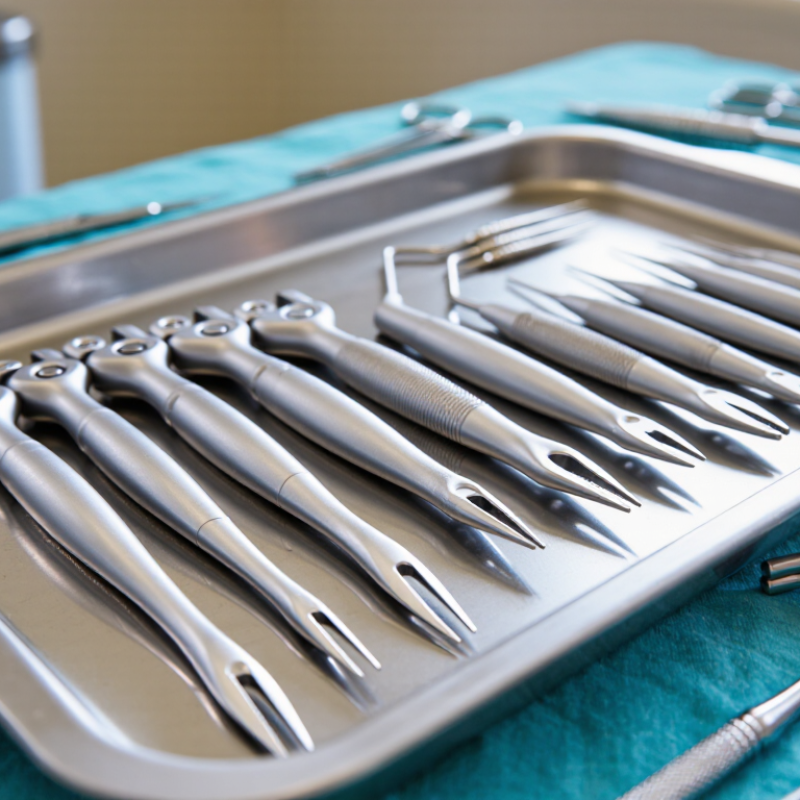
Laminectomy instruments are surgical tools used to remove part of the vertebral lamina. This creates space around compressed nerves or the spinal cord. They support decompression procedures for spinal stenosis, certain disc conditions, and selected spinal tumors. The exact procedure depends on imaging, symptoms, and surgical judgment.
A typical set may include Kerrison rongeurs, bone punches, curettes, periosteal elevators, retractors, and sharp tissue forceps. High-speed drills can shape dense bone with controlled precision. Rongeurs remove small bone sections progressively. Retractors maintain a clear field without excessive tissue pressure. Good instruments should provide a firm grip, smooth jaw movement, consistent cutting, and corrosion resistance.
When evaluating instruments from China, hospitals should check material certificates, production controls, surface finishing, and sterilization compatibility. Surgical teams should also inspect jaw alignment, handle comfort, and locking performance before use. Samples matter more than photographs. Ask for traceability, inspection records, and verified testing documents. A practical trial can reveal awkward balance or weak hinges. Small details matter.
Not every inexpensive set is poor. Not every polished set is reliable. That assumption needs review. Packaging, transport, and repeated sterilization may affect performance. Procurement teams should compare clinical feedback with technical documentation. Final selection belongs to qualified professionals and the facility’s approved purchasing process.
Laminectomy Instruments and the Procedures They Support
The chart counts commonly relevant instrument functions for each procedure. These functions include bone removal, bone cutting, drilling, curettage, neural tissue protection, tissue dissection, retraction, and hemostasis. The figures describe functional coverage rather than product quality, clinical outcomes, or brand performance.
Which Chinese Laminectomy Instruments Are Most Commonly Used?
Chinese laminectomy instrument sets commonly include Kerrison rongeurs, laminectomy punches, bone nibblers, curettes, osteotomes, and nerve-root retractors. These tools support controlled bone removal and tissue protection during spinal decompression procedures.
Kerrison rongeurs are especially common because their angled jaws help surgeons reach narrow spaces. Different jaw widths and upward or downward angles suit cervical, thoracic, and lumbar work. Curettes help clear soft tissue and small bone fragments. High-speed drills are also widely used when gradual thinning is safer than forceful biting.
Material quality matters. Surgical-grade stainless steel should resist corrosion, maintain a sharp cutting edge, and tolerate repeated sterilization. Handles need secure grip, even with gloves or irrigation fluid. A loose hinge is not a small problem. It can affect control.
In practical purchasing, hospitals often compare jaw alignment, spring action, surface finishing, and instrument balance. Chinese suppliers offer many configurations, but specifications can vary between production batches. That deserves attention. Buyers should request inspection records, sterilization compatibility, traceability documents, and samples for clinical evaluation. Price is useful, but it should not replace testing. Even experienced teams may overlook ergonomics until a long procedure exposes hand fatigue. Some instruments feel efficient on paper, yet perform differently under real operating conditions.
How Do Chinese Laminectomy Instruments Compare in Quality and Design?
Chinese laminectomy instruments now cover a broad range of quality levels, from basic surgical sets to carefully engineered systems. In practical evaluations, the strongest instruments usually use corrosion-resistant stainless steel, consistent jaw alignment, and smooth ratcheting mechanisms. These details matter when removing bone near delicate neural structures. A rongeur should close evenly, without a sudden jump. The handle should feel stable, even through wet gloves.
Design is often the clearest difference. Many Chinese manufacturers focus on lightweight handles, balanced shafts, and modular sets that reduce tray size. Some instruments provide useful visual access through slimmer profiles and angled working ends. However, compact design can reduce grip strength or make cleaning channels harder to inspect. That trade-off deserves attention. A polished surface is not proof of reliable performance.
Quality control also varies between suppliers. Better producers document material grades, dimensional tolerances, hardness, and repeated functional testing. They should provide sterilization guidance, traceability records, and responsive technical support. In contrast, inconsistent hinges, rough box locks, or poorly finished edges may appear after repeated cleaning cycles. That is a real concern. Buyers should examine sample instruments, test them under realistic handling conditions, and compare independent inspection data. Chinese laminectomy instruments can offer strong value, but price alone cannot establish surgical reliability.
What Safety, Sterilization, and Material Standards Should Buyers Check?
Choosing laminectomy instruments from China requires more than comparing prices and catalog photographs. Buyers should verify the manufacturer’s quality system, ideally supported by ISO 13485 certification and documented risk management under ISO 14971. Product records should show batch numbers, inspection results, and traceability from raw material to shipment. A certificate alone is not enough.
Material selection affects strength, corrosion resistance, and tissue safety. Surgical stainless steel should have verified composition and passivation records. Titanium may reduce weight, but it still requires surface and fatigue testing. Check compliance with relevant ISO, ASTM, and applicable Chinese GB standards. Reusable instruments need clear instructions for cleaning, disinfection, packaging, and sterilization. Autoclave cycles should be validated, not merely recommended. Inspect hinges, rongeur jaws, and cutting edges after repeated cycles. Small defects matter.
Tips: Request sample instruments before placing a large order. Test grip comfort, jaw alignment, locking action, and visibility under operating lights. Ask for sterilization validation reports, material certificates, and a complete inspection plan. Confirm whether the supplier can investigate complaints and provide corrective actions. Be cautious with claims such as “medical grade” without test evidence. In procurement reviews, buyers sometimes focus on appearance and overlook repeated-use fatigue. That is a real weakness. A bright finish does not prove dependable performance. Ask difficult questions early.
| Instrument Category | Typical Application | Common Material Options | Key Safety Checks | Sterilization and Reprocessing Checks | Relevant Standards to Review | Buyer Evidence to Request |
|---|---|---|---|---|---|---|
| Laminectomy Rongeurs | Removal of lamina, bone fragments, and small portions of spinal bone. | Martensitic or precipitation-hardening stainless steel may be used for cutting parts; corrosion-resistant stainless steel is commonly used for handles and shafts. | Check: smooth jaw opening and closing, accurate bite alignment, secure hinge, controlled cutting action, and absence of sharp burrs on non-cutting surfaces. | Confirm that the instrument can be fully opened, flushed, cleaned, inspected, and dried. Verify the validated cycle in the manufacturer’s instructions for use (IFU); do not assume all models tolerate the same cycle. | ISO 7153-1 ISO 17664-1 ISO 17665-1 ASTM F899 | Material declaration, dimensional inspection report, functional test records, cleaning validation, sterilization instructions, and maintenance guidance. |
| Kerrison Rongeurs | Fine bone removal in confined spinal areas where controlled upward or downward biting is required. | High-strength stainless steel is typically selected for the shaft, spring, jaw, and cutting mechanism; the exact grade should be declared by the manufacturer. | Check: jaw geometry, bite direction, spring return, handle stability, cutting-edge integrity, and resistance to unintended jaw movement. | Inspect the narrow channel and moving joint for retained tissue or debris. Confirm whether disassembly is permitted and whether lubrication, if required, is compatible with sterilization. | ISO 7153-1 ISO 17664-1 ISO 17665-1 ASTM F899 | Jaw alignment inspection, cycle-life or durability data, corrosion testing, IFU, cleaning brush specifications, and traceability records. |
| Laminectomy Retractors | Retraction of soft tissue and exposure of the surgical field during spinal decompression. | Stainless steel is common for frames and blades. Silicone, polymer, or elastomer components may be present in handles or protective interfaces and must be identified separately. | Check: stable locking mechanism, atraumatic blade edges, smooth adjustment, appropriate load resistance, and no unintended release under normal use. | Confirm that all joints, ratchets, and detachable blades can be cleaned. Review compatibility with steam sterilization and any restrictions for polymeric components. | ISO 7153-1 ISO 17664-1 ISO 17665-1 ISO 10993-1 | Locking-force or stability test, material list, biocompatibility assessment for patient-contacting components, IFU, and inspection criteria. |
| Laminectomy Dissectors and Elevators | Separation of tissue, elevation of periosteum, and controlled preparation around the vertebral structures. | Corrosion-resistant stainless steel is commonly used. Working tips may have polished, rounded, or shaped profiles according to the intended application. | Check: tip profile, surface polish, handle-to-shaft security, dimensional conformity, and absence of cracks, pits, or sharp unintended edges. | Verify that the design has no inaccessible crevices. Confirm cleaning and drying instructions and inspect polished surfaces after repeated reprocessing. | ISO 7153-1 ISO 17664-1 ASTM F899 | Material grade certificate, surface-finish specification, dimensional drawings, corrosion-resistance data, and reprocessing validation. |
| Bone Punches and Curettes | Removal or shaping of small bone fragments and preparation of the decompression area. | Stainless steel or other declared surgical-grade metallic alloys may be used for the working end and shaft. | Check: cutting or scraping geometry, handle ergonomics, resistance to deformation, secure assembly, and clear size or direction markings. | Confirm that the working surface can be visually inspected after cleaning. Validate compatibility with the selected washer-disinfector and sterilization process. | ISO 7153-1 ISO 17664-1 ISO 17665-1 ASTM F899 | Mechanical performance data, fatigue or durability test results, corrosion evaluation, cleaning validation, and lot-level traceability. |
| Suction and Irrigation Instruments | Removal of blood or fluid and irrigation of the operative field during spinal surgery. | Stainless steel, medical-grade polymers, and flexible tubing may be used depending on whether the product is reusable or single-use. | Check: unobstructed lumen, secure connectors, leak resistance, atraumatic distal tip, and compatibility with the intended suction pressure. | Reusable lumens require validated flushing, brushing, drying, and inspection steps. Single-use components must not be reused unless specifically validated and authorized by applicable regulations. | ISO 17664-1 ISO 17665-1 ISO 10993-1 | Lumen-cleaning validation, leak and flow test data, material declaration, packaging information, and single-use or reusable status. |
| Instrument Trays and Containers | Organization, protection, transport, and presentation of laminectomy instruments for sterilization. | Perforated stainless steel, anodized aluminum, engineering polymers, silicone mats, and other validated medical-grade materials may be used. | Check: secure retention, adequate instrument protection, drainage, ventilation, stackability, and absence of sharp contact points that could damage instruments. | Confirm that the tray or container has a validated load configuration, allows sterilant penetration, and supports drying. The maximum load and arrangement should follow the validated instructions. | ISO 17665-1 ISO 17664-1 ISO 11607-1 ISO 11607-2 | Compatibility report for the sterilizer, validated load configuration, packaging validation, cleaning instructions, and transport or storage limits. |
| Reusable Surgical Instrument Set | Combined use of rongeurs, retractors, elevators, punches, curettes, and related accessories in a laminectomy procedure. | All metallic and non-metallic materials should be individually identified, including coatings, inserts, springs, seals, and polymer components. | Check: complete set identification, compatibility between components, instrument count, color or size coding, inspection criteria, and replacement-part availability. | A complete validated reprocessing workflow should cover point-of-use treatment, transport, cleaning, disinfection, inspection, packaging, sterilization, storage, and release. | ISO 17664-1 ISO 17665-1 ISO 14971 ISO 13485 | Risk-management file summary, quality-system certification scope, reprocessing validation, inspection checklist, device history or lot traceability, and complaint-handling procedure. |
| Sterile-Packaged Single-Use Instruments | Use when a sterile, individually packaged instrument is required and validated reprocessing is not intended. | Stainless steel, medical-grade polymers, and packaging materials selected for the validated sterilization method. | Check: package integrity, seal quality, sterility claim, expiry or shelf-life information, visible damage, and clear single-use labeling. | Confirm the sterilization method stated on the label. Common methods include moist heat, ethylene oxide, or radiation, but the actual method must be verified for each product. | ISO 11135 ISO 11137-1 ISO 11607-1 ISO 11607-2 ISO 10993-1 | Sterilization validation summary, packaging validation, biocompatibility assessment, shelf-life data, sterility maintenance evidence, and batch-release documentation. |
| Quality and Regulatory Documentation | Verification that the supplier has controlled design, manufacturing, risk, and post-market processes. | Documentation should identify each material and any surface treatment, coating, adhesive, lubricant, or contact component. | Check: product specifications, risk controls, change-control process, nonconformance management, and traceability from raw material to finished device. | Reprocessing claims must be supported by objective validation rather than generic statements such as “autoclavable.” The IFU should state applicable limits and inspection requirements. | ISO 13485 ISO 14971 ISO 17664-1 ISO 20417 | Current quality-system certificate, technical documentation, risk-management evidence, labeling and IFU, declaration of conformity where applicable, and post-market surveillance process. |
Important: Applicable requirements depend on the device classification, intended use, reusable or single-use status, target market, and local regulatory rules. Buyers should verify the current edition of each standard and follow the specific manufacturer’s validated instructions for use rather than relying on a generic sterilization cycle.
How Can Hospitals Select Reliable Chinese Laminectomy Instrument Suppliers?
What Are the Best Laminectomy Instruments from China?
Hospitals should judge suppliers by evidence, not catalog photographs. Laminectomy instruments must provide controlled cutting, stable gripping, and clear surgical visibility. WHO’s 2023 medical-device regulatory framework describes more than two million device types worldwide. This scale makes supplier screening essential, especially for specialized spinal tools.
A reliable Chinese supplier should provide material certificates, inspection records, sterilization guidance, and traceable lot numbers. Ask whether each rongeur, Kerrison punch, and retractor has documented dimensional checks. ISO 13485 is useful, but certification alone is not proof of consistent performance. The ISO Survey 2023 reported more than 40,000 ISO 13485 certificates worldwide. That number shows broad adoption, not automatic quality. Request recent audit results and corrective-action records.
Hospitals should also review manufacturing experience with spinal instruments. A supplier may produce excellent general surgical tools but lack precise Kerrison geometry. Request anonymized user feedback from comparable hospitals, where permitted. Review packaging strength, shipping controls, and response times for defects. These details affect operating-room reliability.
Do not select only by price. Very low pricing can hide thinner materials, weak springs, or inconsistent finishing. Still, higher prices do not guarantee better instruments. This is where procurement teams must remain skeptical. Pilot testing may expose problems that documents miss. A careful selection process is slower, but one failed instrument during surgery is costlier.
FAQS
They remove part of the vertebral lamina and create space around compressed nerves or the spinal cord.
They support decompression for spinal stenosis, selected disc conditions, and certain spinal tumors. The exact use depends on clinical judgment.
Common tools include Kerrison rongeurs, bone punches, curettes, retractors, osteotomes, and sharp tissue forceps.
Their angled jaws can reach narrow spinal spaces. Different jaw sizes support cervical, thoracic, and lumbar procedures.
A drill can gradually thin dense bone. This may offer more control than forceful biting in selected cases.
Surgical-grade stainless steel should resist corrosion, retain cutting performance, and tolerate repeated sterilization.
Request samples, material certificates, inspection records, traceability documents, and verified testing results. Photographs are not enough.
Check jaw alignment, spring action, hinge movement, locking performance, surface finishing, and handle comfort.
Yes, sometimes. Price alone does not prove poor quality, while a polished appearance proves little.
Balance and hinge strength may feel different during a long procedure. Hand fatigue can reveal problems hidden by technical documents.
Conclusion
Laminectomy Instruments are specialized surgical tools used to remove or reshape portions of the vertebral bone and supporting tissue during spinal decompression procedures. Common instruments include rongeurs, bone punches, curettes, Kerrison-style punches, retractors, elevators, and high-precision forceps. Chinese-manufactured options are available in various sizes and designs to support procedures involving different spinal levels, offering practical functionality, ergonomic handling, and competitive value.
When evaluating these instruments, hospitals should focus on material quality, corrosion resistance, edge strength, locking performance, and reliable manufacturing consistency. Buyers should also verify whether the instruments are compatible with established cleaning, sterilization, and surgical workflow requirements. Supplier selection should include reviews of production capabilities, quality-control systems, documentation, customization support, delivery reliability, and after-sales service. Careful comparison of samples, technical specifications, and compliance records can help hospitals choose dependable instruments that support safe, efficient, and repeatable surgical performance.

Blog Tags: