Featured Orthopedic Bone Holding Forceps & Fixation Systems
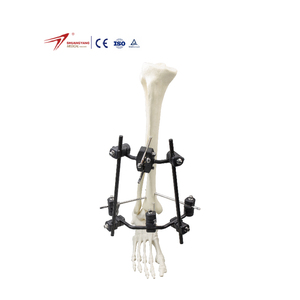
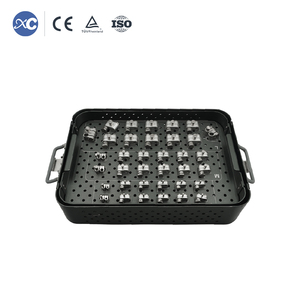
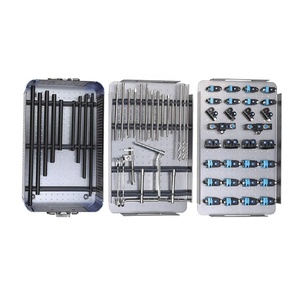
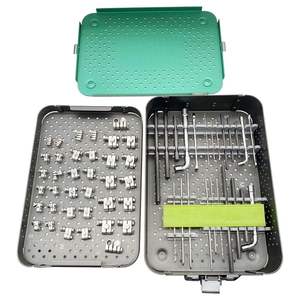
Engineered from surgical-grade German Stainless Steel and Titanium Alloys. Designed for rigid fracture reduction, bone plate stabilization, and trauma realignment.
Technical Whitepaper: Biomechanical Mechanics & Engineering Standards of Bone Holding Forceps
Bone holding forceps serve as the mechanical bedrock in modern orthopedic trauma, reconstructive osteotomy, and joint arthroplasty procedures. The primary clinical function of a bone reduction clamp or bone holding forceps is to exert uniform, slip-resistant clamping force across fractured bone fragments (femur, tibia, humerus, radius, and pelvic ring) without inducing cortical crushing or localized avascular necrosis. As a specialized CE Certified Bone Holding Forceps Manufacturer & Supplier, our engineering standards integrate advanced clinical biomechanics, precise jaw kinematics, and high-grade metallurgical forging.
1. Kinematic Reduction Systems and Lock Mechanisms
Modern surgical protocols demand varying mechanical advantage ratios based on bone geometry, soft-tissue envelope tension, and fracture orientation (oblique, transverse, comminuted, or spiral). Bone holding instruments utilize three main structural engagement designs:
- Speed-Lock Threaded Mechanism: Features an ergonomic knurled nut sliding over a precision-machined threaded bar. This system allows surgeons to apply micro-calibrated tactile clamping force, maintaining precise interfragmentaries compression without manual hand tension fatigue.
- Self-Centering Forceps (Verbrugge & DeBakey Patterns): Designed with dual-pivot joints that allow the jaws to adjust dynamically to tapered diaphysis and epiphysis profiles, distributing radial load evenly across opposing cortical walls.
- Ratcheted Multi-Position Assembly: Provides discrete step-locking increments for rapid temporal stabilization during emergency open reduction and internal fixation (ORIF) procedures.
Clinical Engineering Insight: Excessive mechanical compression (>120 N) applied to cortical bone can trigger micro-fractures along Haversian canals. Our bone holding forceps feature radius-contoured serrations and calibrated tension stops to prevent localized strain concentration while guaranteeing anti-slip axial resistance.
2. Material Science Benchmark: German AISI 420 vs. Titanium Grade 5 (Ti-6Al-4V)
Selecting the optimal alloy composition is paramount for instrument longevity, fatigue life, and magnetic resonance imaging (MRI) compatibility. Below is the structural material comparison matrix utilized in our manufacturing facilities:
| Engineering Property | AISI 420 Martensitic Stainless Steel | Titanium Alloy (Ti-6Al-4V Grade 5) | Carbon-Fiber Composite (Fixator Components) |
|---|---|---|---|
| Tensile Strength (MPa) | 1600 - 1900 MPa | 950 - 1050 MPa | 700 - 1200 MPa |
| Rockwell Hardness (HRC) | 50 - 54 HRC | 36 - 42 HRC | N/A (Rigid Polymer Matrix) |
| Corrosion Resistance | High (Passivated Cr-Oxide layer) | Exceptional (Immune to saline pitting) | Complete Chemical Inertness |
| Radiolucency (X-Ray/CT) | Opaque (High attenuation) | Semi-Radiolucent (Minimal artifact) | 100% Radiolucent (Zero X-Ray artifact) |
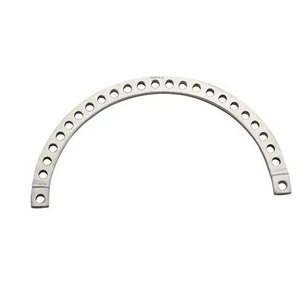
| Primary Clinical Application | Handheld Bone Reduction Forceps | Lightweight Implants & Premium Forceps | External Fixation Transfixation Rings |
Global Procurement Trends & Future Market Outlook (2025–2030)
The global orthopedic surgical instrument market is undergoing a seismic paradigm shift driven by stringent regulatory frameworks, the rapid expansion of veterinary orthopedics, and the rising adoption of Minimally Invasive Surgery (MIS) techniques. B2B medical procurement officers, hospital purchasing groups, and regional distributors must adapt to several critical market vectors:
1. Transition to EU MDR 2017/745 and Stringent CE Compliance
Under the European Union’s Medical Device Regulation (EU MDR 2017/745), reusable surgical instruments—including bone holding forceps, bone reduction clamps, and external fixators—are subject to heightened technical documentation, UDI (Unique Device Identification) laser etching, and rigorous clinical evaluation protocols. Manufacturers without certified ISO 13485 quality management systems and full raw-material heat-lot traceability are being phased out of European and tier-1 global healthcare networks.
2. Demand for Hybrid Radiolucent & Carbon Fiber Reduction Systems
Intraoperative C-arm fluoroscopy is standard in complex trauma reconstruction. Traditional stainless steel forceps obstruct real-time intraoperative radiographs. Consequently, modern surgical suites are increasingly adopting carbon-fiber reinforced clamps and titanium-jaw hybrid forceps that allow unhindered visualization of fracture line alignment during plate and screw fixation.
3. Surge in Specialized Veterinary Orthopedic Trauma Systems
Veterinary orthopedics has emerged as one of the fastest-growing surgical sub-sectors globally. Small animal trauma procedures (canine/feline femoral fractures) and equine distal limb stabilization require scaled-down, high-precision bone reduction tools—such as mini-plate holding forceps, Kern bone forceps, and adjustable external fixator kits. OEM suppliers capable of offering dual-spec human and veterinary instrument manufacturing are capturing significant market share.
Strategic Procurement Advisory: When procuring bulk orthopedic sets, hospital supply managers should demand certified 24-hour boiling test reports and copper sulfate corrosion test data to guarantee instrument longevity over thousands of steam autoclave cycles.
Frequently Asked Questions (FAQ) for B2B Buyers & Surgical Distributors
Direct technical and commercial answers addressing key concerns of hospital procurement teams, medical device importers, and OEM brands.
Enterprise Competencies: Why Partner With Our Manufacturing Hub?
Headquartered in Sialkot, Pakistan—the premier global manufacturing center for precision surgical instrumentation—our enterprise combines over 30 years of traditional artisanal forging expertise with modern 5-axis CNC machining, EDM wire cutting, and automated polishing technologies.
Vertical Manufacturing Control
From raw forging die fabrication to final cleanroom packaging, 100% of production processes are executed in-house, ensuring complete quality oversight and strict cost control.
Rigorous Multi-Point QC
Every single forcep undergoes dimension verification, jaw alignment check under magnification, boiling test for passivation integrity, and Rockwell hardness testing before release.
Global Export Logistics
Serving healthcare networks, military field hospitals, and veterinary clinics across 18+ countries including the USA, Philippines, Malaysia, Indonesia, Germany, and the UK.