CE Certified Neurosurgical Forceps & Instrument Sets
Direct factory supply of high-grade stainless steel and titanium alloy neurosurgical forceps sets engineered for craniotomy, micro-vascular, and spine procedures.
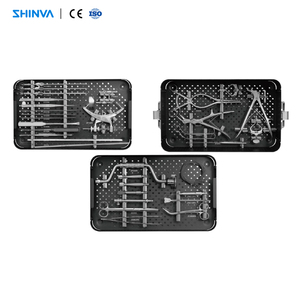
SHINVA Craniotomy Instruments Set Neurosurgery Instruments Set
Contact Us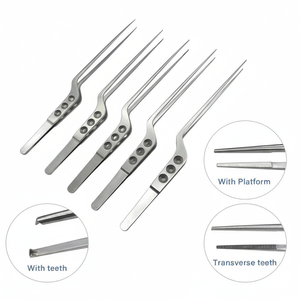
Neurosurgery Micro Tweezers Set of 5 pcs Surgery Forceps With teeth Neuro
Contact Us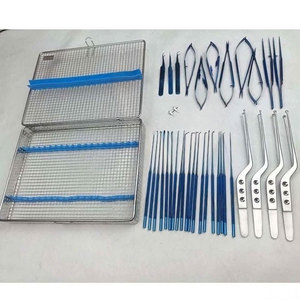
Neurosurgery Instruments Set Titanium Coated Micro Surgical Tools
Contact Us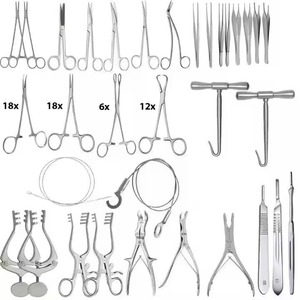
Professional Craniotomy Spine Instruments Set Stainless Steel Forceps
Contact Us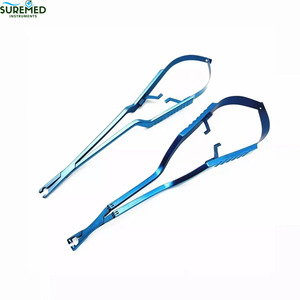
2 Pcs Neurosurgical Aneurysm Clip Forceps Set Stainless Steel
Contact Us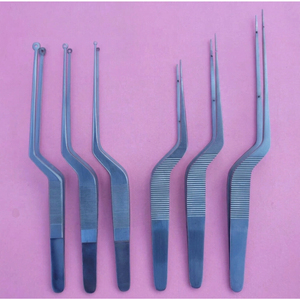
Neurosurgical Yasargil Tumor & Micro Bayonet Forceps Set of 6
Contact Us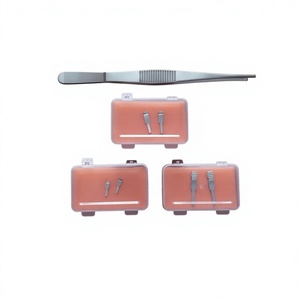
High Quality 7 Pcs Micro Vascular Clamps Forceps Set German Stainless
Contact Us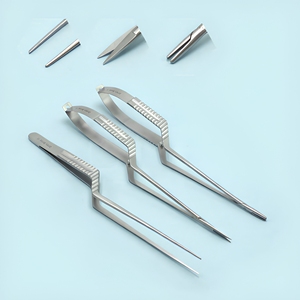
Yasargil Micro Bayonet Scissors Needle Holder Forceps Set 9 Inch
Contact Us1. Executive Summary & Regulatory Evaluation Framework
Neurosurgical procedures represent the zenith of surgical precision, where instrument performance directly impacts patient neurological outcomes. In modern neurosurgery—encompassing craniotomies, micro-vascular clip applications, acoustic neuroma resections, and complex spinal laminectomies—the tactile feel, tip alignment accuracy, spring tension stability, and corrosion resilience of surgical forceps are non-negotiable quality metrics.
This technical whitepaper provides healthcare procurement directors, medical equipment distributors, hospital supply chain executives, and OEM brand owners with a comprehensive evaluation framework for sourcing CE Certified Neurosurgical Forceps Sets from specialized manufacturing factories. Sourcing directly from accredited manufacturing centers like Sialkot, Pakistan—the global hub responsible for over 70% of the world's hand-crafted surgical instruments—allows institutional buyers to achieve optimized cost structures without compromising metallurgical integrity or CE MDR (EU 2017/745) regulatory compliance.
Premium Alloy Metallurgy
Utilizing high-grade German (X20Cr13 / X30Cr13) stainless steel, French surgical steels, and Grade 5 Titanium alloys (Ti-6Al-4V) for non-magnetic, ultra-lightweight micro-dissection.
CE MDR & ISO 13485 Certified
Full regulatory compliance under European Medical Device Regulation (EU 2017/745), US FDA 510(k) traceability, and rigorous ISO 13485 quality management systems.
Sub-Millimeter Tip Geometry
Micro-bayonet designs featuring 0.3mm to 0.9mm tips, micro-serrations, 1x2 teeth interlocking, and tungsten carbide (TC) inserts for micro-vascular stability.
2. Engineering & Manufacturing Standards: The Sialkot Legacy
The manufacture of high-precision neurosurgical forceps requires a delicate balance of advanced automated CNC engineering and time-honored artisan metallurgy. For over 30 years, Warsi Surgical Industries has operated at the epicenter of surgical instrument manufacturing in Sialkot, Punjab, Pakistan, serving institutional clients across 18+ countries including North America, Europe, Southeast Asia (Philippines, Malaysia, Indonesia), and the Middle East.
2.1 Raw Material Sourcing & Chemical Composition
The structural life cycle of a neurosurgical forceps set depends entirely on initial steel selection. Substandard steel grades risk intergranular corrosion, pitting during autoclave thermal cycles, or permanent tip alignment failure under lateral shear forces. Certified factories implement strict spectral chemical checks on incoming raw materials:
- Martensitic Stainless Steel (AISI 420A/420B / DIN 1.4021): Sourced directly from premier mills in Japan and France, providing optimum tensile strength (HRC 50–54) after heat treatment while preserving spring resilience.
- Austenitic Non-Magnetic Steel (AISI 316L): Utilized for non-active structural components requiring complete immunity to magnetic fields during intraoperative MRI procedures.
- Medical Grade Titanium Alloy (Ti-6Al-4V Grade 5): Delivers a 40% reduction in weight compared to steel, eliminating hand fatigue during 8+ hour microsurgical procedures. Titanium forceps are completely rust-proof and MRI-compatible.
- Tungsten Carbide (TC) Gold-Handle Inserts: Micro-grained tungsten carbide plates brazed into forceps jaws via vacuum silver soldering to provide unparalleled grip hardness and wear protection when manipulating suture needles.
| Material Specification | Hardness (Rockwell C) | Corrosion Resistance | Autoclave Life Expectancy | Primary Clinical Application |
|---|---|---|---|---|
| German AISI 420 Stainless | 50 - 54 HRC | Very High | 1,000+ Sterilization Cycles | Standard Craniotomy & Tissue Grasping |
| Ti-6Al-4V Grade 5 Titanium | 36 - 40 HRC | Exceptional (100%) | 2,500+ Sterilization Cycles | Micro-Bayonet & Intraoperative MRI Surgery |
| Tungsten Carbide (TC Jaws) | 70 - 75 HRC | High (Passivated) | 1,500+ Sterilization Cycles | Micro-Needle Drivers & Bone Grasping |
| Non-Stick Titanium Coated Steel | 52 - 56 HRC | Superior | 1,200+ Sterilization Cycles | Bipolar Electrosurgical Hemostasis |
2.2 Precision Manufacturing Workflow Architecture
To guarantee that every forceps tip closes with absolute parallelism and exact spring force, our manufacturing facility follows an 8-stage quality-controlled production workflow:
- CAD/CAM 3D Prototyping & Micro-Milling: Engineering digital blueprints for custom shaft geometries, bayonet angles, and handle knurling patterns.
- Drop Forge Stamping & CNC Shaping: Precision forging using D-2 steel dies, followed by 5-axis CNC machining to form the basic shank and bayonet bend.
- Computerized Vacuum Heat Treatment: Hardened in a computerized vacuum furnace imported from the UK, ensuring consistent metallurgical grain size without surface oxidation.
- Hand-Fitted Jaw & Tooth Milling: Master artisans under 20x magnification microscopes hand-file the micro-teeth (1x2 interlocking) and serrations (0.2mm depth).
- Multi-Phase Electropolishing & Passivation: Chemical passivation (ASTM A967 compliant) in nitric acid baths to remove free iron particles, establishing a self-healing chromium oxide anti-rust layer.
- Coating Application (Titanium Nitride / Black Oxide): Optional physical vapor deposition (PVD) titanium coating for non-glare intraoperative visibility under surgical lights.
- Boil & Autoclave Quality Validation: 100% batch testing via 30-minute boil test and copper sulfate immersion test to verify zero rust potential.
- Laser UDI Etching & Sterile Packaging: Unique Device Identification (UDI) laser etching for hospital inventory traceability according to EU MDR standards.
3. Product Categorization & B2B Recommendation Matrix
Selecting the appropriate neurosurgical forceps configuration depends heavily on surgical access depth, tissue sensitivity, and instrument balance. Below is an expert categorization of core forceps sets available for OEM manufacture and bulk factory procurement.
Yasargil Micro-Bayonet Forceps Sets
Designed with a double-curved bayonet shank that keeps the surgeon's hand completely outside the line of sight under the operating microscope. Essential for deep-seated intracranial tumors, transsphenoidal procedures, and cerebellopontine angle resections.
Aneurysm Clip Applying Forceps
Engineered with precise spring tension and custom clip-latching jaws designed to securely hold and articulate micro-vascular clips (Yasargil pattern) without slippage or mechanical distortion during intracranial aneurysm clamping.
Micro-Vascular Clamps & Tweezers Sets
Ultra-fine 0.3mm to 0.5mm tip tweezers with delicate cross-serrations or 1x2 teeth. Ideal for micro-anastomosis, peripheral nerve repair, plastic surgery, and delicate dural closure.
4. Future Trends in Neurosurgical Forceps Manufacturing (2025–2030)
As neurosurgery transitions toward ultra-minimally invasive techniques, neurosurgical robot integration, and intraoperative real-time imaging, forceps manufacturing is undergoing key technological shifts:
4.1 Non-Stick Thermal Management Alloys for Bipolar Forceps
One of the primary historical challenges in electrosurgical neuro-hemostasis is tissue charring and adherence to forceps tips during coagulation. Future procurement trends focus heavily on Solid Silver Alloy Tips and Copper-Core Thermal Dispersive Forceps. These advanced alloys rapidly conduct thermal energy away from the tip surface, eliminating tissue sticking and reducing intraoperative interruptions for tip scraping.
4.2 3D-Printed Titanium Lattice Handles
Additive manufacturing (Selective Laser Melting - SLM) allows factories to create hollow, matrix-structured titanium handles. This reduces total instrument weight by up to 55% while maintaining structural rigidity, providing neurosurgeons with unmatched tactile feedback during micro-dissection of eloquent brain regions.
4.3 Smart RFID & Laser UDI Tracking Integration
Global regulatory mandates—specifically US FDA GUDID and EU EUDAMED—require direct part marking (DPM) on reusable surgical instruments. Modern production lines now incorporate high-contrast femtosecond laser marking capable of withstanding over 1,500 sterilization cycles without fading, enabling automated hospital tray assembly and real-time lifecycle tracking.
5. Institutional B2B Procurement Strategy & Enterprise Advantages
When selecting a factory partner for wholesale or OEM surgical instrument production, procurement officers must balance production volume capabilities, unit pricing, quality assurance warranties, and shipping logistics.
6-Month Replacement Guarantee
We stand behind our craftsmanship with a comprehensive 6-month hassle-free return and replacement policy for any instrument exhibiting manufacturing defects.
Direct Factory Pricing
Eliminate middleman markups by purchasing directly from our Sialkot manufacturing plant. Lowest factory-direct price guaranteed for high-volume hospital orders.
Global Logistics & OEM Support
With regional export hubs in Pakistan, the Philippines, and the USA, we deliver rapid air/sea freight, custom laser labeling, and private-label packaging worldwide.
B2B Procurement & Technical FAQ
Answers to common technical, regulatory, and ordering questions from hospital procurement officers and medical device distributors.
Are your neurosurgical forceps sets fully CE Certified under the new EU MDR?
Yes. All neurosurgical forceps and instrument sets manufactured by Warsi Surgical comply with the European Union Medical Device Regulation (EU MDR 2017/745) and hold valid CE compliance certification alongside ISO 13485:2016 quality system accreditation.
What stainless steel grades are utilized in your factory?
We primarily use imported German AISI 420A/420B stainless steel and French medical-grade stainless steel. For lightweight microsurgical instruments, we utilize Grade 5 Titanium Alloy (Ti-6Al-4V) for non-magnetic, corrosion-free performance.
Do you offer custom branding, logo laser etching, and OEM packaging?
Absolutely. We provide comprehensive OEM/ODM manufacturing services, including custom tip geometry modification, laser etching of brand logos and catalog numbers, UDI barcode marking, and customized sterile or non-sterile kit packaging.
What is your quality guarantee and return policy for defective items?
We provide a 6-month product warranty. If any instrument exhibits material flaws, tip misalignment, or corrosion during normal clinical use and sterilization within 6 months, we replace or repair the item free of charge.
How many autoclave sterilization cycles can these instruments withstand?
Our vacuum heat-treated and chemically passivated stainless steel forceps are validated for over 1,000 steam autoclave cycles (134°C / 273°F at 2.1 bar) in compliance with ISO 17665 standards, while Titanium models withstand 2,500+ cycles.
What are your Minimum Order Quantities (MOQ) and sample lead times?
For standard catalog forceps sets, our minimum order quantity starts at just 5 sets. Evaluation samples can be dispatched within 7–10 business days, with bulk production lead times ranging between 2 to 4 weeks depending on order volume.
Partner Directly with a Certified Neurosurgical Instrument Manufacturer
Get direct access to factory pricing, custom prototyping, high-volume manufacturing, and global export support. Request a custom quote or technical catalog today.
Contact Us