Featured Surgical Systems & Fixation Instruments
Explore our CE-marked, medical-grade arthroscopy and orthopedic instrumentation series precision-manufactured for trauma centers, veterinary surgery, and specialized clinical environments worldwide.
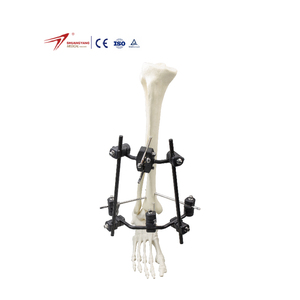
Unilateral Tibial & Femoral External Fixator Assembly
Get Catalog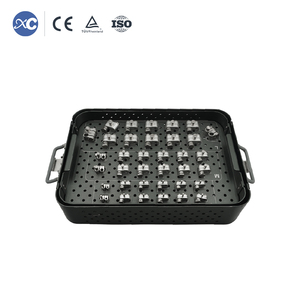
Veterinary Precision External Fixator Instrument Kit
Get Catalog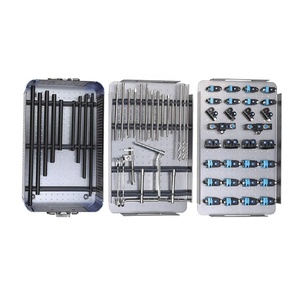
CE-Marked Titanium Alloy External Fixation System
Get Catalog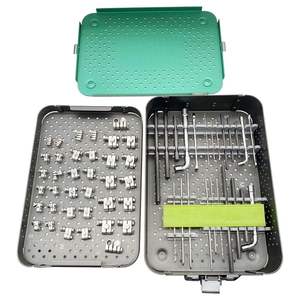
Reusable Metal Clamp Bone Fracture Repair Suite
Get Catalog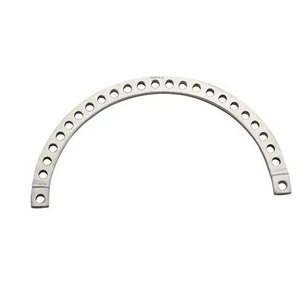
5-Piece Stainless Steel Half-Ring External Fixator
Get Catalog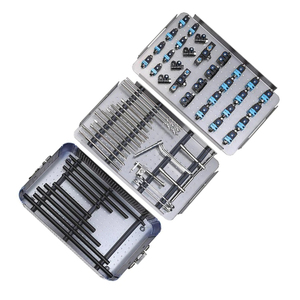
76-Piece Carbon Fiber Large Fragment Fixator System
Get Catalog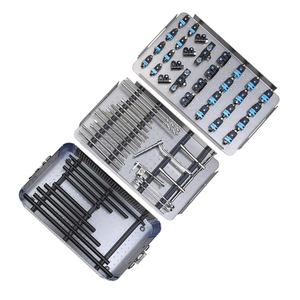
Full Modular General & Orthopedic Surgery Instrument Set
Get Catalog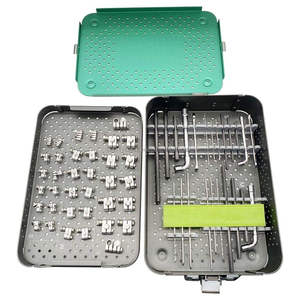
Veterinary Trauma Fixation Stainless Steel Clamp Kit
Get Catalog1. Medical-Grade Metallurgy & Precision Manufacturing Standards in China
Arthroscopic and orthopedic surgical instruments operate under extreme physical stresses, demanding exceptional material tensile strength, fatigue resistance, and absolute bio-inertness. China's top-tier surgical instrument factories have achieved global parity by integrating advanced metallurgy with automated 5-axis CNC machining centers, wire EDM (Electrical Discharge Machining), and vacuum heat-treatment processes.
To withstand repeated steam autoclave sterilization (134°C at 2.1 bar) without surface pitting, micro-cracking, or loss of tactile feedback, raw materials are strictly sourced according to international medical standards:
| Material Standard | Alloy Designation | Mechanical Properties & Tensile Strength | Primary Clinical Applications |
|---|---|---|---|
| ASTM F899 / ISO 7153-1 | Martensitic Stainless Steel (AISI 420 / 440C) | High hardness post-heat treatment (52–56 HRC); resistance to wear | Arthroscopy shaver blades, punches, graspers, osteotomes, bone cutters |
| ASTM F138 / ISO 5832-1 | Austenitic 316L Stainless Steel | Superior pitting resistance (PREN ≥ 26); non-magnetic properties | Surgical handles, outer cannulae, retractors, non-cutting components |
| ASTM F136 / ISO 5832-3 | Titanium Alloy (Ti-6Al-4V ELI) | High strength-to-weight ratio; low artifact interference under MRI | Fixation frames, lightweight arthroscopic handpieces, pediatric implants |
| Carbon Fiber Composite | Radiolucent CFRP Polymer | Radiolucent under X-ray/Fluoroscopy; ultra-high structural rigidity | Large fragment external fixators, spine & joint surgical positioning frames |
Advanced Processing & Surface Treatment Workflows
The manufacturing process of high-precision arthroscopic instruments follows a rigorous 8-stage manufacturing workflow:
5-Axis CNC Milling & EDM
Sub-micron tolerances (±0.005mm) achieved for complex jaw mechanisms, teeth serrations, and inner lumen shaft geometries.
Vacuum Heat Treatment
Computer-controlled vacuum furnaces (imported from Europe) prevent surface decarburization, ensuring precise Rockwell C hardness (HRC 52-58).
ASTM F1089 Chemical Passivation
Multi-stage nitric/citric acid bath removes free iron contaminants, generating a robust passive chromium oxide layer for lifetime corrosion protection.
2. Next-Generation Technological Trends in Arthroscopy Instrumentation
The global field of minimally invasive surgery (MIS) is transitioning rapidly toward micro-arthroscopy, high-definition visualization, and specialized tissue preservation. Chinese manufacturers are investing heavily in R&D to meet the emerging demands of modern orthopedic centers:
A. Ultra-Miniaturized & Needle Arthroscopy Systems
Traditional knee and shoulder arthroscopy utilizes 4.0mm rigid endoscopes and 5.0mm outer cannulae. Next-generation diagnostic and therapeutic procedures are shifting toward 1.9mm and 2.7mm needle arthroscopes. This requires corresponding micro-punches, micro-graspers, and flexible radiofrequency (RF) probes capable of operating through sub-3mm portals without compromising structural strength or tactile feedback.
B. Hybrid Reusable-Disposable Toolkits
Hospitals and Ambulatory Surgical Centers (ASCs) are adopting hybrid procurement models to balance infection control against total cost of ownership. While high-wear items like rotatable arthroscopy shaver blades and electrosurgical ablation tips are designed as single-use disposable devices, high-cost handpieces, punches, and grasper handles are engineered for 500+ autoclave sterilization cycles using PEEK (Polyether Ether Ketone) and titanium-coated stainless steel.
C. Advanced Surface Coatings & Friction Reduction
To eliminate galling and mechanical friction within long, thin-walled arthroscopic shafts, modern instrument builders apply Titanium Nitride (TiN), Diamond-Like Carbon (DLC), and Ceramic Passivation Coatings. DLC coatings reduce the coefficient of friction to below 0.1, ensuring smooth single-handed operation during prolonged rotator cuff or ACL/PCL reconstruction procedures.
3. Strategic B2B Procurement Trends for Hospital Groups & Distributors
Global supply chain diversification, regulatory scrutiny, and cost-containment mandates are transforming how international medical equipment distributors select OEM/ODM partners in China. Successful procurement strategies rest on three vital pillars:
Regulatory Compliance Architecture
Ensure suppliers possess verifiable ISO 13485:2016 Quality Management Systems, CE MDR (EU 2017/745) certificates, and FDA 510(k) clearances for class II medical devices.
Traceability & Material Testing
Demand Raw Material Mill Test Certificates (MTC) according to EN 10204 3.1, along with batch-level passivation, boil-test logs, and laser marking for UDI tracking.
OEM Custom Prototyping Capabilities
Evaluate factory R&D depth by requesting custom 3D CAD design modifications, rapid turnaround on sample tooling, and custom laser engraving services.
Total Cost of Ownership (TCO) Procurement Formula
Leading hospital procurement officers look beyond FOB unit price. A realistic evaluation of surgical tool supply chains factors in cycle longevity, repair index, and risk mitigation:
TCO = Direct Acquisition Cost + (Sterilization Cycles × Operating Cost) - (Resale/Recycling Value) + (Defect Risk Cost × Failure Rate)
High-grade Chinese factories offer up to 40% savings in direct acquisition cost compared to Western brands while matching mechanical lifespan specs, providing significant enterprise margins for overseas importers.
4. Enterprise Advantages: Engineering Excellence & Supply Chain Integration
Combining over 30 years of specialized manufacturing tradition with modern automated production infrastructure, our ecosystem represents the benchmark for Chinese medical device manufacturing and export:
100% In-House Production Control
From initial forging dies to final vacuum heat treatment, CNC grinding, and ultrasonic cleaning, every stage occurs under strict ISO 13485 cleanroom conditions.
Rigorous Multi-Stage Quality Assurance
Every single instrument undergoes copper sulfate testing for free iron, 4-hour boil testing for rust susceptibility, optical comparator dimensional audits, and functional grip force testing.
Global Export Infrastructure
Dedicated international sales and logistical support operating across North America, Europe, the Philippines, Malaysia, and over 18 countries with comprehensive customs compliance support.
5. Frequently Asked Questions (FAQ) for B2B Importers & Procurement Officers
Partner with China's Leading Surgical Instrument Manufacturer
Request our complete 2025/2026 Arthroscopy & Orthopedic Instrumentation Master Catalog, complete with engineering specifications, wholesale price lists, and OEM contract manufacturing guidelines.