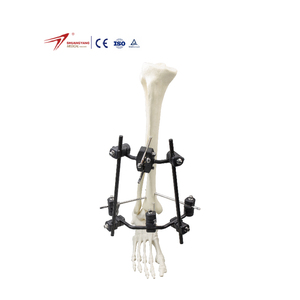
Featured Surgical Systems
Precision External Fixation & Orthopedic Instrument Sets
Explore our export-ready surgical kits manufactured with CNC precision machining, biocompatible titanium alloys, and vacuum heat-treated stainless steel.
Vet Orthopedic Instruments Fracture Bone Fixation Veterinary External Fixator Set
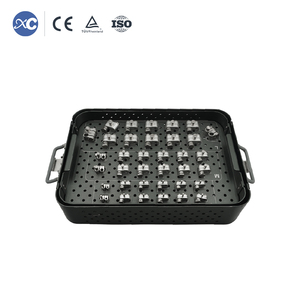
CE Marked Orthopedic External Fixation Instrument Set Titanium Alloy Aluminum Case
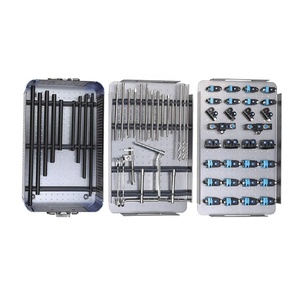
Veterinary Orthopedic External Fixator Set Reusable Metal Clamp Kit for Bone Fracture Repair
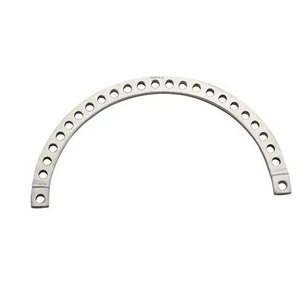
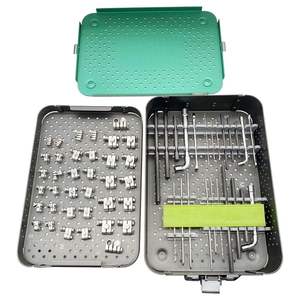
Orthopedic Half Ring External Fixator Set 5 PCS Surgical Instrument Stainless Steel
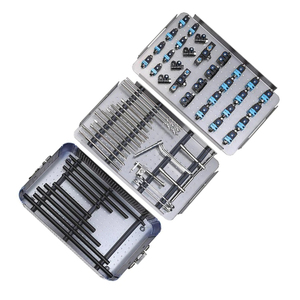
76pcs Large Fragment External Fixator Instrument Set Carbon Fiber External Fixation System Kit
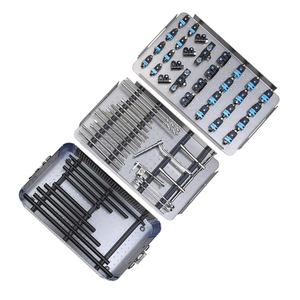
FIDA International External Fixator Set Orthopedic Instrument Kit Stainless Steel Manual Surgery
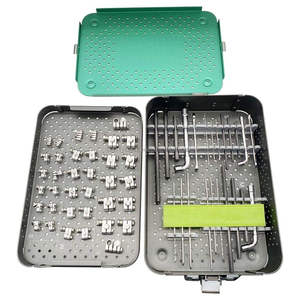
Orthopedic Fracture Bone Fixation Veterinary Surgery External Clamp Fixator Set
Executive Summary: China's Role in Next-Generation Spinal Instrumentation Manufacturing
The global spinal surgery market has undergone a paradigm shift over the past decade, driven by an aging global demographic, increasing prevalence of degenerative disc disorders, and rapid clinical advancements in Minimally Invasive Spine Surgery (MISS). As healthcare systems worldwide demand a stringent balance between clinical efficacy, bio-mechanical reliability, and fiscal sustainability, searching for a China Best Spinal Fusion Instruments Manufacturer & Suppliers has shifted from a cost-reduction tactical decision to a strategic supply chain imperative for major orthopedic brands, hospital procurement networks, and medical device distributors.
Spinal fusion procedures—encompassing Anterior Lumbar Interbody Fusion (ALIF), Posterior Lumbar Interbody Fusion (PLIF), Transforaminal Lumbar Interbody Fusion (TLIF), and Extreme Lateral Interbody Fusion (XLIF), alongside cervical pedicle screw fixation—require surgical instruments engineered to sub-millimeter tolerances. China’s advanced medical instrument manufacturing ecosystem combines ultra-precision multi-axis CNC Swiss machining, metallurgy innovations in titanium Grade 5 (Ti-6Al-4V ELI) and PEEK-OPTIMA polymers, and strict ISO 13485 quality management frameworks. This comprehensive whitepaper explores the technological capabilities, quality control protocols, procurement trends, and engineering standards that define top-tier Chinese spinal fusion instrument manufacturers.
Key Takeaway for B2B Buyers: Modern Chinese spinal instrument manufacturers operate under full compliance with ISO 13485, CE Medical Devices Regulation (MDR 2017/745), and US FDA 21 CFR Part 820 standards. Sourcing directly from tier-1 original equipment manufacturers (OEMs) provides access to custom CAD/CAM prototyping, 24-hour passivation integrity, and substantial cost advantages without sacrificing intraoperative precision.
30+
Years Industry Expertise
±0.005mm
CNC Machining Precision
100%
Passivation & QC Audit
18+
Export Nations Served
Enterprise Strengths & Manufacturing Ecosystem
Achieving clinical excellence in spine surgery requires an uncompromising commitment to manufacturing process control. A top China spinal fusion instrument supplier relies on integrated, full-cycle in-house production facilities to eliminate quality variance. The core manufacturing pillars of our manufacturing partner network include:
5-Axis CNC & EDM Swiss Milling
Utilizing high-precision Japanese Tsugami and German DMG MORI CNC milling machines to produce intricate geometries for Kerrison Rongeurs, pedicle screw drivers, and laminectomy retractors.
Raw Material Traceability
Every batch of Titanium alloy (Ti-6Al-4V ELI grade 5, ASTM F136) and Surgical Stainless Steel (AISI 316L, 17-4PH, Custom 455) is imported with raw material mill test certificates (MTC).
Vacuum Heat Treatment
Advanced computer-controlled vacuum furnace systems imported from the UK achieve precise Rockwell C hardness (HRC 48-52 for cutting instruments), ensuring long-lasting edge retention without embrittlement.
Electropolishing & 24h Passivation
Submersed in specialized chemical passivation tanks for 24 hours to create a dense, corrosion-resistant chromium oxide passive layer, preventing pitting under repeated autoclave steam cycles.
Comprehensive QC Lab Audit
Every finished lot undergoes 100% inspection including boil testing, salt-spray corrosion tests, coordinate measuring machine (CMM) dimensional checks, and tactile force calibration.
OEM Customization & Laser Marking
Comprehensive private label options. Laser marking of UDI barcodes, catalogue reference numbers, custom logo branding, and specialized color-anodized titanium coding.
Technical & Metallurgical Specifications Matrix
Surgical instruments used in spinal fusion must endure high mechanical fatigue, torque forces during pedicle screw insertion, and aggressive chemical washing cycles. Below is the technical composition matrix utilized by top Chinese spine instrument manufacturers:
| Instrument Category | Primary Material Grade | Manufacturing Standards | Surface Treatment / Coating | Autoclave Resistance |
|---|---|---|---|---|
| Spinal Pedicle Screw Drivers | Custom 455 / 17-4PH Stainless Steel | ASTM F899 / ISO 7153-1 | PVD Titanium Nitride (TiN) / Anodized | > 500 Autoclave Cycles |
| Kerrison Rongeurs & Bone Cutters | AISI 420B / High-Carbon German Steel | ISO 13485 / CE MDR | Black Ceramic / Diamond-Like Carbon (DLC) | > 800 Autoclave Cycles |
| Spine Retractor Systems (MIS) | Grade 5 Titanium (Ti6Al4V ELI) | ASTM F136 / ISO 5832-3 | Matte Anti-Glare Anodization | > 1000 Autoclave Cycles |
| External Fixator Clamps & Rods | 316L SS & Carbon Fiber Polymer | ISO 14637 / CE Certified | Electropolished / Carbon Weave Matte | > 600 Autoclave Cycles |
| Bone Curettes & Osteotomes | AISI 316L / 420 High Hardness SS | ASTM F899 Specifications | Passivated 24h / Mirror Finish | > 700 Autoclave Cycles |
Global Development Trends in Spinal Fusion Instrumentation
The spinal surgery device domain is experiencing rapid technological refinement. Leading Chinese manufacturers are investing heavily in R&D to align with next-generation clinical demands. Key market evolution trends include:
1. Integration of Minimally Invasive Surgery (MISS) Toolkits
Open posterior lumbar fusion is increasingly being supplemented by minimally invasive approaches. Instruments are now engineered with micro-cannulated channels for guide wires, expandable tubular retractor systems, and ergonomic bayoneted shafts that keep the surgeon’s line of sight unobstructed under surgical microscopes or endoscopes.
2. Carbon-Fiber and Radiolucent Material Adoption
Intraoperative X-ray and C-arm fluoroscopy require instruments that do not obscure critical anatomical structures. The adoption of radiolucent carbon fiber rods in external fixators and PEEK-OPTIMA trial implants ensures seamless real-time imaging during pedicle screw trajectory validation and interbody cage positioning.
3. 3D Printing & Patient-Specific Custom Instrumentation (PSI)
Additive manufacturing utilizing Selective Laser Melting (SLM) allows for rapid prototyping of patient-specific spinal alignment guides, custom osteotomy templates, and porous titanium interbody cages with trabecular structure matching human cancellous bone.
4. Robotic-Assisted Surgery Compatibility
With the rise of surgical robotics (such as Mazor, Rosa, and Globus systems), modern spinal instrument sets are designed with optical tracking markers, calibrated sleeve adapters, and standardized coupling interfaces for seamless robotic navigation integration.
Future Procurement Trends for Global B2B Buyers
Navigating international orthopedic device procurement requires analyzing macro-economic trends and regulatory shifts. Healthcare procurement officers and OEM buyers should prepare for several key shifts over the next 3 to 5 years:
Strategic Procurement Insight: China's Volume-Based Procurement (VBP) policy has streamlined domestic supply chains, forcing top-tier instrument makers to automate production, scale capacity, and offer unprecedented unit economics for international wholesale export.
A. Demand for Modular "All-in-One" Surgical Trays: Hospitals are increasingly moving away from standalone instruments toward integrated, color-coded modular trays. These trays house all necessary dilators, taps, screw drivers, and nerve retractors, reducing sterilizing tray volume and operating room setup times by up to 35%.
B. Direct Factory OEM/ODM Collaboration: Intermediate trading firms are being bypassed in favor of direct engineering partnerships with verified Chinese manufacturers. Direct collaboration facilitates custom blade thickness on Kerrison Rongeurs, customized handle ergonomics (e.g., silicone vs. textured stainless steel), and fast-tracked prototype iterations.
C. Stringent Regulatory Audit & Technical Files: B2B buyers now mandate complete MDR-ready technical documentation, including biocompatibility test reports (ISO 10993), cleaning validation protocols, and steam sterilization efficacy test certificates. Suppliers capable of providing comprehensive regulatory dossiers gain a decisive competitive advantage.
Procurement FAQ: Frequently Asked Questions
Essential answers for hospital buyers, medical device distributors, and procurement managers evaluating Chinese surgical instrument suppliers.
What quality certifications do top Chinese spinal instrument manufacturers hold?
Leading manufacturers hold ISO 13485:2016 Quality Management Certification for Medical Devices, CE Mark approval under the European Union Medical Device Regulation (MDR 2017/745), and NMPA registration. Many top suppliers also maintain US FDA 21 CFR Part 820 compliant facilities suitable for OEM distribution in North America.
What stainless steel and titanium grades are used in spinal fusion tools?
Implantable items and premium instruments use Ti-6Al-4V ELI (Grade 5 Titanium, ASTM F136). Surgical hand tools, bone clamps, and retractors utilize high-grade surgical stainless steel such as AISI 316L for corrosion resistance, 17-4PH for high torque resistance, and AISI 420 / Custom 455 for durable cutting edges.
Can manufacturers custom-design surgical kits for custom spine systems?
Yes. OEM/ODM customization is a primary strength. In-house CAD/CAM engineering teams can translate surgeon sketches or 3D STEP models into prototype instrument sets within 14 to 21 days, followed by full functional testing, laser engraving, and custom sterilizing container design.
How do suppliers guarantee rust prevention after repeated autoclave cycles?
Instruments undergo a 24-hour chemical passivation process according to ASTM A967 / ISO 16061 standards, removing free iron from the surface and establishing a thick passive chromium oxide layer. Every lot undergoes a boiling water test and salt spray test before final packaging to verify corrosion immunity.
What is the typical Minimum Order Quantity (MOQ) and production lead time?
For standard catalogue instruments (such as external fixators or standard bone curettes), MOQs start as low as 5 to 10 sets. For custom OEM specialized surgical kits, MOQs typically range from 20 to 50 sets. Lead times average 25 to 35 days depending on tooling complexity and surface coating requirements.
What post-sale warranty and quality assurances are offered?
Tier-1 Chinese manufacturers provide a comprehensive 6-month to 1-year product replacement warranty against material defects or mechanical failure under normal clinical usage. Defective instruments are evaluated and replaced directly without bureaucratic delays.
Partner with China's Premier Spinal Instrumentation Manufacturer
Request our complete 2026 PDF catalogue, technical CAD specifications, or a competitive OEM wholesale quotation. Our medical engineering team responds within 12 business hours.