Precision Orthopedic & External Fixation Solutions
Engineered for rapid traumatic stabilization, complex limb reconstruction, and craniomaxillofacial bone repairs. Made from high-grade titanium alloys, surgical-grade stainless steel, and radio-translucent carbon fiber composites.
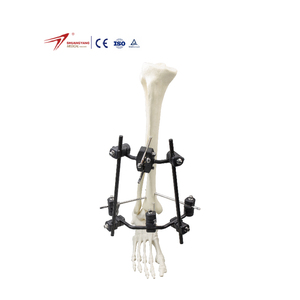
Indication: Tibia & Femur Fracture Reduction
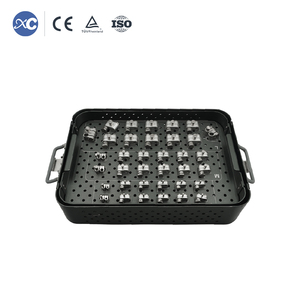
Feature: Multi-planar Pin Clamps
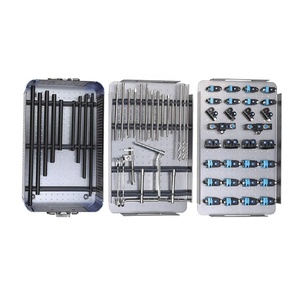
Storage: Autoclavable Sterilization Tray
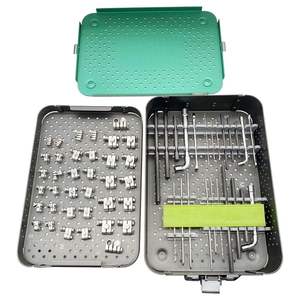
Durability: High Corrosion Resistance
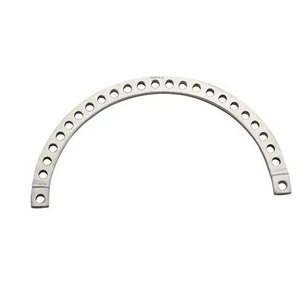
Grade: Medical Grade Stainless Steel
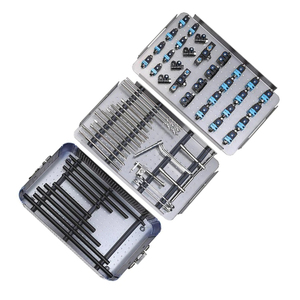
Application: Polytrauma & Complex Long Bone
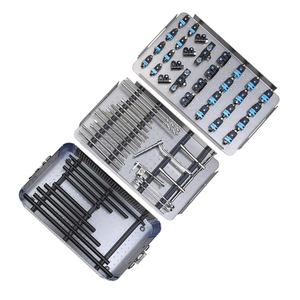
Passivation: ASTM F1089 Compliant
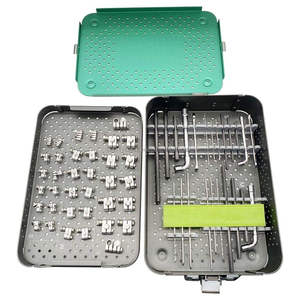
Target: Small-to-Medium Fracture Repair
Industry Whitepaper: Engineering Standards in Cranial & Traumatology Instrumentation
In modern neurosurgery, neuro-traumatology, and craniomaxillofacial (CMF) surgical disciplines, the performance margin of surgical instrumentation directly correlates with clinical outcomes and surgical efficiency. As a premier China Cranial Surgical Instruments Manufacturer & OEM Supplier, our facility integrates high-precision metallurgy, multi-axis computer numerical control (CNC) machining, and rigid bio-compatibility standards to produce tools engineered for delicate bone structures and high-stress cranial reconstruction.
Information Gain Insights: Surgical instruments used in cranial procedures require a dynamic balance between tactile feedback for the surgeon and zero micro-flexure during bone resection. The transition from standard 316L stainless steel to custom Ti-6Al-4V ELI (Grade 23 Titanium) and PEEK-based instrumentation reduces instrument-induced artifact interference during intraoperative CT/MRI scans by up to 92%.
1. Advanced Metallurgy & Biocompatible Materials Analysis
Cranial surgical tools, such as cranial drills, bone punches, Kerrison rongeurs, scalp flap retractors, and fixation plates, demand strict material purity. Our manufacturing protocols utilize raw materials imported under certified mill heat numbers:
| Material Type | Tensile Strength (MPa) | Biocompatibility Standard | Primary Surgical Application |
|---|---|---|---|
| Ti-6Al-4V ELI (Grade 23) | ≥ 860 | ISO 5832-3 / ASTM F136 | Cranial Mesh Plates, Fixation Screws, Cranial Clamps |
| AISI 420 / 440C Stainless Steel | 1600 - 1900 | ASTM F899 | High-cutting Cranial Chisels, Bone Cutters, Rongeurs |
| Radiolucent Carbon Fiber | ≥ 1200 | ISO 10993 | External Fixation Frame Rods, Intraoperative Rings |
| PEEK-OPTIMA Medical Polyetherketone | 100 - 170 | ASTM F2026 | Patient-Specific Cranial Implants (PSI), Trial Fixators |
2. Precision Manufacturing Matrix: From Forging to Vacuum Heat Treatment
Every cranial instrument undergoes an 8-stage precision manufacturing sequence. Raw forged bars are micro-machined using 5-axis Swiss-type CNC lathes and wire EDM (Electrical Discharge Machining) systems capable of achieving geometric tolerances within ±0.005mm.
Future Trends in Cranial & Traumatology Instrument Procurement (2025–2030)
Hospital procurement officers, surgical distributors, and global OEM partners must align their sourcing strategies with rapid technological shifts. Sourcing cranial and orthopedic surgical tools from top-tier Chinese manufacturers has evolved from pure cost optimization into a strategic partnership driven by technological integration:
Why Partner with Our Manufacturing Facility in China
With over three decades of medical device engineering expertise, our modern manufacturing complex spans advanced CNC machining centers, automated polishing lines, ISO Class 7 cleanrooms, and dedicated metallographic testing labs.