Flagship Surgical & External Fixation Catalog
Explore our ISO 13485 & CE certified surgical instrumentation and external fixation systems engineered for high-precision orthopedic and spinal interventions.
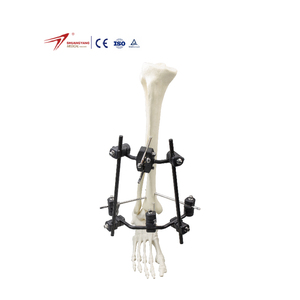
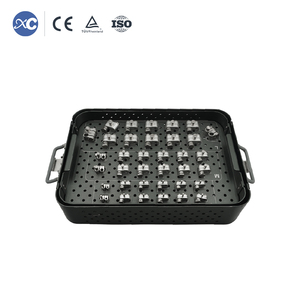
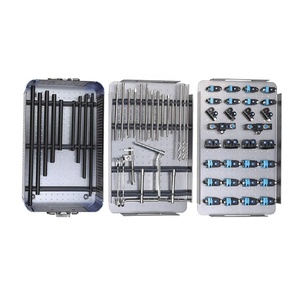
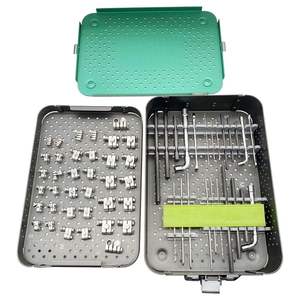
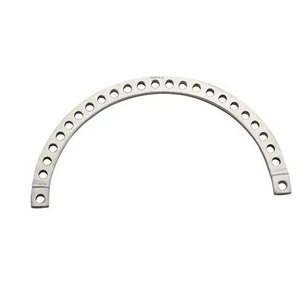
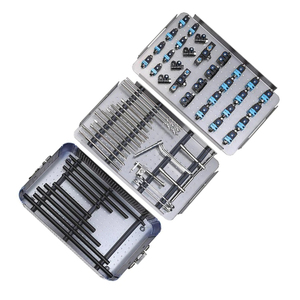
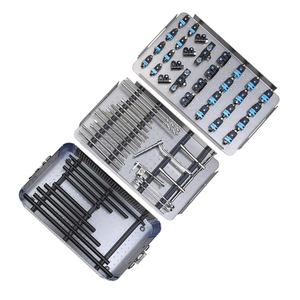
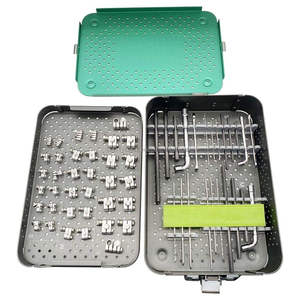
1. Technical Deep-Dive: Comprehensive Architecture of Modern Spinal Retractor Systems
In modern spine surgery—encompassing Anterior Cervical Discectomy and Fusion (ACDF), Posterior Lumbar Interbody Fusion (PLIF), Transforaminal Lumbar Interbody Fusion (TLIF), and Minimally Invasive Spine (MIS) procedures—the spinal retractor system is the foundational instrument that determines operative access, visualization clarity, and tissue preservation. As surgical protocols move aggressively toward smaller incisions and reduced postoperative recovery timelines, the performance demands on spinal retractor systems have escalated exponentially.
A high-performance spinal retractor system does not merely push muscle and soft tissue aside; it maintains a stable, illuminated, radiolucent portal while applying calibrated micro-pressure to safeguard vascular structures, nerve roots, and delicate spinal cords. Leading hospital procurement teams and global orthopedic distributors evaluate retractor suppliers based on mechanical fatigue resistance, blade interchangeability, light guide integration, and complete compatibility with intraoperative fluoroscopy (C-Arm) and 3D navigation guidance systems.
Core Structural Classification of Spinal Retraction Platforms
Spinal retractors are categorized into three clinical categories based on surgical approach and mechanical actuation:
Anterior Cervical Retractor Systems
Engineered for ACDF surgeries (e.g., Caspar-style and Williams-style platforms). Features longitudinal self-retaining frames, distraction blades with blunted teeth, and quick-connect handle assemblies to protect the esophagus, carotid sheath, and trachea while securing disc space exposure.
Posterior Lumbar & Thoracic Systems
Utilized in high-load open spinal reconstructions (McCulloch, Scoville, and Goldthwait configurations). Designed with double-hinged articulated arms, heavy-duty ratchet mechanisms, and deep anatomical blades ranging from 30mm to 150mm in length to retract dense paraspinal musculature.
Minimally Invasive (MIS) Tubular Systems
Progressive sequential dilator and expandable tube systems. Allows surgeons to split muscle fibers percutaneously rather than dissecting tissue. Integrated fiber-optic light cables illuminate deep operative channels for microdiscectomy and MIS-TLIF procedures.
2. Technical Evaluation Matrix: Comparing Spinal Retractor & Fixation Alloy Specifications
When selecting a Chinese manufacturing partner or B2B exporter, technical buyers must match raw material metallurgy and surface treatments with intended clinical uses. Below is a engineering comparison of materials used across premium spinal retractors and orthopedic fixation devices.
| Material / Material Class | Tensile Strength (MPa) | Radiolucency & Fluoroscopy Behavior | Corrosion & Sterilization Resistance | Recommended Clinical Application |
|---|---|---|---|---|
| Titanium Alloy (Ti-6Al-4V ELI Grade 5) | 860 - 960 MPa | High Radiolucency (Minimal scatter on C-Arm) | Exceptional (500+ Autoclave cycles without degradation) | MIS Tubular Retractor Systems, Micro-Spine Blades, Cervical Distractors |
| 316L Implant-Grade Stainless Steel | 620 - 750 MPa | Opaque (Causes shadow under X-Ray) | Superior Passivated Surface (ISO 16061 compliant) | Heavy-Duty Posterior Lumbar Retractor Frames, Bone Clamps, Unilateral Fixators |
| Carbon Fiber Reinforced PEEK | 180 - 230 MPa | 100% Fully Radiolucent (Zero X-Ray artifact) | Excellent chemical resistance to enzymatic washes | Radiolucent External Fixator Rods, Specialized Spinal Retractor Blades |
| Anodized Aircraft Aluminum (7075-T6) | 505 - 570 MPa | Semi-Radiolucent (Low mass density) | Anodized protective barrier against oxidation | Sterilization Storage Trays, Retractor Handle Grips, Quick-Connect Coupling Bars |
3. China Manufacturing Supremacy: Quality Assurance & Process Engineering
Over the past two decades, China has evolved into a global powerhouse for surgical instrument manufacturing and OEM device development. Integrating advanced 5-axis CNC machining, Swiss-type automatic lathes, wire-cut Electrical Discharge Machining (EDM), and vacuum heat treatment technologies imported from Europe, Chinese suppliers produce spinal retractor platforms that match German and American benchmarks at optimized cost structures.
Building on over 30 years of surgical toolmaking heritage—traceable to specialized medical manufacturing clusters in Sialkot and high-tech biomedical parks in Jiangsu, Zhejiang, and Guangdong—our certified facilities apply stringent multi-stage quality control mechanisms to every piece of hardware produced.
Multi-Phase Quality Control Protocol for Spinal & Fixation Instruments
To guarantee zero defect rates in critical surgical environments, our manufacturing workflow adheres to an 8-phase precision protocol:
Spectrometric Alloy Verification
Every batch of raw stainless steel and titanium is subjected to optical emission spectrometry to verify elemental purity, carbon threshold compliance, and nickel-chromium ratios before machining.
Vacuum Heat Treatment & Tempering
Components undergo computer-controlled vacuum heat treatment to refine grain structures, achieving optimal Rockwell hardness (HRC 42-48 for frames, HRC 48-52 for cutting teeth and ratchets) without surface oxidation.
Chemical Passivation & Boil Test
Instruments undergo 24-hour citric/nitric acid passivation according to ASTM A967 standards to remove free iron. Subsequent boiling water immersion testing verifies 100% resistance to pitting and corrosion.
4. Future Sourcing Trends: Next-Generation Spinal Retractor Innovations (2025–2030)
As healthcare systems worldwide focus on surgical efficiency, patient safety, and cost reduction, B2B buyers must align their supply networks with emerging technology shifts in spinal instrumentation:
A. Integration with Robotic Navigation & Free-Hand Guidance Arms
Modern spinal retractor systems are transitioning from passive manual tools to active digital nodes. Next-generation retractor frames feature universal mechanical interface sockets designed to clamp seamlessly to robotic surgical arms (such as Mazor, Globus ExcelsiusGPS, and Medtronic StealthAutoguide). This stability enables uninterrupted micro-retraction during automated pedicle screw drilling.
B. Carbon Fiber & Hybrid Radiolucent Construction
Traditional stainless steel retractors create significant intraoperative artifact cast under C-Arm fluoroscopy. The industry is rapidly migrating toward ultra-lightweight Carbon Fiber-Reinforced PEEK blades and hybrid titanium-alloy frames. These systems provide complete radiolucency, allowing surgeons to verify interbody fusion cage position without adjusting or removing retractor blades.
C. Modular, Single-Use Blade Modules with Integrated Cold Lighting
Hospital-acquired infection (HAI) control protocols are pushing hospital buying consortia toward disposable, sterile-packaged retractor blade tips and clip-on fiber-optic illumination conduits. By pairing reusable main frames with single-use, high-visibility LED light channels, surgical centers lower autoclave processing burdens and eliminate cross-contamination hazards.
D. Direct-to-Factory OEM & Custom Branding Solutions
Global orthopedic distributors are moving away from multi-tier brokerage networks in favor of direct manufacturing partnerships in China. Direct factory collaboration provides tailored laser marking, customized sterilization container configurations, customized blade lengths, and swift prototyping cycles (reducing product launching lead times from 12 months down to 8 weeks).
5. Comprehensive B2B Buyer FAQ: Sourcing Spinal Retractor Systems
Here are authoritative technical and commercial answers to frequently asked questions from hospital procurement officers, medical device distributors, and OEM buyers worldwide.
Q1: What international quality certifications do your spinal retractor systems carry?
Our manufacturing operations strictly comply with ISO 13485:2016 quality management systems for medical devices. Our flagship spinal and orthopedic instrument sets carry CE certification under MDR regulations and are compliant with FDA QSR 21 CFR Part 820 standards, ensuring seamless custom clearance across European, American, and Asian markets.
Q2: Can we order custom blade configurations, unique lengths, and private label laser branding?
Yes. As a leading manufacturer and exporter, we offer complete OEM/ODM customization services. Our in-house engineering team uses SolidWorks CAD and CAM modeling to produce custom blade geometry (curved, blunted, serrated, or fenestrated) in lengths from 30mm to 180mm. Laser logo marking, custom part numbering, and personalized anodized color coding are fully supported.
Q3: How do your titanium retractor systems compare against traditional stainless steel sets?
Titanium alloy (Ti-6Al-4V ELI) retractor systems are approximately 40% lighter than stainless steel equivalents, reducing hand fatigue during prolonged surgical holds. Furthermore, titanium exhibits superior radiolucency under intraoperative fluoroscopy, allowing clear visualization of bone structures without heavy metallic reflection shadows.
Q4: What is your standard Minimum Order Quantity (MOQ) and production lead time for bulk orders?
For standard catalog instrument sets and external fixators, our MOQ starts at 5 to 10 sets to accommodate market trials. For custom OEM designs, the typical MOQ is 20 to 50 sets depending on manufacturing complexity. Delivery lead time ranges from 15 to 25 working days after order confirmation and deposit receipt.
Q5: How do you prevent rusting and surface pitting after repeated autoclave cycles?
All stainless steel components are processed through ultrasonic cleaning, automated electropolishing, and 24-hour chemical passivation treatment in accordance with ASTM A967 protocols. This creates an impenetrable chromium-oxide passive layer that resists aggressive enzymatic detergents and high-temperature steam autoclaving (134°C / 273°F).
Q6: What warranty and post-sale replacement guarantees are provided with your instrument sets?
We provide a comprehensive 6-month product warranty on all mechanical frames, ratchets, and structural components. In the unlikely event of material failure, manufacturing defects, or corrosion during recommended clinical usage, we provide free immediate replacement shipped via express air delivery without delay.
Q7: Are your retractor systems compatible with major global brand components (e.g., Caspar, McCulloch)?
Yes. Our engineering designs follow standardized quick-connect coupling and snap-lock joint dimensions. Our cervical and lumbar retractor arms, distraction screws, and blade handles are 100% cross-compatible with conventional European and American surgical system standards.
Q8: What export packaging options do you offer for overseas hospital distributors?
We supply complete surgical solutions, including custom-punched aluminum anodized sterilization container boxes with silicone holding brackets, heavy-duty molded outer transport cases, and sterile pouch packaging options to guarantee safe transit via air or ocean freight.
6. Why Partner With Us: Corporate Legacy & Global Supply Chain Reliability
With over three decades of dedicated experience in surgical instrument design, metal finishing, and global distribution, our enterprise stands as a premier supply partner for orthopedic, neurosurgical, and general surgery suppliers worldwide. Combining time-tested craftsmanship with modern CNC automation, we eliminate middleman markups and deliver institutional-grade medical tools directly to your facility.
In-House Machining & Tooling
From raw bar stock forging to final laser etching, 100% of production processes take place inside our controlled manufacturing facilities under strict quality supervision.
Global Logistics & Regional Service
With established export hubs spanning China, Pakistan, North America, and Southeast Asia, we handle custom paperwork, door-to-door air freight, and duty clearance smoothly.
Competitive Direct Factory Pricing
By leveraging integrated supply networks and lean manufacturing, we provide competitive factory-direct pricing, maximizing profit margins for our distribution partners.
Request Your Custom Quotation & Product Catalog Today
Partner with China's top supplier and exporter of spinal retractor systems, external fixators, and orthopedic surgical toolsets. Speak directly with our engineering sales specialists.