Featured Surgical Products & Fixator Sets
Explore our flagship OEM surgical instrument range, featuring ultra-sharp carbon/stainless blades alongside precision orthopedic fixation systems for hospital supply chains.
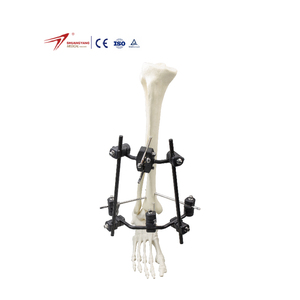
China Manufacture Fixat External Fixator Tibiaaxis Unilateral Frame Femur & Tibia External Fixator for Orthopedic Surgery
Contact Us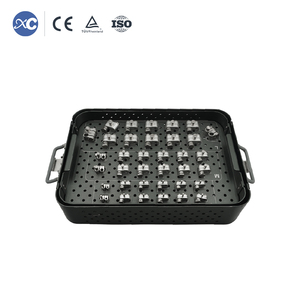
Vet Orthopedic Instruments Fracture Bone Fixation Surgery Veterinary External Fixator Set
Contact Us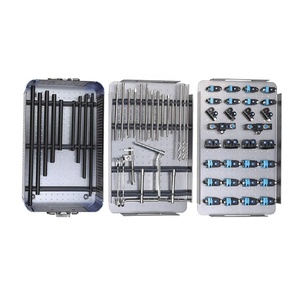
CE Marked Orthopedic External Fixation Instrument Set Titanium & Aluminum Alloy Case
Contact Us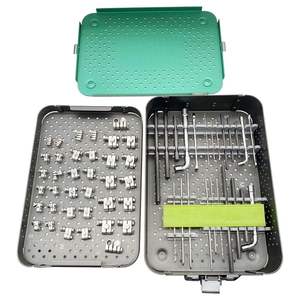
Veterinary Orthopedic External Fixator Set Reusable Metal Clamp Kit for Bone Repair
Contact Us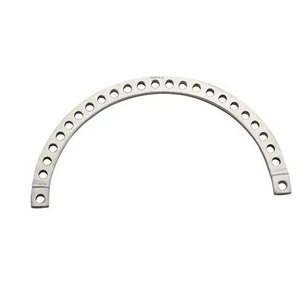
Orthopedic Half Ring External Fixator Set 5 PCS Surgical Instrument Stainless Steel
Contact Us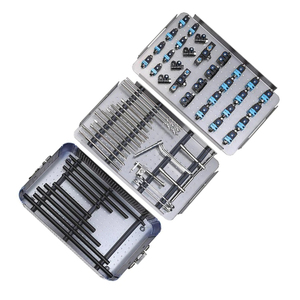
76pcs Large Fragment External Fixator Set Carbon Fiber Fixation System Kit
Contact Us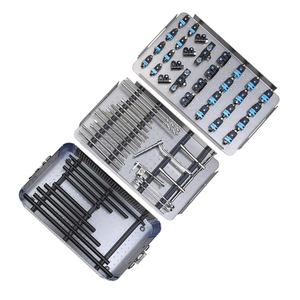
FIDA International External Fixator Set Stainless Steel General Surgery Kit
Contact Us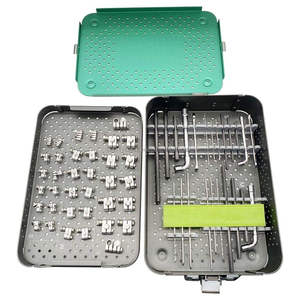
Orthopedic Fracture Bone Fixation Veterinary External Clamp Fixator Set SS
Contact UsChina's Ecosystem in Surgical Scalpel Blade Manufacturing
As the medical device supply chain demands greater resilience, precision, and cost-efficiency, China has consolidated its status as the world's premier manufacturing hub for single-use and reusable surgical cutting tools. Leading Chinese surgical scalpel blade factories operate at the intersection of advanced metallurgy, ultra-precision micro-grinding technology, and automated ISO 13485 cleanroom packaging. For global healthcare buyers, hospital consortiums, and medical equipment distributors, understanding the technical specifications and production dynamics of surgical scalpels is essential for securing long-term operational excellence and superior clinical outcomes.
Surgical scalpels represent the fundamental interface of surgical intervention. The mechanical performance of a blade—defined by its cutting edge radius, penetrative resistance force, lateral stiffness, and structural integrity under torsional stress—directly impacts tissue trauma, incisional healing speed, and surgeon hand fatigue. Premier Chinese exporters leverage state-of-the-art Japanese steel stock, automated CNC sharpening lines, continuous vacuum heat treatment, and computerized 100% optical inspection systems to produce scalpels that rival traditional European brands while delivering unmatched economic value.
Material Science & Metallurgical Engineering of Scalpel Blades
The selection of raw materials dictates the mechanical performance profile of surgical blades. Top Chinese factories utilize two distinct material categories engineered to comply with strict international standards such as ISO 7740 and BS 2982.
1. High-Carbon Steel (Grade SK5 / 1095 Equivalent)
Carbon steel surgical blades are renowned for their exceptional initial sharpness and edge retention capabilities. Containing a carbon concentration between 0.95% and 1.10%, carbon steel forms a densely packed carbide microstructure upon oil-quenching heat treatment. This enables the cutting edge to be honed to an acute bevel angle (15° to 17°), yielding an ultra-thin cutting tip radius of less than 0.5 microns. Carbon steel blades are ideal for delicate tissue dissections, plastic surgery, and ophthalmic procedures where minimal initial penetration force is vital.
2. Martensitic Stainless Steel (AISI 420 C / 440A Grade)
Stainless steel scalpels incorporate a minimum of 12% to 14% chromium alongside controlled carbon fractions. The presence of chromium forms a self-healing chromium oxide ($Cr_2O_3$) passive layer on the blade surface, delivering superior resistance against oxidation, physiological fluids, and chemical disinfectants. Modern vacuum heat treatment processes achieve a Rockwell hardness of 58–62 HRC, striking an optimal balance between extreme sharpness, corrosion immunity, and ductile fracture resistance during orthopedic or general surgical procedures.
| Performance Parameter | High-Carbon Steel (SK5) | Martensitic Stainless (AISI 420C) | TiN Coated Stainless Steel |
|---|---|---|---|
| Rockwell Hardness (HRC) | 62 - 65 HRC | 58 - 62 HRC | 68 - 72 HRC (Surface Layer) |
| Initial Sharpening Radius | < 0.4 µm | < 0.6 µm | < 0.3 µm |
| Corrosion Resistance | Requires VCI Foil Packaging | Excellent (Passivated Surface) | Superior Chemical & Fluid Barrier |
| Tissue Friction Coefficient | 0.18 - 0.22 | 0.20 - 0.25 | 0.12 - 0.15 (Ultra-smooth) |
| Primary Clinical Application | Ophthalmic, Plastic & Neuro | General, Abdominal & Emergency | Orthopedic & Deep Cavity Surgery |
Precision Manufacturing & Quality Control Protocols
Achieving zero-defect mass production requires rigorous quality control across every phase of the manufacturing process within Chinese manufacturing plants:
- Stamping & Blanking: High-speed progressive stamping presses convert calibrated cold-rolled strip steel into unsharpened blade blanks with sub-micron dimensional repeatability.
- Continuous Vacuum Heat Treatment: Blanks pass through computer-controlled continuous belt furnace atmospheres (Nitrogen/Hydrogen gas mix) at 1,050°C, followed by rapid quenching and double-tempering to prevent internal stress and micro-fissures.
- Micro-Grinding & Honing: Triple-bevel sharpening is performed on multi-axis CNC grinding machines utilizing diamond-vitrified wheels. Laser profilometers measure the edge angle in real-time.
- Passivation & Ultrasonic Cleaning: Stainless steel blades undergo citric/nitric acid bath passivation to strip free iron from the surface, followed by multi-stage ultrasonic deionized water baths.
- Gamma Sterilization (Co-60): Packaged blades undergo Cobalt-60 Gamma Irradiation at a validated dose of 25 kGy, achieving a Sterility Assurance Level (SAL) of $10^{-6}$.
ISO 7740 Standard Fitment Specifications for Blades & Handles
Universal fitment compatibility between disposable surgical blades and reusable surgical scalpels handles is governed by ISO 7740. The chart below outlines standard blade dimensions and matching handle slot sizes.
| Blade Number | Blade Profile Geometry | Compatible Handle No. | Primary Surgical Utility |
|---|---|---|---|
| #10 | Large Curved Cutting Edge | No. 3, 3L, 7, 9 | Skin Incisions, Muscular Tissue Cutting |
| #11 | Elongated Triangular Pointed Tip | No. 3, 3L, 7 | Stab Wounds, Arthroscopic Portals, Arteriotomy |
| #12 | Small Sickle-Shaped Crescent | No. 3, 3L, 7 | Suture Removal, ENT, Mucogingival Cut |
| #15 | Small Curved Cutting Edge | No. 3, 3L, 7, 9 | Precise Small Incisions, Plastic & Pediatric |
| #20 - #24 | Large Heavy Curved Bevel | No. 4, 4L, 6 | Orthopedic Surgery, Thoracic & Autopsy Cut |
Our Manufacturing & OEM Advantages
Why top global healthcare brands and hospital groups choose us as their strategic surgical instrument export partner in China.
Class 100,000 Cleanroom Packaging
Our automatic primary foil pouch packaging is conducted in Class 8 / ISO Class 100,000 cleanrooms, guaranteeing dust-free, non-pyrogenic product delivery.
Full Regulatory Compliance
Complete technical documentation dossiers (STED), ISO 13485:2016 certification, EU MDR 2017/745 CE marks, and US FDA 510(k) establishment registration.
100% Optical Inspection
Automated high-speed vision systems inspect every millimeter of the cutting edge for micro-burrs, tip distortion, or surface imperfections before sterilization.
Future Trends in Surgical Blade & Instrument Procurement (2026–2030)
The global market for surgical scalpels and orthopedic instrumentation is undergoing rapid technological and regulatory transformations. Overseas procurement officers and supply chain executives must align their strategies with these key industry shifts:
1. Widespread Adoption of Safety Scalpels with Retractable Shields
Driven by strict occupational safety directives (such as the EU Sharps Directive 2010/32/EU and US OSHA Bloodborne Pathogens Standard), demand is surging for safety scalpels featuring integrated protective sheaths. Chinese manufacturers are pioneering single-piece retractable mechanisms that allow one-handed blade shielding before, during, and after surgical disposal, drastically reducing accidental needle-stick and sharps injuries in operating theaters.
2. Nanocomposite & Ceramic Surface Coatings
Next-generation scalpels utilize Physical Vapor Deposition (PVD) to apply Titanium Nitride (TiN), Diamond-Like Carbon (DLC), or Aluminum Titanium Nitride (AlTiN) coatings. These ultra-thin ceramic films increase surface hardness beyond 70 HRC, reduce tissue dragging friction by 40%, and eliminate metallic particle shedding during complex orthopedic periosteal scraping.
3. Integration of Carbon Fiber & Titanium in Fixation Kits
Modern surgical suites require radiolucent external fixation systems to enable real-time intraoperative X-ray and CT imaging. As highlighted in our product portfolio, Chinese factories are replacing heavy steel frames with high-strength carbon fiber rods and titanium alloy clamps, yielding lightweight, biologically inert fixators that enhance patient post-operative mobility.
4. Sustainable & Eco-Friendly Packaging Solutions
Medical procurement divisions are prioritizing suppliers who minimize plastic waste. Innovations include recyclable aluminum foil laminates, biodegradable blister trays, and eco-optimized bulk packaging configurations that cut container freight volume by up to 25% while maintaining sterile barrier integrity over a 5-year shelf life.
Frequently Asked Questions (FAQ)
Detailed answers to critical technical, quality control, OEM customization, and export logistics questions for healthcare procurement teams.
Partner with China's Premier Surgical Instrument Factory
Elevate your medical product offerings with market-leading surgical scalpel blades, safety scalpels, and orthopedic fixator sets. Contact our engineering team today for factory-direct pricing and custom OEM consultations.