Featured Wholesale Orthopedic Instrument Kits & External Fixators
Explore our factory-direct surgical tool sets engineered for human trauma reconstruction and veterinary orthopedic procedures. Designed to international ISO 13485 and CE standards.
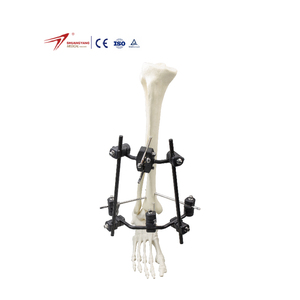
China Manufacture Fixat External Fixator Tibiaaxis Unilateral Frame Frame Femur & Tibia External Fixator for Orthopedic Surgery
Inquire Now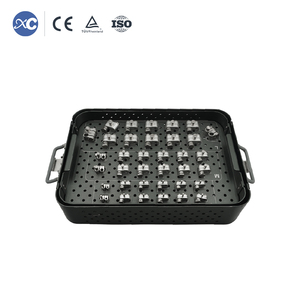
Vet Orthopedic Instruments Fracture Bone Fixation Surgery Veterinary External Fixator Set
Inquire Now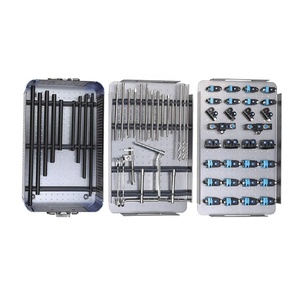
CE Marked Orthopedic External Fixation Instrument Set Within Bone Surgical Tools Titanium Alloy Aluminum Alloy Case Made BY ZUOL
Inquire Now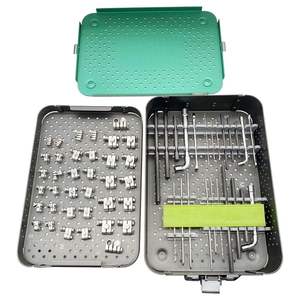
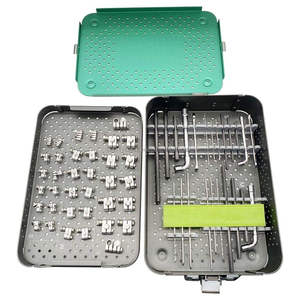
Veterinary Orthopedic External Fixator Set Surgical Instruments Reusable Metal Clamp Kit for Bone Fracture Repair
Inquire Now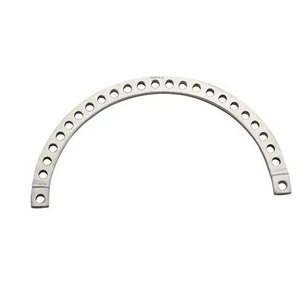
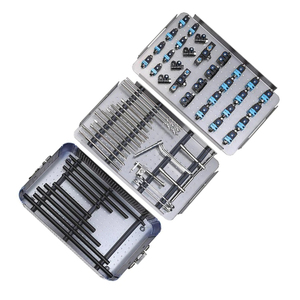
76pcs Large Fragment External Fixator Instrument Set Carbon Fiber External Fixation System Orthopedic Surgical Instruments Kit
Inquire Now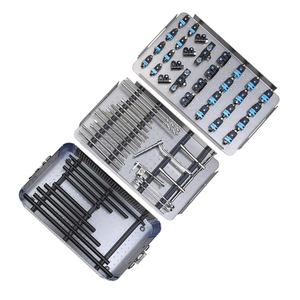
1. Executive Procurement Landscape: Sourcing Complete Orthopedic Instrument Kits from China
The global orthopedic medical device ecosystem is undergoing a dramatic structural shift. Hospital procurement departments, orthopedic device distributors, and private trauma centers are increasingly seeking factory-direct wholesale partnerships with leading Chinese manufacturers. Modern complete orthopedic instrument kits—spanning large fragment trauma sets, small fragment fixation tools, micro-hand & foot surgery containers, and complex Ilizarov circular external fixators—demand an unprecedented combination of metallurgical purity, mechanical fatigue resistance, and micro-machining tolerances.
As surgical procedures shift toward minimally invasive techniques and rapid post-operative mobilization, the performance baseline for surgical tooling has elevated. A failure in an instrument's spring mechanism during a laminectomy, or micro-corrosion on a bone-reduction clamp pin after repeated steam autoclave cycles, introduces intolerable clinical risks and financial liabilities. Consequently, strategic buyers must look beyond initial unit costs and evaluate factories based on total manufacturing integration: raw material lab-testing, CNC multi-axis milling capabilities, vacuum heat treatment protocols, and rigorous surface passivation procedures.
Technical Metallurgy: Raw Material Comparison for Orthopedic Tooling
Leading Chinese orthopedic tool manufacturers utilize premium-grade surgical alloys imported from top-tier mills in Japan, France, and Germany, alongside certified national aerospace-grade stock. Selecting the correct material for specific kit components is crucial for surgical efficacy and tool longevity.
| Material Designation | Standard Compliance | Rockwell Hardness (HRC) | Primary Application in Kit | Key Metallurgical Property |
|---|---|---|---|---|
| AISI 420 (Martensitic SS) | ASTM F899 / ISO 7153-1 | 48 – 54 HRC | Bone Cutters, Rongeurs, Osteotomes | High tensile strength & superior edge retention |
| AISI 316L (Austenitic SS) | ASTM F138 / ISO 5832-1 | 25 – 35 HRC | Fixator Pins, Cannulated Screws, Trays | Exceptional corrosion resistance & biocompatibility |
| Ti-6Al-4V (Grade 5 Titanium) | ASTM F136 / ISO 5832-3 | 30 – 38 HRC | External Fixator Clamps, Spinal Rods | High strength-to-weight ratio, MRI compatible |
| Carbon Fiber Composite | ISO 10993 Biocompatible | N/A (Flexural > 400 MPa) | Connecting Rods, Radiolucent Rings | Complete X-Ray / C-Arm radiolucency |
2. Comprehensive Kit Architecture: System Categories & Specifications
When purchasing wholesale orthopedic instrument kits, B2B buyers must evaluate the completeness and modularity of the set. Complete instrument systems are engineered to provide seamless surgical workflows, reducing intraoperative assembly time and ensuring compatibility across standardized screw threads, drill bits, and tap drivers.
Large Fragment Trauma Kits (4.5mm / 6.5mm)
Engineered for femur, tibia, and humeral fractures. Includes heavy-duty self-retaining bone clamps, double-action bone rongeurs, drill guides, countersinks, tap sleeves, and torque-limiting quick-coupling screwdrivers housed in anodized aluminum sterilization boxes.
Small Fragment & Mini-Fragment Sets (2.7mm / 3.5mm)
Designed for radius, ulna, ankle, and clavicle reconstruction. Features precise micro-bent periosteal elevators, mini-reduction forceps with point-to-point tips, wire-bending pliers, and specialized Kirschner wire (K-wire) insertion tools.
Unilateral & Bilateral External Fixator Systems
Trauma stabilization modules incorporating self-drilling Schanz screws, universal pin-to-rod coupling clamps, carbon fiber connecting rods, and quick-locking tension wrenches. Essential for emergency open fracture stabilization.
Veterinary Orthopedic Fixation Sets
Tailored specifically for canine and feline limb alignment and fracture management. Combines lightweight mini-external fixators, adjustable half-rings, stainless steel bone holding forceps, and specialized orthopedic wire cutters.
3. Technological Trends & Future Procurement Innovations
The orthopedic device sector is evolving rapidly driven by advancements in materials science, digital healthcare, and hospital supply chain automation. Buyers seeking long-term competitive advantages should align with OEM factories that actively integrate the following technological developments into their product lines:
1. Carbon Fiber & Radiolucent Composite Integration
Traditional stainless steel fixator frames create significant artifacts during intraoperative fluoroscopy (C-arm imaging), obscuring the surgeon's view of fracture reduction. Next-generation external fixator kits utilize PEEK and carbon fiber composite rods, offering complete radiolucency, reduced frame weight by up to 45%, and superior structural stiffness.
2. Advanced Surface Passivation & Nano-Coating Protocols
Routine steam autoclaving (134°C at high pressure) subjects instruments to severe oxidation stresses. Top-tier Chinese manufacturers have abandoned traditional dip-passivation in favor of multi-stage automated electro-cleaning, ultrasonic degreasing, and citric acid passivation complying with ASTM A967 standards. Furthermore, Titanium Nitride (TiN) gold-coatings are increasingly applied to cutting edges (e.g., drill bits and rongeur jaws) to extend sharpness retention by over 300%.
3. RFID-Enabled Smart Instrument Trays
To combat hospital inventory loss and streamline CSSD (Central Sterile Supply Department) processing, modern orthopedic instrument sets feature laser-welded RFID micro-chips and 2D Data Matrix barcodes embedded directly into instrument handles. This enables automated tracking, tray counting, and sterilization cycle logging.
4. Our Enterprise Advantage: Manufacturing Supremacy & Quality Validation
Building upon a rich 30+ year heritage in surgical instrument forging and precision machining (spanning collaborative supply ecosystems between Sialkot manufacturing hubs and high-tech Chinese automated facilities), our enterprise delivers world-class orthopedic kits directly to B2B clients in over 18 countries.
Strict ISO 13485 & CE Compliance
Every production batch undergoes 100% multi-point inspection, including raw material spectro-analysis, Rockwell hardness testing, dimensional CMM verification, boiling test for corrosion resistance, and micro-burr elimination under optical magnification.
6-Month Return & Replacement Guarantee
We stand firmly behind our craftsmanship. If any surgical instrument demonstrates material defects, jaw misalignment, or premature corrosion within 6 months of delivery, we provide immediate no-cost replacement under our global warranty.
OEM / ODM Custom Laser Branding & Trays
We provide full-service OEM customization. From laser-etching your brand logo and part numbers onto instrument bodies to custom-molding silicone bracket inserts inside personalized color-anodized sterilization containers.
Competitive Direct Factory Pricing
By optimizing in-house drop-hammer forging, 5-axis CNC wire-EDM milling, and vacuum heat treatment, we eliminate middleman markups—delivering up to 40% cost savings for global medical supply distributors.
Step-by-Step Factory Quality Assurance Workflow
| Workflow Stage | Technical Process Description | Quality Assurance Gate |
|---|---|---|
| 1. Raw Material Receiving | Imported SS316L, AISI 420, and Titanium alloy bar stock inspection. | Chemical Spectrometry & Hardness Verification |
| 2. Hot Drop-Forging | Precision closed-die forging shaping tool blanks at optimal thermal thresholds. | Grain Flow Structure & Dimensional Inspection |
| 3. CNC & Wire EDM Milling | 5-Axis computer-controlled milling of box locks, serrations, and ratchet teeth. | Tolerances verified within ±0.05mm range |
| 4. Vacuum Heat Treatment | Controlled atmosphere heating and oil quenching to achieve target Rockwell hardness. | Hardness testing across critical stress points |
| 5. Polishing & Passivation | Multi-stage hand-buffing followed by nitric/citric acid bath chemical passivation. | Boil-Test (ISO 13402) for zero oxide formation |
| 6. Final Assembly & Packaging | Matching paired components, functional tensioning, laser marking, container packing. | 100% Functional Test & Optical Inspection |
5. Complete B2B Procurement FAQ: Orthopedic Kits Sourcing
Detailed technical and commercial answers to clarify common questions raised by hospital purchasing managers, regulatory teams, and wholesale buyers.
Ready to Optimize Your Orthopedic Supply Chain?
Partner with an established manufacturer trusted by surgical distributors and hospitals across 18+ countries. Request technical catalogs, custom OEM quotes, or sample validation kits today.