Featured External Fixation Instrument Sets
Standardized trauma fixation components manufactured with medical-grade titanium alloy, carbon fiber composites, and surgical stainless steel. Fully compliant with ISO 13485 and CE standards.
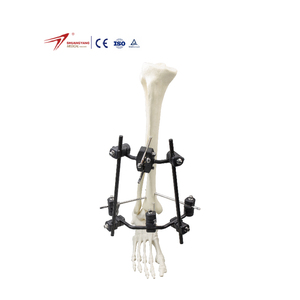
China Manufacture Unilateral Tibia & Femur External Fixator Frame
Heavy-duty unilateral modular fixation system engineered for long-bone shaft fractures, open complex trauma, and non-union stabilization.
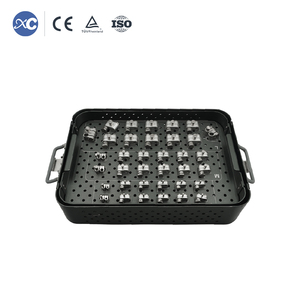
Vet Orthopedic Fracture Bone Fixation Veterinary External Fixator Set
Precision veterinary orthopedic system designed for small to large animal fracture alignment, joint distraction, and corrective osteotomy.
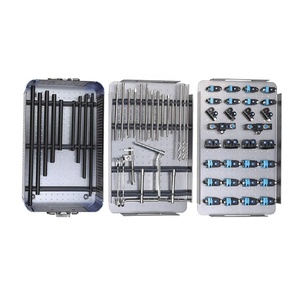
CE Marked Orthopedic Fixation Set with Titanium/Aluminum Alloy Case
Complete surgical trauma set housed in an anodized sterilizing aluminum container. Features biocompatible titanium pins and multi-pin clamps.
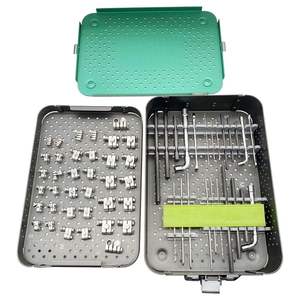
Veterinary External Fixator Reusable Metal Clamp Kit for Bone Repair
Autoclavable stainless steel clamp assembly providing rigid structural stability for small animal femoral, tibial, and humeral fracture repair.
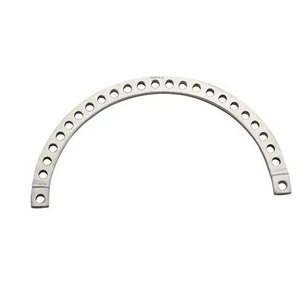
Orthopedic Half Ring External Fixator Set (5 PCS Stainless Steel)
Circular ring fixation modules designed for limb reconstruction, bone transport, deformity correction, and pediatric trauma management.
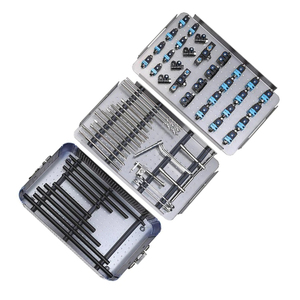
76pcs Large Fragment Carbon Fiber External Fixation System Set
Ultra-lightweight radiolucent carbon rod fixator kit. Allows uninhibited X-ray visualization during intraoperative intra-articular fracture reduction.
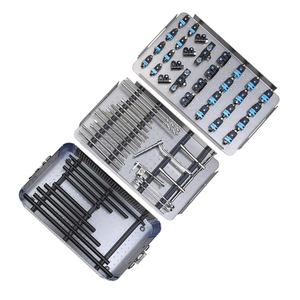
FIDA External Fixator Set Stainless Steel Manual Surgery Kit
Comprehensive general surgery trauma instrumentation kit including bone drills, Schanz screw inserters, wrench sets, and universal pin clamps.
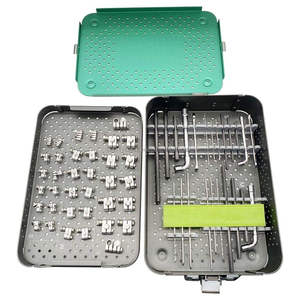
Orthopedic Bone Fixation Veterinary Clamp Fixator Set Stainless Steel
Multi-angle pin clamp system built from high-tensile 316L stainless steel, customized for emergency veterinary trauma surgical procedures.
The Evolution of External Fixation Systems in Global Orthopedic Supply Chains
External fixation instruments represent a cornerstone of modern orthopedic trauma surgery, limb reconstruction, and complex fracture management. Historically utilized primarily for temporary stabilization in high-energy damage-control orthopedics (DCO), contemporary China wholesale external fixation instrument sets have evolved into highly sophisticated, definitive treatment modalities. Modern external fixators integrate advanced biomechanical engineering, radiolucent material science, and modular pin-clamp architecture to mitigate pin-tract infections, prevent stress shielding, and enhance early patient mobilization.
For hospital procurement officers, medical device distributors, and OEM buyers, sourcing external fixators directly from verified Chinese manufacturing facilities offers a decisive competitive advantage. Driven by substantial investments in multi-axis CNC machining, automated passivation lines, and raw material standardization (ISO 5832-3 Titanium and ASTM F138 Stainless Steel), leading Chinese factories deliver surgical-grade instrumentation at optimized total cost of ownership (TCO). This technical procurement guide evaluates system classifications, manufacturing quality protocols, future technology trajectories, and critical compliance metrics necessary to streamline global healthcare sourcing.
Key Technical Insight for B2B Buyers
The global shift toward Radiolucent Carbon Fiber Systems and Computer-Assisted Hexapod Deformity Correction Fixators requires suppliers to maintain strict dimensional tolerances (within ±0.05 mm) on clamp interfaces. Substandard manufacturing leads to mechanical play, micro-motion at the pin-bone interface, and subsequent pin loosening or non-union. Sourcing from certified factories with integrated vacuum heat treatment and 24-hour acid passivation ensures operational reliability under maximum mechanical load.
Classification & Material Science Matrix of External Fixators
Comparing core mechanical properties across primary external fixator configurations used in human clinical trauma and veterinary orthopedics.
| Fixator System Type | Primary Materials Used | Biomechanical Rigidity | Radiolucency | Clinical Applications |
|---|---|---|---|---|
| Unilateral / Monolateral Frame | Ti-6Al-4V Titanium Alloy / 316L SS | High Axial & Bending Stiffness | Opaque (Metallic) | Femur & Tibia shaft fractures, open trauma, emergency stabilization. |
| Circular (Ilizarov System) | Stainless Steel / Aircraft Grade Aluminum | High Multi-Planar Stability | Partial / Frame Dependent | Limb lengthening, non-union, complex bone defect transport, foot deformities. |
| Radiolucent Composite Sets | Carbon Fiber Reinforced PEEK / Epoxy Rods | Dynamic Elastic Fixation | 100% Radiolucent | Intra-articular reduction, distal radius fractures, pediatric trauma imaging. |
| Hexapod Spatial Frames | Anodized Aluminum Alloy & Titanium Struts | 6-Degrees of Freedom Adjustment | High Radiolucent Clear Clearance | 3D deformity correction, angular realignment, multi-planar bone transport. |
| Veterinary Micro Fixator Kits | 316L Stainless Steel Clamps & Pins | Proportional Biomechanical Stiffness | Standard Metallic | Small animal bone reconstruction (canine/feline femoral & radial fractures). |
Future Procurement & Technological Trends in External Fixation
Anticipating shifts in orthopedic surgery, regulatory mandates, and smart manufacturing over the next decade.
1. Hybrid Carbon Fiber & PEEK Polymer Integration
Surgeons demand intraoperative fluoroscopic visibility without metal artifacts obscuring the fracture line. Future wholesale procurement will overwhelmingly favor carbon-reinforced polyetheretherketone (PEEK) connecting rods and carbon-ring assemblies that maintain the modulus of elasticity close to human cortical bone, reducing stress shielding.
2. Computer-Assisted Hexapod Softwares & Smart Struts
The modernization of Ilizarov principles has birthed software-driven hexapod frames. Hospitals are increasingly purchasing external fixator sets equipped with digital strut calibration, quick-adjust locking collars, and web-based deformity correction planning software compatibility for precise multi-planar bone alignment.
3. Antibacterial & Bioactive Pin Surface Treatments
Pin-tract infection remains the primary clinical complication of long-term external fixation. Advanced Chinese factories are pioneering hydroxyapatite (HA) plasma spraying, silver-nanoparticle anodization, and titanium nitride (TiN) coatings on Schanz screws to promote osseo-integration while inhibiting bacterial biofilm formation.
Why Direct Manufacturer Sourcing Drives B2B Purchasing Success
Navigating global orthopedic instrument purchasing demands absolute transparency regarding raw material pedigree, precision machining infrastructure, and quality verification. Our manufacturing facilities combine 30+ years of surgical forging expertise with modern automated quality systems to ensure that every clamp, rod, wrench, and Schanz screw delivers flawless clinical performance.
Raw Material Integrity
We exclusively utilize certified medical-grade stainless steel (316L/316LVM) and titanium alloys (Ti-6Al-4V ELI) imported from audited metallurgical suppliers in Japan and France. Every batch undergoes spectral chemical analysis and tensile testing before entering the forging shop.
CNC Swiss Machining Precision
Equipped with 5-axis CNC machining centers and EDM wire-cutting machinery, our automated production achieves tolerances within ±0.05 mm. Universal joints, threaded bar connectors, and serrated pin clamps snap together seamlessly with zero micro-play.
Vacuum Heat Treatment & Passivation
Instruments undergo vacuum heat treatment to achieve optimal metallurgical hardness (Rockwell C 45–52 HRC) without surface oxidation. A full 24-hour citric/nitric acid passivation cycle builds an impenetrable chromium oxide layer for total corrosion resistance.
Rigorous Quality Validation
100% of finished instrument sets undergo boiling water corrosion tests, optical comparator inspections, and repeated high-pressure autoclave cycling (134°C) to guarantee structural durability prior to sterile packaging dispatch.
OEM & ODM Customization
We support full contract manufacturing for multinational orthopedic brands. From custom laser-etched UDI branding, specialized color-anodized aluminum carrying cases, to bespoke clamp geometries developed from client CAD models.
Comprehensive Warranty & Logistics
All non-consumable fixator instruments are backed by our 6-month full replacement warranty against material defect or mechanical failure. Supported by global regional hubs for expedited customs clearance and delivery.
B2B Purchasing & Technical FAQ
Addressing common technical, compliance, and supply chain questions from hospital procurement committees and medical equipment distributors.
Request Complete External Fixation Catalog & Wholesale Pricing
Connect directly with our engineering and international export division. Receive comprehensive PDF technical catalogs, material test reports, and direct factory quotation within 24 hours.