Precision Reusable External Fixator & Surgical Sets
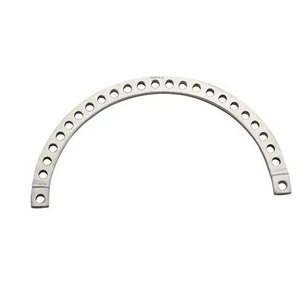
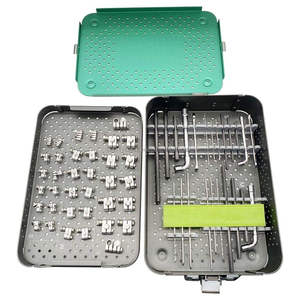
Engineered for orthopedic bone fracture repair, veterinary surgery, and complex trauma stabilization with long-term autoclave endurance.
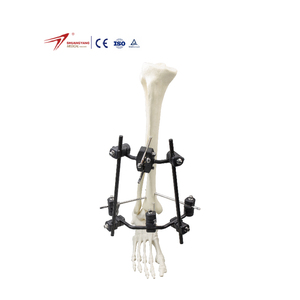
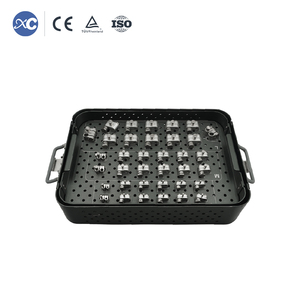
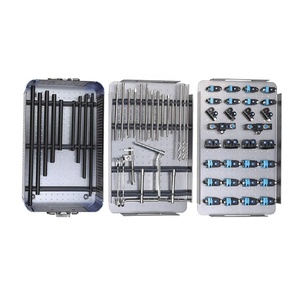
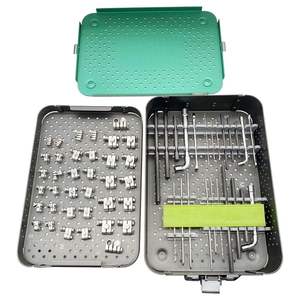
1. Metallurgical Science & Manufacturing Engineering of Reusable Surgical Instruments
In modern clinical environments, surgical instruments represent a vital intersection of biomechanical engineering, material science, and stringent infection control protocols. As a premier China wholesale reusable surgical instruments manufacturer and factory, our enterprise dedicatedly bridges the gap between cost-efficient bulk production and uncompromised surgical performance. Reusable surgical instruments demand significantly higher technical thresholds in metallurgical composition, heat treatment precision, and surface chemistry than disposable single-use alternatives.
Our manufacturing workflow utilizes imported surgical-grade stainless steel raw materials—primarily conforming to AISI 410, AISI 420J2, AISI 316L, and specialized French/German stainless steel alloys (such as X20Cr13 to X50CrMoV15). The selection of specific alloys is strictly calibrated based on the functional mechanics of the surgical instrument:
Martensitic Stainless Steel (AISI 410 / 420)
Utilized for high-yield cutting tools, bone chisels, osteotomes, rongeurs, and retractors requiring elevated Rockwell hardness (HRC 48-54) and edge retention following repeated steam sterilization cycles.
Austenitic Stainless Steel (AISI 316L)
Selected for non-cutting structural components, cannula tubes, bone pin clamps, and external fixator frames requiring supreme intergranular corrosion resistance and zero bio-reactivity under physiological contact.
Biocompatible Titanium & Carbon Composites
Engineered for ultra-lightweight orthopedic trauma fixators, large fragment fixation systems, and MRI-compatible surgical apparatus, reducing surgeon hand fatigue during lengthy reconstructions.
To eliminate internal stress and guarantee dimensional stability, all forged instrument blanks undergo computer-controlled vacuum heat treatment inside atmosphere-sealed furnaces imported from Europe. This metallurgical refinement prevents stress-corrosion cracking (SCC) and pitting corrosion—the primary failure modes of low-grade medical instruments exposed to enzymatic detergents and autoclaving conditions above 134°C (273°F).
2. Enterprise Manufacturing Core Competencies & Multi-Stage Quality Assurance
Leveraging over 30 years of industrial expertise passed down and honed through state-of-the-art CNC machining centers, our factory maintains full vertical integration—from raw material forging to final micro-polishing, passivation, and UDI (Unique Device Identification) laser marking. Unlike trading intermediaries, our factory infrastructure features specialized processing workshops dedicated to specific medical disciplines, including Orthopedics, Spine & Neurosurgery, Hand & Foot Micro-Surgery, and Veterinary Reconstruction Kits.
Rigorous 6-Step Verification Protocol
Every reusable surgical instrument manufactured in our facility undergoes an uncompromising quality verification workflow prior to global dispatch:
| Inspection Stage | Technical Method / Standard | Quality Objective & Conformance Threshold |
|---|---|---|
| 1. Dimensional Machining | 5-Axis CNC & EDM Wire Machining (±0.01mm) | Absolute precision matching international DIN/ISO blueprints and master CAD models. |
| 2. Metallurgical Hardness | Rockwell C-Scale Testing (ASTM E18) | Conformity to 42–54 HRC depending on tool function (cutting edge vs. load-bearing joint). |
| 3. Corrosion Resistance | Boil Test & Copper Sulfate Test (ISO 7151) | Zero surface oxidation, rust spots, or pitting after 30 minutes of continuous boiling immersion. |
| 4. Chemical Passivation | Citric/Nitric Chemical Passivation (ASTM A967) | Formation of a uniform chromium-oxide ($Cr_2O_3$) passive protective layer over the entire metal body. |
| 5. Surface Finishing | Electro-Polishing & Satin/Matte Glare-Free Finish | Elimination of microscopic surface burrs to prevent bacterial adhesion and glare under operating lights. |
| 6. Sterilization Endurance | Pre-vacuum Steam Autoclave Testing (134°C) | Validated structural and functional integrity across 1,000+ repeated sterilization cycles. |
Our commitment to clinical security extends to an industry-leading 6-Month Unconditional Quality Guarantee on standard instrument lines. Should any instrument display material defects, joint loosening, or premature corrosion under compliant reprocessing conditions, our factory replaces the affected items directly, providing distributors and hospital procurement buyers with maximum risk protection.
3. Global Procurement Trends & Economic Shifts in Reusable Surgical Instrumentation (2025–2030)
The global healthcare industry is undergoing a structural transformation regarding medical device procurement strategies. Hospital networks, group purchasing organizations (GPOs), and surgical centers are re-evaluating the total cost of ownership (TCO) associated with single-use disposable instruments versus high-grade reusable surgical tools.
Macro Trend A: The Shift toward Environmental Sustainability & Carbon Footprint Reduction
Single-use plastic and low-grade disposable instruments generate millions of tons of biohazardous medical waste annually. European Union directives and global healthcare ESG (Environmental, Social, and Governance) mandates are incentivizing medical institutions to transition back to validated reusable surgical instruments. A medical-grade reusable stainless steel external fixator set or surgical forceps set used for 1,000+ operations emits up to 84% less lifetime carbon footprint compared to 1,000 single-use disposable kits.
Macro Trend B: Total Cost of Ownership (TCO) Optimization in B2B Procurement
While the initial acquisition cost of high-quality reusable surgical instruments is higher than disposable alternatives, the amortized cost per surgical procedure drops exponentially over time. The graphic illustration below details the TCO comparative curve across 500 surgical procedures:
Single-Use Disposable Instruments
Linear cost growth ($25 per unit × 500 procedures = $12,500 total outlay). High recurring logistics fees, inventory holding expenses, and hazardous waste disposal surcharges.
Factory Direct Reusable Instruments
Upfront instrument kit procurement ($600 per set) + low sterilization cost per cycle ($1.20 × 500 = $600). Total expenditure: $1,200. Net cost reduction: 90.4%.
Supply Chain Resilience
Direct wholesale factory partnerships eliminate third-party markup fees, guarantee spare parts availability (pins, clamps, rods), and enable custom OEM/ODM modification.
Macro Trend C: Integration of Smart Asset Tracking & UDI Serialization
Modern regulatory authorities (US FDA, European MDR) require strict trace-ability for reusable medical devices. Our manufacturing lines feature fiber-laser marking capabilities capable of etching 2D DataMatrix UDI codes onto instruments as small as micro-scissors. This enables automated hospital CSSD (Central Sterile Supply Department) management, tracking sterilization cycles and usage counts automatically.
4. Future Development Horizons for Surgical Tool Manufacturing
As surgical techniques advance toward Minimal Invasive Surgery (MIS), robotic-assisted procedures, and specialized veterinary orthopedics, instrument manufacturing methodologies are keeping pace. Key innovations currently emerging from our R&D center include:
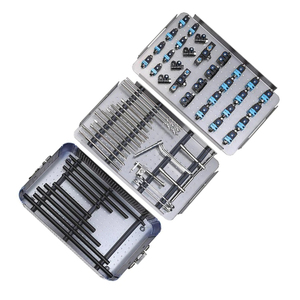
1. Carbon Fiber Hybrid Constructs: Combining ultra-strong carbon fiber rods with aerospace-grade anodized aluminum alloys in external fixation systems (e.g., our 76pcs Large Fragment External Fixator System). This yields radiolucent properties under intraoperative fluoroscopy/X-ray, enabling surgeons to verify bone fracture reduction without visual obstruction from metal components.
2. Advanced Physical Vapor Deposition (PVD) Coatings: Beyond standard electro-polishing, our factory applies specialized PVD coatings including Titanium Nitride (TiN Gold), Titanium Carbonitride (TiCN Dark Grey), and Ceramic Black coatings. These atomic-layer surface enhancements increase surface hardness up to 2,500 Vickers (HV), reduce coefficient of friction on sliding joints, and virtually eliminate light reflection in microsurgical procedures.
3. Custom Ergonomic Handle Engineering: Transitioning from legacy heavy stainless steel handles to lightweight silicone-molded handles and hollowed ergonomic contours, reducing physical strain during complex multi-hour joint reconstruction procedures.
Why Partner With Our China Manufacturing Facility?
Combining decades of master craftsmanship with modern automated manufacturing technologies for global medical device brand owners and distributors.
30+ Years OEM/ODM Manufacturing
Over three decades of specialized experience crafting precision orthopedic, neurosurgical, spine, and general surgery instruments for international brand leaders.
ISO 13485 & CE Quality Assurance
Operates under rigorous quality management systems certified to ISO 13485, ISO 9001, and CE compliance standards, ensuring seamless customs clearance globally.
In-House CAD/CAM Prototyping
Rapid engineering transformation from customer concept drawings or physical samples into 3D CAD files, rapid prototypes, and production tooling.
6-Month Warranty & Free Replacement
We guarantee structural integrity and rust-free performance across all instrument lines, providing hassle-free replacement policies for our global distribution network.
Custom Branding & Laser Etching
Full private label services including high-precision laser marking for logos, catalog item numbers, lot codes, and DataMatrix UDI barcodes.
Worldwide Wholesale Freight Network
Established supply chain partnerships offering air express, ocean freight, and DDP (Delivered Duty Paid) door-to-door delivery across North America, Europe, Asia, and the Middle East.
Frequently Asked Questions (FAQ)
Technical and commercial answers for medical equipment importers, hospital purchasing directors, and B2B distributors.