Featured Fixator Sets & Sterilization Container Trays
Standardized DIN-compliant and customizable orthopedic instrument trays, external fixator sterilization containers, and precision aluminum cases engineered for heavy-duty hospital autoclaving.
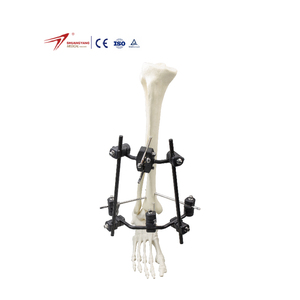
China Manufacture Fixat External Fixator Tibiaaxis Unilateral Frame Frame Femur & Tibia External Fixator for Orthopedic Surgery
Get a Quote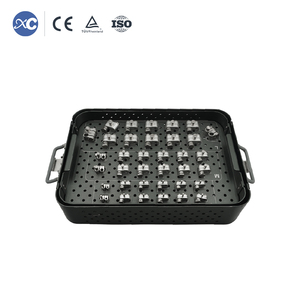
Vet Orthopedic Instruments Fracture Bone Fixation Surgery Veterinary External Fixator Set
Get a Quote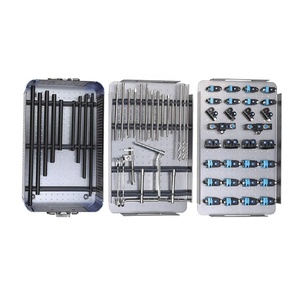
CE Marked Orthopedic External Fixation Instrument Set Within Bone Surgical Tools Titanium Alloy Aluminum Alloy Case Made BY ZUOL
Get a Quote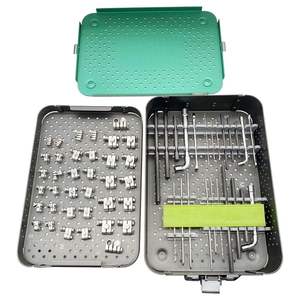
Veterinary Orthopedic External Fixator Set Surgical Instruments Reusable Metal Clamp Kit for Bone Fracture Repair
Get a Quote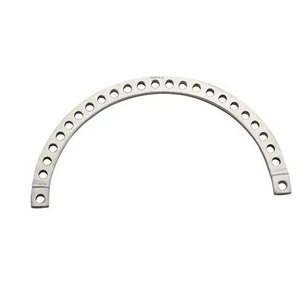
Orthopedic Half Ring External Fixator Set 5 PCS Surgical Instrument SS
Get a Quote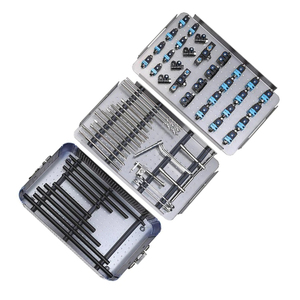
76pcs Large Fragment External Fixator Instrument Set Carbon Fiber External Fixation System Orthopedic Surgical Instruments Kit
Get a Quote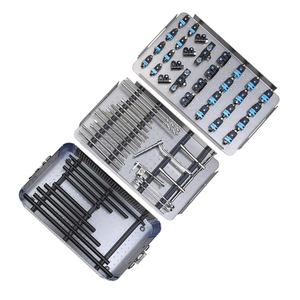
FIDA International External Fixator Set Orthopedic Instrument Kit Stainless Steel Manual Surgery Set for General Surgery
Get a Quote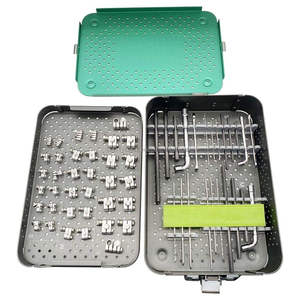
Orthopedic Fracture Bone Fixation Veterinary Surgery External Clamp Fixator Set Stainless Steel Surgical Instruments
Get a QuoteState of Technical Architecture in Surgical Container & Tray Manufacturing
Modern Central Sterile Supply Departments (CSSD) and operating theaters require uncompromising performance from instrument containment systems. As medical procedures grow increasingly specialized—ranging from micro-neurosurgical interventions to complex trauma external fixation—the demand for custom OEM surgical instrument container trays has shifted from generic storage towards high-precision, ergonomically tailored protection systems.
As a leading international manufacturer and exporter, our engineering facilities bridge the gap between heavy metallurgical durability and high-precision polymer bracket customization. Utilizing advanced 5-axis CNC machining, deep-draw aluminum forming, and custom silicone moulding, we craft specialized container systems compatible with all global sterilization protocols including Pre-vacuum Steam Autoclave (134°C), Ethylene Oxide (EtO), and Low-Temperature Hydrogen Peroxide Gas Plasma.
Material Metallurgy & Structural Component Integrity
Selecting the appropriate raw material composition is the foundational step in manufacturing rigid container systems and custom instrument trays. Our manufacturing process utilizes three core material classifications:
| Material Type | Technical Specification | Corrosion & Thermal Resistance | Primary Clinical Application |
|---|---|---|---|
| Anodized Aluminum Alloy (AL5052/AL6061-T6) | Type III Hard-Coat Anodization (25–30 µm), micro-porous sealed finish. | Resistant to 500+ autoclave cycles at 134°C. High thermal conductivity for rapid drying. | Rigid Sterilization Containers, Heavy-duty Orthopedic Cases, Outer Box Bodies. |
| AISI 316L & 304 Stainless Steel | Electro-polished, 24-hour nitric acid passivated surface finish. | Impervious to alkaline detergents (pH 10–11) and harsh decontaminants. zero pitting risk. | Perforated Mesh Baskets, Wire Baskets, Fine Micro-Surgery Insert Trays. |
| Medical-Grade Silicone (Shore 50A–70A) | Platinum-cured elastomeric polymer, USP Class VI certified. | Thermal stability up to 200°C. Non-reactive, non-staining surface chemistry. | Custom Instrument Positioning Brackets, Fixing Strip Inserts, Cushioning Mats. |
| High-Performance Polymers (PPSU / Radel) | Polyphenylsulfone transparent thermo-formed covers and dividers. | Extreme impact resistance, handles 1,000+ steam sterilization cycles. | Transparent Lids, Modular Divider Brackets, Implant Caddies. |
Why Global Healthcare Brands & OEM Partners Trust Our Factory
Refined through 30+ years of family-owned manufacturing legacy in Sialkot and backed by international sales hubs in the USA and Philippines, our engineering rigor guarantees compliance, speed, and durability.
Full In-House Manufacturing Loop
From raw material verification to tool-making, drop-hammer forging, CNC wire EDM cutting, and silicone moulding—100% of production occurs in-house for absolute quality control.
ISO 13485 & CE Quality Validation
Every container and tray undergo rigorous passivation, 24-hour salt-spray testing, and boil testing to guarantee zero rust, oxidation, or structural warping over extended hospital lifespans.
Parametric CAD/CAM Customization
Send us your surgical instrument set blueprints or physical samples. Our engineering team designs custom 3D CAD layouts, silicone holder positions, and laser-cut tray inserts within 48 hours.
Direct Factory Pricing Guarantee
By eliminating middleman brokers and trading companies, we deliver tier-one European-grade manufacturing quality at competitive direct-from-factory FOB/CIF wholesale prices.
Global Logistics & Regulatory Support
Serving OEM medical distributors across 18+ countries with door-to-door shipping, custom laser marking/branding, barcode serialization, and complete documentation packages.
6-Month Warranty & Replacement
We stand behind our craftsmanship. Every container tray, lock latch, and silicone insert carries a 6-month complete quality replacement guarantee against manufacturing defects.
Future Procurement Trends in Surgical Container & Tray Systems
As hospital networks and surgical centers worldwide strive to increase operating room throughput while curbing healthcare-associated infections (HAIs), procurement strategies for surgical containers are undergoing a massive transformation. B2B buyers, medical device vendors, and CSSD directors should prepare for four key macro trends:
1. Shift from Rigid Blue Wrap to Permanent Aluminum Container Systems
Sterilization wrap (blue wrap) presents persistent financial and environmental challenges due to frequent tearing, compromise of sterile boundaries, and high solid waste generation. Modern hospital procurement is rapidly transitioning towards reusable aluminum rigid container systems. Aluminum containers provide an impenetrable barrier, reduce long-term cost-per-use metrics by up to 60% over a 5-year cycle, and support hospital ESG (Environmental, Social, and Governance) sustainability targets.
2. Integration of Smart Asset Tracking (RFID & UDI Barcoding)
The implementation of Unique Device Identification (UDI) regulations by the US FDA and EU MDR requires detailed track-and-trace capabilities for reusable surgical instruments and their housing trays. Future-proof procurement mandates container trays embedded with high-temperature PPSU RFID tags or direct 2D DataMatrix laser etching. This enables automated CSSD scanning, real-time tray location tracking, automated usage count cycle logging, and preventive maintenance alerts.
3. Modular and Color-Coded Specialty Customization
With surgical techniques becoming increasingly specialized (e.g., minimally invasive spine surgery, robotic-assisted joint replacement, specialized veterinary orthopedics), standard off-the-shelf trays are being replaced by modular custom trays. Procurement directors are favoring container systems with interchangeable silicone brackets, adjustable plastic dividers, and anodized color-coded lids (Gold, Blue, Green, Red, Black). Color coding allows surgical staff to instantly identify procedure-specific instrument sets in fast-paced OR environments.
4. Enhanced Flow Dynamics for Rapid Steam Autoclave Drying
Wet packs represent a severe compliance failure in sterile processing. Procurement departments are demanding next-generation container trays featuring bio-engineered perforation patterns, convex floor slopes for condensation drainage, and high thermal conductivity aluminum alloys. Advanced air-flow channel geometries ensure complete steam evacuation and ultra-fast vacuum drying cycles, preventing moisture retention and microbial growth.
Key Technological Developments in Instrument Container Manufacturing
Staying ahead in the medical device contract manufacturing space requires continuous innovation in materials science and surface treatment. Our R&D team focuses on several technical breakthroughs shaping the future of surgical storage:
Titanium-Alloy Hybrid Reinforcements
To withstand the heavy weight of orthopedic fracture fixation sets (such as large fragment external fixator kits and pelvic fixation systems), traditional full-aluminum trays can buckle under prolonged stress. We engineer hybrid container chassis using structural titanium-alloy corner reinforcements and carbon-fiber composite lids. This yields a 30% reduction in total set weight while doubling torsional rigidity during transport.
Nanotechnology Antimicrobial Anodizing
While standard hard-coat anodization offers excellent oxidation resistance, modern surface science allows for the incorporation of silver-ion antimicrobial agents into the porous aluminum oxide layer prior to hot-water sealing. This creates an active surface layer that inhibits bacterial colonization on container exteriors between sterilization cycles without leaching harmful chemicals into the steam stream.
Toolless Quick-Release Silicone Bracketing
Traditional customized instrument trays relied on permanently riveted metal clamps, making tray reconfiguration expensive and difficult. Our latest engineering developments utilize toolless, press-fit medical silicone holder pins. CSSD technicians can effortlessly adjust or replace instrument brackets in seconds, adapting existing container trays to updated instrument models without purchasing entirely new metal base plates.
Frequently Asked Questions for B2B Buyers & OEM Partners
Get immediate answers regarding customized tooling, minimum order quantities, compliance certifications, and material specifications.
Q1: What custom OEM services do you offer for surgical instrument container trays?
We provide full end-to-end OEM/ODM manufacturing services. This includes custom CAD structural design, 3D rapid prototyping, custom die-punching for specialized tray dimensions, custom laser engraving of corporate logos, UDI barcode serialization, tailored anodized color finishes, and customized platinum-cured silicone holder moulding specifically shaped to fit your proprietary instrument geometries.
Q2: Are your surgical container trays compliant with international sterilization standards?
Yes. All our sterilization containers and instrument trays are manufactured in strict compliance with ISO 13485 quality management systems, ISO 11607-1/2 (Packaging for terminally sterilized medical devices), DIN EN 868-8, and CE regulatory standards. They are fully validated for high-temperature Pre-vacuum Steam Autoclaving at 134°C (2.1 bar pressure), Ethylene Oxide (EtO) gas, and Hydrogen Peroxide Plasma sterilization.
Q3: What are the primary materials used in your container trays and baskets?
We utilize premium-grade materials imported from certified global mills: high-grade AL5052 and AL6061-T6 aluminum alloys for container bodies (treated with Type III Hard-Coat Anodization), electro-polished AISI 316L and 304 stainless steel for fine mesh baskets and wire frames, USP Class VI medical-grade silicone for instrument positioning inserts, and transparent Polyphenylsulfone (PPSU / Radel) for durable impact-resistant covers.
Q4: What is your typical Minimum Order Quantity (MOQ) for OEM custom projects?
For standard catalog products (such as standard DIN-size aluminum boxes and mesh baskets), our MOQ starts at just 20 to 50 units. For fully customized OEM projects requiring custom tooling, specialized silicone moulds, or proprietary dimensions, our standard MOQ is typically 100 units. However, we support prototype development and low-volume pilot batches for verified medical device brands.
Q5: How do you prevent corrosion, pitting, and discoloration after repeated steam sterilization cycles?
Our aluminum containers undergo electrochemical Type III Hard-Coat Anodization forming a dense 25–30 micron protective oxide layer, followed by high-temperature deionized water sealing. Stainless steel components undergo 24-hour nitric acid chemical passivation and electro-polishing to remove free surface iron. Additionally, every batch undergoes a 30-minute boiling water test and salt spray testing prior to final dispatch.
Q6: Can you manufacture custom trays for large external fixator sets and orthopedic fracture kits?
Absolutely. Orthopedic trauma kits—such as unilateral tibia/femur external fixator frames, carbon fiber ring systems, and large fragment sets—require reinforced tray architectures due to high component weight. We manufacture heavy-duty aluminum containers with dual-layer storage trays, reinforced corner bumpers, and high-durometer silicone clamp blocks specifically engineered to lock heavy clamps, rods, and bone drills securely in place.
Q7: What is the lead time for OEM sample prototyping and mass export production?
Initial 3D CAD design approval takes 2 to 3 business days. Physical sample prototypes with custom silicone holders are generated within 10 to 14 days. Once sample approval is secured, full-scale mass production lead times generally range between 25 and 35 days depending on total order volume and customization complexity.
Q8: What payment and export terms do you support for international B2B clients?
We offer flexible, risk-free international trade terms including FOB (Sialkot/Karachi), CIF, CPT, and DDP to main global ports. Payment terms include Telegraphic Transfer (T/T), Irrevocable Commercial Letter of Credit (L/C at sight), and PayPal for sample orders. All shipments include complete commercial invoices, packing lists, Certificate of Origin (COO), and ISO/CE mill test compliance certificates.
Request a Custom OEM Container Tray Quote Today
Partner with an established manufacturer. Send us your technical drawings, sample specs, or RFP details to receive a comprehensive factory-direct pricing proposal within 24 hours.
Get a Quote