Precision Bone Plate Benders & External Fixator Systems
Explore our ISO-certified surgical instrument range engineered from Japanese & French stainless steel and titanium alloys for human traumatology and veterinary bone fixation.
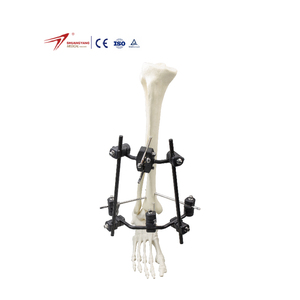
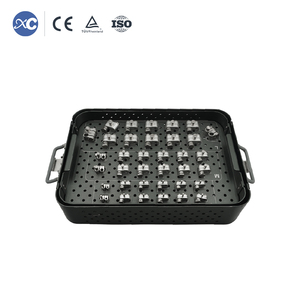
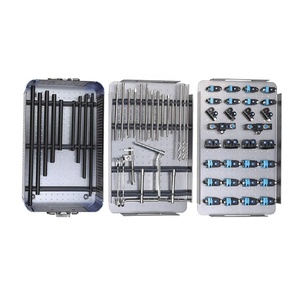
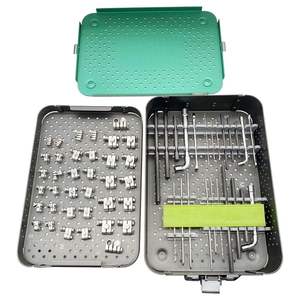
1. Technical Overview: Mechanics of Intraoperative Bone Plate Contouring
In modern traumatology, reconstructive orthopedics, and veterinary surgery, anatomical alignment relies heavily on the mechanical precision of bone plate benders. Surgical bone plates—whether manufactured from cold-worked AISI 316L (ASTM F138) stainless steel or Ti-6Al-4V ELI (ASTM F136) titanium alloy—must be contoured intraoperatively to match the complex, non-planar geometries of cortical bone surfaces. Proper bending ensures uniform stress distribution across the implant-bone interface, preventing stress shielding, premature plate fatigue, or construct failure.
Achieving ideal anatomical conformity without inducing micro-fractures or altering locking screw hole geometry demands specialized bending instruments. Professional OEM/ODM manufacturers design bone plate bending irons, roller benders, and press pliers with calibrated fulcrum radii. This technical white paper analyzes the physical mechanisms, metallurgical constraints, OEM custom engineering capabilities, and global procurement trends governing orthopedic plate deformation tools.
| Mechanical Parameter | Stainless Steel Plates (316L / 22-13-5) | Titanium Alloy Plates (Ti-6Al-4V ELI) | OEM Bender Design Requirement |
|---|---|---|---|
| Yield Strength ($\sigma_y$) | 690 - 830 MPa | 795 - 875 MPa | High-leverage mechanical advantage (minimum 12:1 force conversion) |
| Springback Angle ($\theta_s$) | 3° to 5° per 15° bend angle | 7° to 10° per 15° bend angle | Over-bending stop gauge integration or digital angle indicators |
| Notch Sensitivity | Moderate plastic deformation allowance | High susceptibility to micro-fissures | Ultra-smooth polished contact anvils (Ra < 0.2 µm) to avoid surface scoring |
| Locking Hole Distortion Risk | Low-to-Medium deformation under tension | High risk of thread pitch alteration | Bending plugs / threaded inserts mandatory during contouring |
2. Metallurgical Considerations & Stress Distribution During Cold Deformation
When an orthopedic surgeon applies three-point bending forces or rotational torque using bending irons, the material undergoes severe elastic-plastic transitions. The outer radius of the plate experiences tensile deformation, while the inner radius undergoes compressive stress. If the bending tool exerts concentrated point loads rather than distributed curved contact, the plate suffers from localized thinning and severe strain hardening.
As an established OEM/ODM Bone Plate Benders Factory, our R&D team utilizes Finite Element Analysis (FEA) to engineer ergonomic handle dynamics and replaceable contact jaws. Jaws machined from hardened tool steel (D2 or H13) or non-marring PEEK polymers prevent metallic transfer during contouring. Cross-contamination between bender jaw alloys and titanium implants can trigger galvanic corrosion post-implantation; therefore, specialized passivation protocols (ASTM A967) and biocompatible material selections are paramount.
Preventing Micro-Crack Initiation at Screw Holes
Plate bending must strictly avoid placing fulcrum points directly across a screw hole—especially in locking compression plates (LCP). Deforming the threaded geometry of a locking hole compromises the conical or spherical thread interface, resulting in cross-threading or mechanical failure of the locking screw upon insertion. Modern OEM plate benders incorporate localized relief channels or complementary threaded inserts that safeguard thread pitch accuracy during extreme contouring maneuvers.
Why Partner With Our OEM/ODM Production Facility?
Leveraging over 30 years of surgical instrument manufacturing mastery in Sialkot, Pakistan, supported by regional logistics hubs in the USA and Philippines.
CNC 5-Axis Precision Machining
Our state-of-the-art facility utilizes high-speed 5-axis CNC milling centers and Wire EDM technology to maintain sub-0.05mm tolerances on all load-bearing bender hinges, ratchets, and fulcrum pins.
Vacuum Heat Treatment & Passivation
Equipped with computer-controlled vacuum furnaces imported from Europe, we execute standardized hardening (50-54 HRC) and 24-hour continuous passivation to prevent pitting corrosion under repeated autoclave cycles.
Full Traceability & 6-Month Guarantee
Each batch undergoes rigid metallurgical verification, boil testing, and dimensional inspection. We back every instrument with a comprehensive 6-month product repair or replacement policy.
Comprehensive Range of Bone Plate Benders
Custom engineered solutions designed for human orthopedic surgery trauma kits, reconstructive surgery, and veterinary external fixation systems.
1. Handheld Plate Bending Irons & Pliers
Designed for intraoperative flexibility, handheld bending irons are utilized in pairs to impart precise 3D twists and helical curves into reconstruction plates, pelvic plates, and clavicle plates. Available with slot widths ranging from 1.5mm (micro fragment) up to 6.5mm (large fragment broad plates). Ergonomic satin-finished handles minimize hand fatigue during prolonged procedures.
2. 3-Point Roller Bending Pliers
Utilizing a smooth cam-action mechanical lever, 3-point roller benders apply progressive, continuous radii to straight dynamic compression plates (DCP). The integrated center anvil distributes compressive force evenly over a broader surface area, ensuring smooth curvature without dangerous sharp structural kinks.
3. Heavy-Duty Tabletop / Benchtop Press Benders
For thick structural trauma implants, distal femur locking plates, and veterinary external fixator rods, tabletop press benders deliver immense mechanical force. Featuring interchangeable anvil inserts, calibrated dial indicators, and heavy baseplates, these units allow pre-operative precision shaping based on 3D CT scan models.
4. Veterinary External Fixation Contour Tools
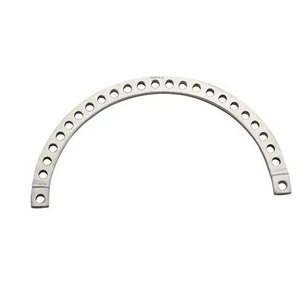
Specifically tailored for small animal, equine, and wildlife orthopedics, our veterinary bender collection includes ring fixator rod benders, acrylic pin benders, and compact unilateral frame adjustment tools. Engineered for extreme durability and rapid disassembly for field surgical sterilization.
3. Future Industry & Procurement Trends (2026–2030)
The global orthopedic surgical instrument market is undergoing rapid evolution driven by minimally invasive surgery (MIS), patient-specific 3D preoperative modeling, and strict regulatory harmonization (EU MDR compliance). Buyers and medical distributors sourcing from OEM/ODM Bone Plate Bender Factories must align with these advancements:
A. Integration of Smart Torque-Feedback Mechanisms
Next-generation bending instruments are incorporating mechanical load limiters and digital strain gauges. These prevent surgeons from exceeding the ultimate yield point of delicate titanium plates, eliminating hidden internal micro-fissures before the implant reaches the patient.
B. Low-Friction Biocompatible PVD Coatings
To address metal particulate shedding during intraoperative bending, leading B2B suppliers are applying Physical Vapor Deposition (PVD) Titanium Nitride (TiN) or Diamond-Like Carbon (DLC) coatings to bender contact anvils. These ultra-hard coatings (harder than 2000 HV) reduce friction coefficients to <0.1, virtually eliminating metallic debris generation.
C. Modular Jigs for Pre-Operative 3D Patient Models
Hospitals are increasingly adopting 3D-printed anatomical bone models created from patient MRI/CT data. OEM manufacturers now offer specialized benchtop bending jigs equipped with adjustable pin matrices, allowing scrub technicians to shape plates pre-operatively with exact spatial accuracy, dramatically cutting surgical anesthesia time.
Frequently Asked Questions (FAQ) for Global Buyers
Key commercial, technical, and regulatory insights for hospital procurement managers, medical device importers, and OEM brand owners.
Request an Immediate OEM/ODM Quotation & Catalog
Partner with Pakistan's premier surgical instrument factory. Our engineering team is ready to assist with CAD prototype reviews, custom branding, and competitive factory-direct wholesale pricing.