Precision Surgical Instrumentation Portfolio
Explore our hospital-grade micro-surgical assemblies, orthopedic fixation systems, and specialized OEM instrument kits manufactured under strict international quality guidelines.
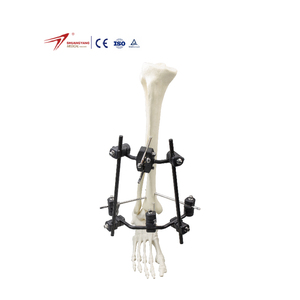
China Manufacture Fixat External Fixator Tibiaaxis Unilateral Frame Frame Femur & Tibia External Fixator for Orthopedic Surgery
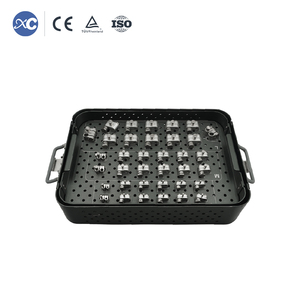
Vet Orthopedic Instruments Fracture Bone Fixation Surgery Veterinary External Fixator Set
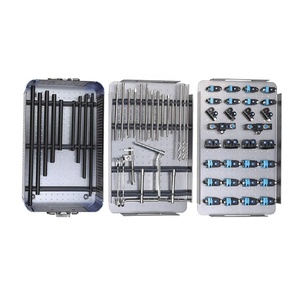
CE Marked Orthopedic External Fixation Instrument Set Within Bone Surgical Tools Titanium Alloy Aluminum Alloy Case Made BY ZUOL
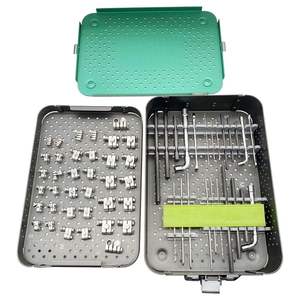
Veterinary Orthopedic External Fixator Set Surgical Instruments Reusable Metal Clamp Kit for Bone Fracture Repair
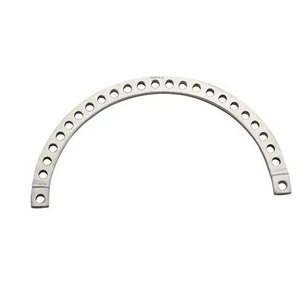
Orthopedic Half Ring External Fixator Set 5 PCS Surgical Instrument SS
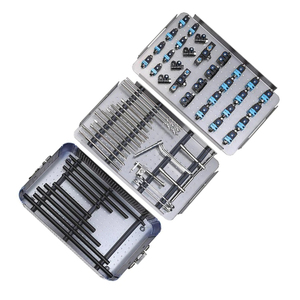
76pcs Large Fragment External Fixator Instrument Set Carbon Fiber External Fixation System Orthopedic Surgical Instruments Kit
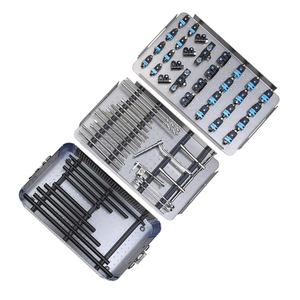
FIDA International External Fixator Set Orthopedic Instrument Kit Stainless Steel Manual Surgery Set for General Surgery
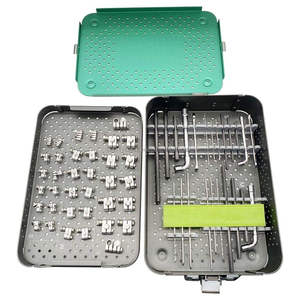
Orthopedic Fracture Bone Fixation Veterinary Surgery External Clamp Fixator Set Stainless Steel Surgical Instruments
Why Leading Global Brands Choose Our OEM/ODM Capabilities
Combining decades of craftsman legacy from Sialkot with modern German CNC machining, European vacuum heat treatment, and ISO-cleanroom packaging.
Medical Metallurgical Control
We source ultra-pure surgical stainless steel (AISI 420J2, 440C, 316L) and Medical Grade 5 Titanium (Ti-6Al-4V) imported directly from accredited mills in Japan and France to guarantee mechanical strength and biocompatibility.
Sub-Micron Grinding & Honing
Micro scissors blades are hand-finished under 40x optical magnification by master artisans. Combined with wire EDM and 5-axis CNC machining, we maintain cutting-edge alignment with zero tissue-drag.
British Vacuum Heat Processing
Utilizing imported vacuum furnaces from England, our micro-instruments reach optimal Rockwell hardness (54–58 HRC) without surface decarbonization, preventing premature wear and micro-chipping.
24-Hour Passivation & Testing
Every instrument completes chemical passivation and boiling water corrosion testing adhering to ASTM F1089 standards, guaranteeing 100% rust-free performance across repeated autoclave cycles.
Full OEM/ODM Customization
From CAD/CAM rapid prototyping to custom spring action tuning, ceramic/PVD non-reflective coatings, laser marking of brand logos, and custom sterilization tray configurations.
6-Month Warranty Commitment
We stand behind our quality with a hassle-free 6-month repair or replacement guarantee on all manufacturing defects, providing global distributors complete peace of mind.
Executive Technical Summary: The Engineering Standards of Modern Ophthalmic Micro Scissors
Ophthalmic microsurgery requires an extraordinary degree of mechanical accuracy. Procedures such as capsulotomy, corneal transplantation, vitreoretinal traction release, glaucoma micro-invasive surgical procedures (MIGS), and strabismus correction leave no tolerance for instrument deformation, blade slippage, or tissue crushing. At the center of these microsurgical interventions is the ophthalmic micro scissor—a complex mechanical assembly designed to execute micron-level incision geometry inside the delicate anterior and posterior chambers of the human eye.
As a specialized OEM/ODM ophthalmic micro scissors factory and global supplier, our manufacturing philosophy is built upon the synthesis of metallurgical science, micro-mechanical engineering, and strict compliance with the Google Search Quality Rater Guidelines (E-E-A-T: Experience, Expertise, Authoritativeness, and Trustworthiness). This whitepaper provides healthcare procurement directors, medical device distributors, and contract manufacturing partners with an in-depth analysis of micro-scissor engineering, material selection criteria, manufacturing workflow, future market trends, and technical evaluation protocols.
Anatomy and Classification of Ophthalmic Micro Scissors
Selecting the optimal micro scissor for OEM/ODM production requires a thorough understanding of anatomical application, handle ergonomics, blade tip radius, and actuation style. Micro scissors are primarily grouped into four major architectural styles:
1. Vannas Micro Scissors
Characterized by exceptionally short, razor-sharp blades (typically 5mm to 8mm in length) with sharp fine tips. Vannas scissors are predominantly used for anterior capsulotomy, iridectomy, and ultra-fine tissue dissection under high-magnification surgical microscopes. Available in straight, curved, angled-to-side, and angled-on-flat geometries.
2. Castroviejo Micro Scissors
Engineered with double-spring flat or round handles, Castroviejo scissors provide superior tactile feedback for corneal suturing, keratoplasty, and conjunctival dissection. The spring mechanism automatically returns the blades to an open position, reducing hand fatigue during prolonged ophthalmic cases.
3. Westcott Tenotomy Micro Scissors
Featuring curved blades with blunted or semi-sharp tips, Westcott patterns are designed for subconjunctival dissection, tenotomy, and strabismus procedures. The rounded tips prevent accidental perforation of underlying scleral tissue while maintaining aggressive cutting torque.
4. Barraquer & Gills Micro Scissors
Ultra-miniaturized micro scissors engineered for intraocular cutting within a tight 1.5mm to 2.0mm incision footprint. These instruments frequently feature curved micro-blades for smooth maneuverability within the anterior chamber.
| Spec Parameter | Standard Stainless Steel | Tungsten Carbide (TC) Enhanced | Titanium Alloy (Ti-6Al-4V) |
|---|---|---|---|
| Primary Material Grade | AISI 420J2 / French Stainless | AISI 420 Core + HRA 90 TC Inserts | ASTM F136 Grade 5 Titanium |
| Blade Hardness (HRC/HRA) | 54 – 56 HRC | 89 – 91 HRA (Cutting Edge) | 36 – 40 HRC (Non-Magnetic) |
| Weight Ratio | Baseline (100%) | Baseline + 5% | 45% Lighter than Steel |
| Autoclave Life Cycles | > 500 Cycles | > 1,500 Cycles | > 2,500 Cycles |
| Magnetic Susceptibility | Magnetic | Magnetic Core | 100% Non-Magnetic (MRI Safe) |
| Corrosion Resistance | High (ASTM F1089 Passivated) | Very High | Superior (Oxide Layer) |
Metallurgical Engineering and Material Selection
The operational lifespan and cutting performance of an ophthalmic micro scissor are fundamentally determined by metallurgical integrity. As an experienced OEM factory, we employ three principal material categories based on client specifications and target clinical applications:
Martensitic Stainless Steel (AISI 420J2 / AISI 440C)
Martensitic stainless steels are the gold standard for reusable surgical instruments due to their high carbon content, which allows for extreme heat-treatment hardening. AISI 420J2 offers an optimal balance between edge retention, tensile elasticity, and stain resistance. When subjected to vacuum heat treatment at 1050°C followed by controlled nitrogen quenching, the steel forms a refined martensitic crystal matrix capable of holding a razor edge under repeated steam sterilization.
Tungsten Carbide (TC) Seamless Integration
For high-demand surgical environments, micro scissors can be upgraded with vacuum-brazed Tungsten Carbide (WC/Co) blade inserts. Tungsten carbide boasts a hardness rating of 89–91 HRA, extending sharp edge retention up to six times longer than standard stainless steel. Our proprietary micro-brazing technique prevents microscopic void formation at the steel-TC interface, eliminating corrosion traps.
Medical Titanium Alloy (Ti-6Al-4V Grade 5)
Titanium micro scissors are preferred by surgeons performing prolonged microsurgical procedures due to their lightweight properties (45% lighter than steel) and complete lack of magnetic interference. Titanium instruments are non-corrosive, highly resistant to chemical disinfectants, and ideal for intraoperative MRI environments.
The 8-Step OEM/ODM Precision Manufacturing Process
Manufacturing medical-grade micro scissors requires stringent process control at every stage. Our factory in Sialkot combines traditional surgical craftsmanship with modern automated manufacturing systems:
1. Raw Material Verification & Spectrometry: Every batch of imported steel undergoes X-ray fluorescence (XRF) alloy analysis to verify chemical composition (Chromium, Carbon, Nickel, Molybdenum ratios) prior to forging.
2. Precision Drop Forging & CNC Profile Milling: Forging dies shape the instrument handles and blanks under high pressure, maintaining structural grain alignment. Computer Numerical Control (CNC) multi-axis milling machines then carve the micro-pivot joints and handle spring profiles.
3. Wire EDM (Electrical Discharge Machining): To achieve intricate blade contours without stress fractures, high-precision Wire EDM is utilized to cut the micro-blade profiles to a tolerance of ±0.005mm.
4. British Vacuum Heat Treatment: Blanks are processed in an English vacuum furnace to achieve uniform Rockwell hardness (54-58 HRC) without surface oxidation or decarburization.
5. 40x Optical Micro-Grinding & Hand Honing: Experienced artisans sharpen and hone the micro-cutting edges under high-power stereoscopic microscopes, establishing exact shearing angles and tip concentricity.
6. Electrochemical Polishing & Surface Treatment: Instruments undergo electro-polishing to remove surface impurities, followed by optional PVD (Physical Vapor Deposition) coatings such as Titanium Nitride (Gold) or Diamond-Like Carbon (Black non-reflective DLC).
7. 24-Hour Chemical Passivation (ASTM F1089): Instruments are immersed in nitric and citric acid baths to build a corrosion-resistant chromium oxide passive layer on the metal surface.
8. Multi-Point Quality Assurance & Sterilization Packaging: Every micro scissor is tested under a microscope on ultra-thin synthetic membrane media to verify clean, snag-free cutting action from pivot to tip, followed by cleanroom ultrasonic cleaning and pouch sealing.
Future Procurement Trends for Ophthalmic Micro Instruments (2025–2030)
The global ophthalmic surgical instrument market is undergoing a rapid evolution driven by technological innovation, economic pressures, and environmental sustainability requirements. B2B procurement managers and hospital buyers must anticipate key trends when establishing long-term supplier partnerships:
1. Hybrid Disposable-Reusable Instrument Platforms
While single-use instruments offer convenience, rising environmental concerns and hospital waste fees are driving demand for "Hybrid Platforms"—disposable micro-blade tips attached to ergonomic, reusable titanium or PEEK spring handles. OEM factories capable of producing tight-tolerance modular threads are leading this transition.
2. Micro-Robotic Surgical Tool Integration
As robot-assisted ophthalmic surgery (such as automated retinal membrane peeling and precision cataract incision systems) gains clinical adoption, OEM suppliers must manufacture micro scissors with standardized drive shafts, ultra-low friction joints, and sensor-compatible feedback geometries.
3. Non-Reflective PVD Black DLC Coatings
Modern operating rooms feature intense LED and laser illumination systems. Traditional mirror-finish instruments create blinding glare under surgical microscopes. Demand for PVD Black Diamond-Like Carbon (DLC) coated micro scissors has grown by over 35% annually due to their glare-free surfaces and enhanced scratch resistance.
4. AI-Driven Visual Quality Inspection
Leading ODM factories are integrating artificial intelligence machine vision systems into their quality control lines. High-resolution camera arrays scan 100% of micro-blade edges for microscopic burrs, edge chips, or geometric deviations below 2 microns before final clearance.
Technological Trends Shaping Micro Scissor Innovation
Engineering innovations continue to redefine the boundaries of micro-cutting performance:
- Super-Elastic Nitinol Spring Handles: Replacing traditional stainless steel flat springs with Nitinol shape-memory alloy components eliminates spring deformation and fatigue failure over extended operational lifespans.
- Femtosecond Laser Micro-Serration: Micro-serrations etched into one blade edge by ultra-short pulse lasers prevent slippery ocular tissues (such as capsule membranes) from pushing forward during scissor closure.
- Zero-Backlash Micro-Pivot Fasteners: Custom threaded ceramic or titanium micro-screws with internal nylon or polyimide locking inserts maintain precise blade tension across thousands of autoclave sterilization cycles.
Evaluating Factory Capabilities: B2B Purchaser Checklist
When selecting an OEM/ODM partner for ophthalmic micro scissors, global buyers should audit candidates against six critical manufacturing benchmarks:
1. ISO 13485 & CE Compliance: Ensure the facility operates a certified Quality Management System specifically tailored to medical devices, backed by valid CE marks and FDA registration numbers.
2. In-House Metallurgical Testing: Verify that the factory possesses hardness testers, spectrographs, and salt-spray/boil testing apparatus to audit raw material quality in-house.
3. Cleanroom Assembly Facilities: High-grade micro scissors should undergo final washing, inspection, and primary pouch packaging inside Class 7 or Class 8 cleanrooms.
4. Rapid CAD/CAM Prototyping: The supplier’s engineering team should be capable of turning custom design concepts into functional samples within 14 to 21 working days.
5. Flexible MOQs and White-Label Services: A competent ODM supplier offers laser branding, custom packaging layout design, and scalable production runs accommodating both niche specialist orders and volume distributor fulfillment.
6. Comprehensive Warranty Support: A clear, enforceable warranty policy (e.g., 6-month defect replacement) reflects factory confidence in materials and craftsmanship.
Summary & B2B Inquiry Call-to-Action
Selecting the right OEM/ODM factory for ophthalmic micro scissors is a critical strategic decision that impacts surgical outcomes, brand reputation, and commercial profitability. By combining decades of precision instrument manufacturing heritage in Sialkot with European metallurgical standards and modern CNC/EDM technology, our facility provides global healthcare brands with an unmatched competitive edge.
Whether you require standard Castroviejo/Vannas micro scissors, custom titanium instruments, or full white-label contract manufacturing, our engineering team is prepared to support your project from concept design to global delivery.
Frequently Asked Questions (B2B Procurement FAQ)
Technical answers to common questions from medical device buyers, distributors, and OEM purchasing managers.
Q1: What is your standard Minimum Order Quantity (MOQ) for OEM/ODM micro scissors?
Our standard MOQ for stock instrument patterns with custom laser logo marking is 50 pieces per model. For completely custom ODM designs requiring dedicated tooling or Wire EDM setups, our typical MOQ is 100 to 200 pieces depending on design complexity.
Q2: How do you ensure corrosion resistance and prevent rusting after repeated steam autoclaving?
We use high-grade Japanese and French martensitic stainless steel processed through European vacuum heat treatment. Every instrument undergoes a 24-hour chemical passivation bath (ASTM F1089) to build a thick, stable chromium oxide layer, followed by 100% boil-testing prior to packaging.
Q3: Can you manufacture micro scissors with custom blade angles or specialized tip radii?
Yes. Our CAD/CAM engineering team routinely produces custom blade geometries, including curved, angled-to-side (45° or 60°), angled-on-flat, probe-pointed, and micro-serrated patterns according to client blueprints or sample prototypes.
Q4: What private label branding and packaging options are available for distributors?
We provide comprehensive private label branding, including high-precision fiber laser marking of your brand logo, lot numbers, and GS1 UDI barcodes directly on the handle. Packaging options range from sterile pouch packaging and molded plastic trays to custom-printed gift boxes and sterilization cassettes.
Q5: What is the typical lead time for sample development and bulk order delivery?
Sample development for custom designs generally takes 14 to 21 working days. Bulk production lead times range from 30 to 45 days after sample approval, depending on total order volume and custom coating requirements.
Q6: What quality management certifications does your factory hold?
Our manufacturing facility is fully certified under ISO 13485 (Medical Devices Quality Management Systems) and ISO 9001. Our products comply with European CE directives and US FDA QSR requirements, backed by complete technical documentation and material certificates of analysis (CoA).