Precision Orthopedic Drill Systems & External Fixators
Engineered with high-grade Japanese and French stainless steel/titanium alloys, supporting full customization, private labeling, and autoclave sterilization.
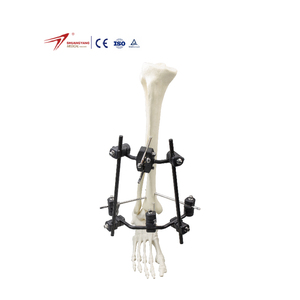
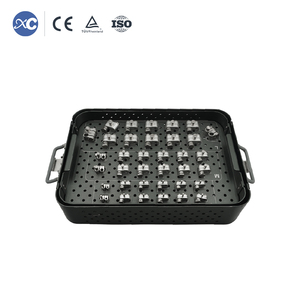
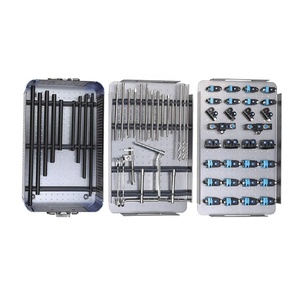
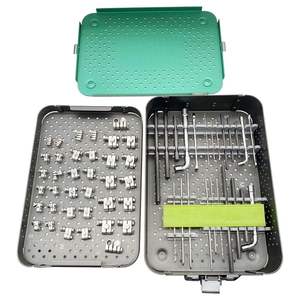
Engineering Authority: Enterprise Manufacturing Infrastructure & E-E-A-T Standard
In the high-stakes sector of surgical medical devices, precision power tools such as orthopedic bone drill systems, cannulated drill drivers, and sagittal oscillating saws constitute the backbone of modern trauma, reconstructive, and spinal surgical interventions. As a premier OEM/ODM orthopedic bone drill system supplier and exporter based in Sialkot, Pakistan—the globally recognized epicenter of surgical instrument craftsmanship—our organization merges over three decades of artisanal metallurgic expertise with state-of-the-art automated manufacturing infrastructure.
Building upon a heritage established in 1995, our integrated production lines operate strictly under ISO 13485:2016 quality management systems. We eliminate supply chain vulnerabilities by controlling every phase of production in-house: from metallurgical testing of raw materials to multi-axis CNC micro-milling, vacuum heat treatment, electro-polishing, and cleanroom packaging.
Core Manufacturing Pillars
Metallurgical Rigor
Imported Japanese & French stainless steel subjected to vacuum furnace heat treatment (manufactured in the UK), securing optimal HRC 48-52 rockwell hardness for prolonged cutting-edge sharpness without brittleness.
Micron CNC Tolerances
Swiss-type 5-axis CNC turning and EDM wire-cutting stations ensure drive gear concentricity, zero shaft wobble, and precise AO/Jacobs chuck quick-coupling inter-compatibility (tolerances to ±0.05mm).
24-Hr Chemical Passivation
Full 24-hour chemical passivation treatment and ultrasonic cleaning remove free iron particles from component surfaces, providing complete oxide barrier protection against steam sterilization corrosion.
Our global operations span export partners, hospital procurement groups, and OEM distributors across 18+ countries, including the United States, Philippines, Malaysia, Indonesia, standardizing delivery timelines while backing every tool with an industry-exclusive 6-Month Unconditional Warranty & Replacement Policy.
Technical Evolution & Industry Development Trends in Surgical Power Tools
The global market for orthopedic surgical power tools is undergoing a structural paradigm shift driven by minimally invasive surgery (MIS), digital surgical integration, and strict infection control directives. Modern orthopedic surgeons demand surgical drill systems that offer high torque-to-weight ratios, whisper-quiet operation, absolute autoclave resilience, and zero risk of thermal bone necrosis.
1. Transition to High-Efficiency Brushless DC (BLDC) Motors
Traditional brushed motors rely on physical carbon brushes that suffer mechanical wear, produce carbon dust contamination within internal gearboxes, and generate excessive resistive heat. Next-generation bone drill systems incorporate sensorless Brushless DC (BLDC) motors coupled with rare-earth Neodymium (NdFeB) magnets. BLDC technology provides:
- Thermal Necrosis Mitigation: Maintaining drill bit surface temperatures below the critical 47°C osteocyte necrosis threshold during high-RPM cortical bone drilling.
- Autoclave Longevity: Hermetically sealed motor stator windings capable of withstanding over 1,000+ steam sterilization cycles (134°C at 0.22 MPa) without insulation degradation.
- Variable Torque Profiles: Stepless speed adjustment from 0 to 1,200 RPM for high-speed drilling, with instant switching to high-torque low-speed (0-300 RPM) modes for reaming medullary canals.
2. Modular Quick-Coupling & Multi-Functional Tool Handpieces
Cost efficiency in modern trauma centers dictates that a single handpiece drive motor must handle multiple surgical steps. Contemporary OEM/ODM designs focus on modular quick-coupling snap-lock interfaces that allow seamless intra-operative interchangeability between:
| Modular Attachment Type | Operational Speed Range | Maximum Torque Output | Clinical Surgical Application |
|---|---|---|---|
| Cannulated Bone Drill Attachment | 0 – 1,200 RPM | ≥ 3.5 Nm | K-Wire driving, Kirschner wire insertion (0.8–4.5mm), fracture fixation pin placement. |
| Acetabular / Femoral Reamer Attachment | 0 – 350 RPM | ≥ 10.0 Nm | Joint replacement reaming, medullary canal preparation in total hip arthroplasty (THA). |
| Sagittal Oscillating Saw Attachment | 0 – 15,000 CPM | N/A (Oscillation angle 4°–5°) | Total knee replacement (TKA) osteotomy, bone resection, angle-cut precision operations. |
| Cranial Burr / Micro Drill Attachment | 0 – 40,000 RPM | ≥ 1.2 Nm | Neurosurgical craniotomy, spine laminectomy, maxillofacial micro-bone shaping. |
3. Battery Innovation: LiFePO4 & Smart Energy Management
The industry is rapidly phasing out obsolete Nickel-Cadmium (NiCd) and standard Lithium-Ion cells in favor of Lithium Iron Phosphate (LiFePO4) and sterile enclosed power modules. These advanced batteries eliminate memory effect issues, deliver flat discharge curves under heavy bone resistance loads, and feature integrated thermal fuse cut-offs that guarantee safety within operating room environments.
Future Procurement Trends for Medical Distributors & Hospital Networks
Procurement directors and B2B medical supply chains are recalibrating their sourcing strategies to navigate post-pandemic supply chain complexities, regulatory updates (such as EU MDR 2017/745 and US FDA 510(k) clearances), and aggressive cost-containment mandates.
1. Growth of Private Label OEM Sourcing
Distributors are shifting away from high-margin international tier-1 brand monopolies to direct partnerships with certified OEM factories. By customizing housing aesthetics, laser-etched branding, and custom aluminum case layouts, distributors achieve 40%–60% higher gross margins while offering competitive end-user pricing.
2. Total Cost of Ownership (TCO) Prioritization
Forward-thinking hospital networks no longer evaluate power tool procurement solely on initial acquisition price. Sourcing metrics now weigh long-term repair frequency, battery life cycles, and chuck repair costs. Standardized modular systems drastically lower TCO by simplifying replacement part logistics.
3. Dual-Source & Geographically Resilient Supply Chains
Over-reliance on single-region manufacturing exposes medical distributors to severe geopolitical tariffs and logistics bottlenecks. Sialkot, Pakistan offers an optimal balance: duty-free trade corridors, world-class surgical metallurgical tradition, and competitive labor structures backed by ISO-standard manufacturing quality.
Custom OEM/ODM Engineering Capabilities: From Concept to Cleanroom
As an established manufacturer, Warsi Surgical provides full-spectrum contract manufacturing services tailored to multinational medical brands, regional distributors, and specialized orthopedic startup ventures:
- Custom Handpiece Design & CAD Prototyping: Rapid 3D solid modeling, ergonomic handgrip adjustments, and custom shell anodization matching your brand's corporate identity.
- Private Label Laser Etching: High-precision fiber laser marking for company logos, unique device identifiers (UDI), lot numbers, and serial tracking directly on surgical steel.
- Custom Gearbox Torque Engineering: Tailored gear ratios designed for specific surgical specialties, including small animal veterinary orthopedics, pediatric trauma, or heavy-duty adult joint replacement.
- Turnkey Sterilization Container Design: Custom-fitted, hard-anodized aluminum or autoclavable PSU/PSSI polymer surgical trays with silicone holding fixtures for complete tool protection during transport and sterilization cycles.
Frequently Asked Questions (Procurement & Technical FAQ)
Comprehensive technical guidance for medical device importers, hospital purchasing agents, and OEM procurement managers.