Featured OEM/ODM Small & Large Fragment Fixator Sets
Explore our flagship, medical-grade small fragment surgical instruments and external fixation systems engineered for superior biomechanical stability and clinical safety.
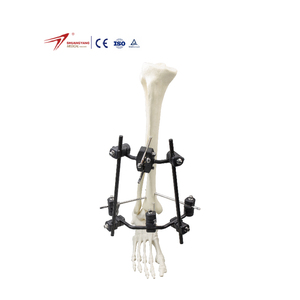
Unilateral Tibia & Femur External Fixator Frame
Heavy-duty unilateral modular frame engineered for stable fracture reduction, open trauma stabilization, and pediatric/adult orthopedic limb reconstruction.
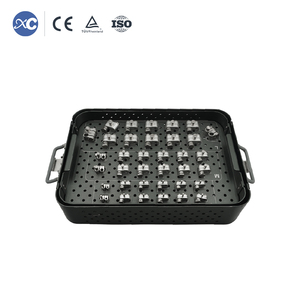
Veterinary Small Fragment External Fixator Set
Precision-engineered mini bone fixation clamp kit designed specifically for feline, canine, and small animal fracture reduction and reconstructive procedures.
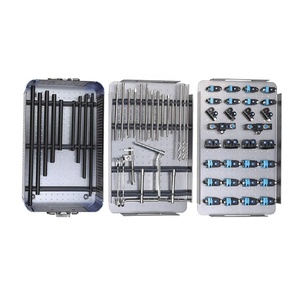
Titanium Alloy Universal External Fixation Kit
Ultra-lightweight Ti-6Al-4V external fixation suite housed in a custom anodized sterilizable aluminum case, featuring quick-lock rod clamps and pins.
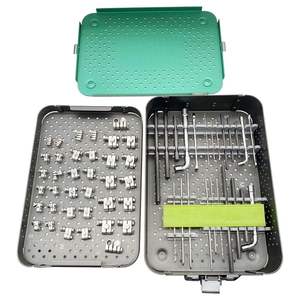
Reusable Multi-Pin Clamp Fixator Instrument Set
High-autoclave capacity metal clamp fixation kit with variable-angle pin coupling, built for repeated clinical cycles and extreme durability in trauma care.
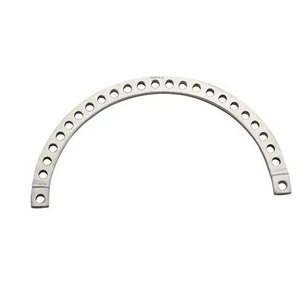
Orthopedic Stainless Steel Half Ring Fixator Set
Ilizarov-style modular 5-piece half-ring frame setup ideal for segmental limb lengthening, complex non-union treatment, and pediatric osteotomy alignment.
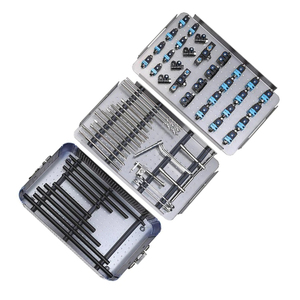
76-Piece Carbon Fiber Large Fragment Fixator Set
Comprehensive radiolucent carbon fiber rod fixation set engineered for total artifact-free X-ray monitoring during intraoperative fracture reduction.
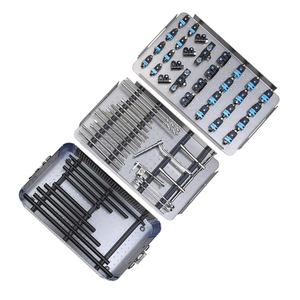
Universal Trauma Manual Surgery Instrument Kit
Versatile manual surgical kit combining fracture reduction forceps, bone drills, benders, and clamp keys, packaged in an ergonomic protective aluminum case.
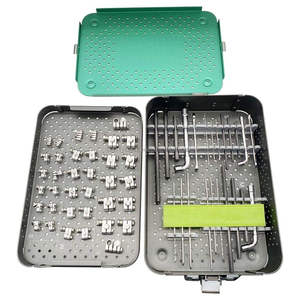
Stainless Steel Small Fragment Bone Clamp Fixator
Ultra-precise dual-locking clamp fixation kit optimized for small bone splinting, metacarpal/metatarsal alignment, and delicate reconstructive trauma surgeries.
Small Fragment Instrument Sets: Engineering, Metallurgy & Clinical Performance Standards
In modern orthopedic trauma management, the Small Fragment Instrument Set (typically 2.7mm / 3.5mm systems) represents the fundamental backbone for the operative stabilization of periarticular fractures, forearm diaphyses, fibular disruptions, clavicle fractures, and pelvic ring reconstructions. Unlike large fragment systems engineered for high-torque femoral and tibial shaft loads, small fragment instruments demand an intricate balance of micro-mechanical tolerance, metallurgical ductility, tactile feedback, and extreme corrosion resistance during repeated sterilization cycles.
1. Metallurgical Composition and Material Selection
The structural efficacy of surgical instruments directly depends on the alloy integrity utilized during hot forging and precision machining. Qualified OEM/ODM manufacturers strictly comply with international surgical steel standards:
- AISI 316L / ISO 5832-1 (Implants & Direct Contact Elements): Low-carbon austenitic stainless steel offering exceptional pitting resistance in saline intraoperative environments. Used predominantly for temporary implant pins, wire guides, and tissue contact sleeves.
- AISI 420 / ISO 7153-1 (Martensitic Cutting & Gripping Instruments): Hardened stainless steel formulated with high carbon content (0.15% - 0.40%) to ensure razor-sharp retention on drill bits, countersinks, osteotomes, bone reduction forceps teeth, and tap threads.
- Grade 5 Titanium (Ti-6Al-4V ELI / ISO 5832-3): Employed in premium radiolucent external fixator frames and mini-clamp assemblies where weight reduction by 40% significantly enhances patient comfort without sacrificing torsional stiffness.
- Carbon Fiber Reinforced Polymers (CFRP): Used in radiolucent connecting rods to permit zero-artifact fluoroscopic intraoperative visualization during complex fragment reduction.
2. Core Mechanical Components in a Universal Small Fragment Set
A standardized OEM/ODM 3.5mm / 2.7mm small fragment system manufactured for B2B procurement comprises several sub-assemblies, each requiring dedicated quality assurance protocols:
| Instrument Category | Technical Specifications & Dimensions | Critical Manufacturing Tolerances | Primary Clinical Function |
|---|---|---|---|
| Bone Screwdrivers | Hexagonal 2.5mm / StarDrive T15 / Cruciate, Quick-Coupling | Torque limit tolerance within ±0.05 Nm; CNC tip milling | Precise insertion and removal of 3.5mm cortex/cancellous screws |
| Drill Bits & Taps | Ø 2.5mm & Ø 3.5mm, calibrated depth rings, AO quick-latch | Flute concentricity < 0.02mm, micro-ground cutting edge | Precise pilot hole creation and tap thread cutting in cortical bone |
| Reduction Forceps | Pointed tips, self-centering, speed-lock thread ratchet mechanism | Jaw tip alignment within 0.05mm, fatigue-tested ratchet spring | Temporary anatomical fragment reduction prior to definitive plate clamping |
| Bending Pliers & Irons | Dual-contour radius slots for 2.7mm/3.5mm dynamic compression plates | Smooth-radius bending grooves to prevent plate notch stress | Three-dimensional intraoperative anatomical plate contouring |
| Drill Guides & Sleeves | Neutral/Eccentric load sleeves, threaded locking sleeve caps | Inner sleeve clearance 0.03mm over drill diameter | Guarantees concentric pilot hole alignment and dynamic compression logic |
As an established global manufacturer in Sialkot, Warsi Surgical integrates full 5-Axis CNC Milling, EDM Wire Cutting, and Automated Vacuum Heat Treatment to guarantee that every single screwdriver tip, tap thread, and pliers pivot maintains identical tolerances across high-volume production batches.
Future Procurement Trends in Small Fragment Surgical Instrumentation
The global orthopedic surgical instrument market is undergoing a seismic transformation driven by cost-containment mandates, strict international regulatory frameworks (EU MDR compliance), and the rapid expansion of Ambulatory Surgical Centers (ASCs). Healthcare procurement directors and medical device importers must adapt to several critical procurement dynamics over the coming decade:
1. Shift Toward Custom OEM/ODM Modular Kit Configurations
Hospitals no longer prefer rigid, monolithic master trays containing redundant tools. Instead, global procurement favors highly customized, task-specific modular kits (e.g., dedicated mini-fragment hand sets or calcaneal fixation sets). OEM suppliers capable of rapid CAD prototyping and custom aluminum graphic tray layout creation are capturing market share.
2. Demands for Advanced Passivation & Chemical Longevity
With central sterile supply departments (CSSD) utilizing aggressive enzymatic cleaners and high-temperature steam autoclaves, buyers require strict compliance with ASTM F1089 (Standard Test Method for Corrosion of Surgical Instruments). Chemical passivation treatments using citric or nitric acid baths are now mandatory to prevent pre-mature spot rusting and pitting.
3. Expansion of Veterinary & Pediatric Trauma Sectors
The veterinary surgical market is expanding at a CAGR exceeding 8.5%. Veterinary orthopedists require specialized small fragment tools (1.5mm, 2.0mm, and 2.7mm systems) that mirror human surgical quality. Manufacturers offering dual human/veterinary OEM solutions are providing immense catalog flexibility to global importers.
Development Trends in Orthopedic Fixation & Instrument Technology
Technological advancement in small fragment manufacturing focuses on eliminating intraoperative failure points, reducing operative setup times, and integrating smart ergonomics. Leading innovation pathways include:
A. Torque-Limiting Quick-Release Handle Technology
Over-tightening small fragment locking screws frequently results in cold welding of the screw head to the plate hole or stripping of the internal hex/star recess. Modern OEM sets incorporate pre-calibrated torque-limiting handles (1.5 Nm for 2.7mm screws; 2.5 Nm for 3.5mm screws) featuring slip-clutch mechanisms that disengage automatically upon reaching targeted tightness.
B. Radiolucent Carbon Fiber Hybrid External Fixators
Traditional steel fixator frames create significant artifact shadows under C-arm fluoroscopy, concealing bone contact alignment. Next-generation external fixation systems replace heavy metallic connecting bars with PEEK (Polyether ether ketone) or carbon fiber composite rods, allowing clear 360-degree intraoperative radiographic inspection of fracture healing lines.
C. Laser Matrix Marking and UDI Compliance
Global regulations (US FDA UDI rule and EU MDR System) require indelible tracking of reusable surgical instruments down to individual lot numbers and serial identifiers. Advanced Fiber Laser Engraving places high-density 2D DataMatrix codes onto 3.5mm instrument shanks without compromising the protective oxide layer of the stainless steel surface.
Enterprise Manufacturing Capabilities & Global OEM Advantages
Headquartered in Sialkot, Pakistan—the premier global manufacturing hub for precision surgical hand tools—Warsi Surgical Industries brings over 30 years of specialized manufacturing experience. We operate as an end-to-end original equipment manufacturer (OEM) and original design manufacturer (ODM) supplying high-volume surgical distributors, hospital networks, and private-label brands across 18+ countries including the USA, Philippines, Malaysia, Indonesia, and across Europe.
Raw Material Authenticity
We import certified medical-grade stainless steel bars and sheets directly from Japan (AISI 420/316L) and France. Every mill batch comes with 3.1 Material Test Certificates (MTC) verifying chemical and mechanical compliance.
ISO 13485 & CE Multi-Point Quality Assurance
Our multi-stage quality control includes Rockwell C hardness verification (HRC 48-52 for cutting edges), copper-sulfate corrosion testing, boil testing, and ultrasonic cleaning prior to final sterile tray packaging.
Rapid OEM Prototyping & Custom Branding
From 3D CAD modeling to physical sample delivery within 14 business days. We provide custom laser logo etching, private-label box packaging, color-anodized trays, and flexible MOQs for growing brands.
6-Month Quality Replacement Warranty
We stand behind our craftsmanship with an unconditional 6-month return and replacement policy against any manufacturing defects, alignment flaws, or premature pitting.
B2B Purchasing & OEM Manufacturing FAQ
Detailed technical and logistical answers for medical equipment importers, tenders, and private label procurement officers.
Q1: What minimum order quantities (MOQ) apply for custom OEM/ODM small fragment sets?
For standard catalogue small fragment kits, our minimum order quantity starts at just 5 sets. For full custom OEM/ODM branding—including custom tray anodization, laser marking, and proprietary handle molding—our flexible MOQ starts at 15 to 20 complete sets, or 50 pieces for individual surgical instruments.
Q2: Which steel grades are utilized for your 3.5mm drill bits, screwdrivers, and taps?
We utilize high-grade French and Japanese AISI 420B/420C martensitic stainless steel for cutting and tapping tools to achieve an optimal working hardness of HRC 50–54. Screwdriver shafts feature hardened AISI 440C or German AISI 630 (17-4 PH) precipitation-hardened stainless steel to prevent torsional twisting under heavy manual torque.
Q3: Can you manufacture custom sterilizable container trays tailored to our hospital tender specs?
Yes. We specialize in designing deep-drawn and CNC-milled aluminum alloy sterilization trays featuring silicone insert clamps, color-coded anodized lid finishes, and laser-engraved instrument outlines. We work directly from your 2D drawings or physical sample layouts.
Q4: How does Warsi Surgical ensure corrosion resistance and passivation quality?
Every instrument undergoes a 24-hour ultrasonic chemical cleaning followed by an automated nitric/citric acid bath passivation process strictly conforming to ASTM F1089 standards. Each batch is subjected to a 30-minute boiling water test and copper sulfate surface test to ensure absolute rust immunity.
Q5: What regulatory documentation and quality certifications do you provide for import customs clearings?
We provide complete regulatory support packages including ISO 13485:2016 certification, CE mark documentation, Certificates of Origin (Form A/COO), Material Mill Test Reports (MTC 3.1), Batch Sterilization Validation Certificates, and Free Sale Certificates (FSC).
Q6: Are your small fragment instruments compatible with major international plating systems (AO/ASIF standard)?
Absolutley. Our small fragment tools (screwdrivers, quick-coupling drill bits, countersinks, and depth gauges) are engineered to strict AO/ASIF international dimension standards, ensuring 100% cross-compatibility with global implant brands.
Q7: What is the typical production lead time for bulk B2B surgical export orders?
Standard order lead times range between 20 to 35 business days depending on order volume and packaging customisation. For urgent tender demands or sample evaluations, express manufacturing dispatches can be arranged within 10 to 14 days.
Q8: What international payment terms and shipping methods do you support?
We offer flexible international transaction methods including Wire Transfer (T/T), Irrevocable Letter of Credit (L/C at sight), PayPal, and Western Union. Shipping is dispatched via DHL, FedEx, UPS air express, or sea freight via major commercial carriers with full door-to-door tracking.
Selecting the Right OEM/ODM Manufacturer for Orthopedic Instruments
When selecting a contract manufacturing partner for high-precision orthopedic tools, medical device brands must evaluate four critical pillars: Dimensional Consistency, Metallurgical Certification, Passivation Integrity, and Warranty Responsiveness. Partnering directly with an established manufacturer eliminates multi-tier trading markups, shortens sample development cycles, and guarantees direct control over factory-level quality assurance.
At Warsi Surgical Industries, we combine traditional Sialkot metalworking craftsmanship with modern 5-axis CNC automation, offering unprecedented value and quality guarantees for medical distributors worldwide.
Request a Custom OEM Quote & Product Catalog
Direct factory pricing, custom laser branding, and fast international sample shipping. Talk directly to our technical engineering team today.