High-Precision External Fixators & Surgical Instrument Sets
Engineered for rigid fracture stabilization, trauma reconstruction, and veterinary orthopedics. Manufactured under strict ISO 13485 & CE regulatory compliance.
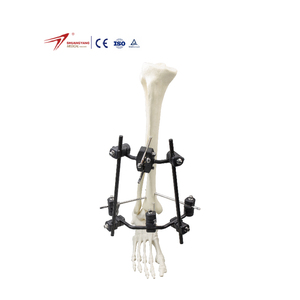
China Manufacture Fixat External Fixator Tibiaaxis Unilateral Frame Femur & Tibia External Fixator
Unilateral axial fixation system optimized for tibia and femur diaphyseal fractures. High torque clamping nodes prevent pin slippage.
Get a Quote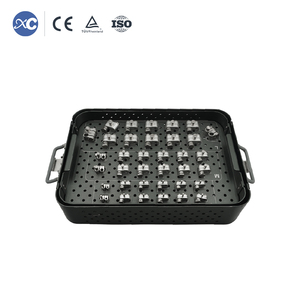
Vet Orthopedic Instruments Fracture Bone Fixation Surgery Veterinary External Fixator Set
Designed for small animal fracture management. Provides modular pin-to-bar configurations for varied anatomical structures.
Get a Quote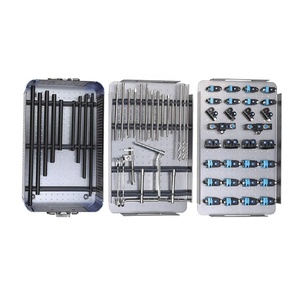
CE Marked Orthopedic External Fixation Instrument Set Titanium Alloy & Aluminum Case BY ZUOL
Complete trauma surgical instrument tray packaged in an anodized sterilizable aluminum alloy storage case. Biocompatible titanium construction.
Get a Quote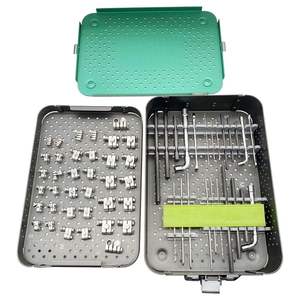
Veterinary Orthopedic External Fixator Set Reusable Metal Clamp Kit for Fracture Repair
Autoclavable stainless steel clamp assembly suitable for comminuted fractures in canine and feline orthopedic operations.
Get a Quote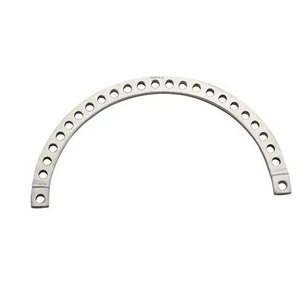
Orthopedic Half Ring External Fixator Set 5 PCS Surgical Instrument SS
Circular ring fixation modules for limb lengthening and complex deformity correction. High radial stiffness and stability.
Get a Quote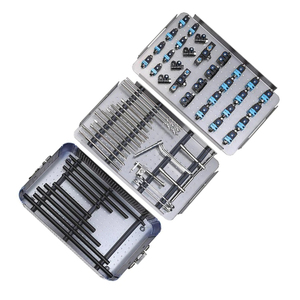
76pcs Large Fragment External Fixator Set Carbon Fiber Fixation System Kit
Radiolucent carbon fiber connection rods allow intraoperative X-ray fluoroscopy without metal image distortion.
Get a Quote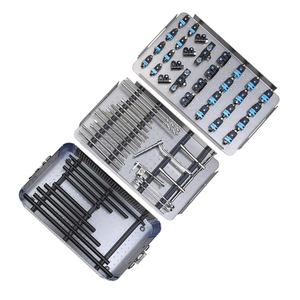
FIDA International External Fixator Set Stainless Steel Manual Surgery Kit
Standardized manual instrument set engineered for rapid emergency room trauma stabilization and perioperative fixation.
Get a Quote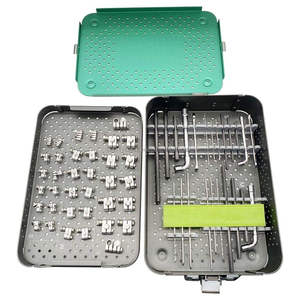
Orthopedic Fracture Bone Fixation Veterinary External Clamp Fixator Set
Compact fracture reduction kit engineered with high-friction universal clamps for stable alignment in veterinary surgeries.
Get a QuoteWhy Global Healthcare Distributors & Hospitals Partner With Us
From raw material metallurgic testing to 5-axis CNC micro-milling, our manufacturing footprint ensures absolute biomechanical reliability.
Sialkot & ZUOL Precision Engineering
Rooted in Sialkot, Pakistan—the premier global manufacturing hub for surgical instruments—our manufacturing combines legacy craftsmanship with state-of-the-art automated CNC and EDM wire-cutting machinery.
Biocompatible Materials Sourcing
We exclusively forge from imported medical-grade stainless steel (AISI 316L, 420, 630) and Titanium Alloy (Ti-6Al-4V ELI / ASTM F136) sourced directly from certified mills in Japan, Germany, and France.
Vacuum Heat & Passivation Treatment
Instruments undergo computer-controlled vacuum heat treatment to achieve exact Rockwell hardness (HRC 40–48), followed by a 24-hour nitric acid chemical passivation process for ultimate corrosion prevention.
Every surgical tool and fixation system supplied carries an unconditional 6-month product warranty. If any instrument exhibits micro-fractures, thread stripping, or material defects under normal operating procedures, our technical service replaces it immediately free of charge.
Comprehensive Analysis: Sourcing High-Grade Orthopedic Implants and Surgical Instrumentation
In modern hospital operations and medical distribution networks, selecting an orthopedic implants and instruments supplier is a strategic risk-management decision. Orthopedic procedures—ranging from trauma fracture stabilization using external fixator sets to joint reconstruction and spinal fusion—require surgical tools engineered to withstand immense biomechanical stress. A failure in pin clamping force, thread precision, or material yield strength can compromise surgical alignment, prolong intraoperative times, or lead to postoperative patient complications.
This procurement guide evaluates the key engineering standards, manufacturing processes, regulatory compliance protocols, and technological shifts defining the global orthopedic supply chain.
1. Material Science and Metallurgical Integrity
The structural performance of orthopedic hardware depends heavily on raw material composition. Suppliers must provide clear material traceability through Mill Test Certificates (MTC) matching international ASTM and ISO standards:
- ASTM F136 / ISO 5832-3 (Ti-6Al-4V ELI): Titanium alloy chosen for permanent and semi-permanent implants due to its high strength-to-weight ratio, biological inertness, and modulus of elasticity closer to human cortical bone compared to steel.
- AISI 316L (ASTM F138) Stainless Steel: Vacuum-melted surgical stainless steel with elevated chromium and nickel content. It provides exceptional toughness and resistance to pitting corrosion in high-load external fixation frames and temporary fracture plates.
- Carbon Fiber Composites: Utilized in connection rods for external fixator kits (e.g., 76pcs Large Fragment External Fixator Instrument Sets). Carbon fiber provides complete radiolucency during X-ray intraoperative fluoroscopy, allowing surgeons clear visual access to fracture reduction sites.
| Material Type | Tensile Strength (MPa) | Biocompatibility | Primary Clinical Application |
|---|---|---|---|
| Titanium Grade 5 (Ti-6Al-4V) | 860 - 960 | Highest (Osseointegration) | Internal Implants, Trauma Screws, Modular Fixators |
| 316L Surgical Stainless Steel | 490 - 690 | High (Passivated) | External Fixator Clamps, Bone Chisels, Rongeurs |
| Carbon Fiber Composite | 700 - 1200 | Chemically Inert | Radiolucent Fixator Connecting Rods |
| Aluminum Alloy (Anodized) | 200 - 450 | N/A (Non-Implant) | Sterilization Trays, Instrument Storage Cases |
2. Essential Manufacturing Processes: CNC Milling, Heat Treatment, and Passivation
High-grade orthopedic suppliers differentiate themselves through multi-stage quality control integrated directly into the production line:
Precision CNC Machining & EDM: Modern external fixators feature complex ball-joint clamps, serrated washers, and fine-pitch adjustment threads. Utilizing 5-axis CNC machining centers and wire Electrical Discharge Machining (EDM) ensures component tolerances within ±0.01 mm, preventing mechanical slop or thread binding during surgery.
Vacuum Heat Treatment: Untreated stainless steel rapidly loses sharp cutting edges (in bone osteotomes or rongeurs) and suffers structural yield under stress. Computer-monitored vacuum heat treating furnaces harden tools to exact Rockwell C specs (HRC 40–48) while maintaining core ductility to prevent brittle catastrophic failure.
Nitric Acid Passivation and Electro-Polishing: Free iron particles deposited during machining can trigger microscopic surface oxidation (rusting) after repeated autoclave cycles. Passivation strips free iron and forms a passive chromium oxide layer. Ultrasonic cleaning and electro-polishing leave a mirror-like finish that inhibits microbial adherence.
Future Procurement Trends in the Orthopedic Implants Market (2025–2030)
Procurement officers and B2B medical supply chains must prepare for several structural shifts impacting vendor selection over the next decade:
1. Shift Toward Additive Manufacturing (3D Printing)
Direct Metal Laser Sintering (DMLS) allows suppliers to manufacture implants with porous trabecular titanium surfaces. This porous structure mimics cancellous bone architecture, drastically improving early biological fixation and ingrowth.
2. Proliferation of Veterinary Orthopedics
The global veterinary orthopedic market is expanding at a CAGR exceeding 8.5%. Manufacturers are scaling dedicated veterinary external fixator sets and specialized mini-fragment plates designed specifically for companion animal and equine trauma care.
3. Hybrid Radiolucent Fixation Systems
Hospitals are replacing heavy all-metal external frames with hybrid systems combining aluminum-titanium alloy clamps and carbon fiber rods. This reduces weight for patient mobility while facilitating clear intraoperative imaging.
4. Strict Regulatory Harmonization (EU MDR & FDA)
The transition from MDD to EU MDR (Medical Device Regulation 2017/745) requires suppliers to maintain complete clinical evaluation reports (CER), Unique Device Identification (UDI) laser marking, and stringent post-market surveillance (PMS).
Supplier Evaluation Matrix: How to Qualify an OEM/ODM Manufacturer
When auditing potential orthopedic manufacturing partners in key industrial clusters like Sialkot or international production centers, procurement teams should evaluate vendors using the following four-stage assessment matrix:
- Quality Management System (QMS) Accreditation: Verify current ISO 13485 certification scope specifically covering "Design, Manufacture, and Distribution of Orthopedic Implants and Surgical Instruments."
- In-House Testing Facilities: Does the supplier conduct non-destructive testing (NDT), coordinate measuring machine (CMM) dimensional checks, boil testing for passivation verification, and fatigue torque testing in-house?
- Custom OEM/ODM & Prototyping Capabilities: Ensure the vendor provides CAD/CAM engineering assistance, rapid prototype forging, custom laser branding, and tailored sterilization packaging.
- Supply Chain Transparency & Minimum Order Quantities (MOQ): Assess lead time stability, global shipping insurance policies, flexible batch production sizes, and multi-currency payment options (T/T, L/C, PayPal).
Frequently Asked Questions (FAQ) for B2B Buyers
Answers to common technical, quality control, regulatory, and supply chain queries from hospital purchasing directors and equipment distributors.
Q: What international quality certifications do your orthopedic instruments hold?
Our production facilities operate under ISO 13485 quality management systems. Selected orthopedic external fixator kits, bone clamps, and instrument sets carry CE marking compliant with international medical device regulations, ensuring seamless import approval across North America, Europe, Asia, and the Middle East.
Q: What is the difference between 316L Stainless Steel and Titanium Alloy external fixators?
316L Stainless Steel fixators offer maximum rigidity, high shear strength, and cost efficiency, making them ideal for heavy trauma stabilization and short-to-medium duration external fixation. Titanium alloy (Ti-6Al-4V) is significantly lighter, highly biocompatible, CT/MRI compatible, and minimizes stress-shielding, making it preferable for long-term placement and sensitive patient profiles.
Q: Do you provide custom OEM/ODM manufacturing and private labeling?
Yes. We offer complete OEM/ODM solutions including custom CAD/CAM engineering, blueprint prototyping, custom laser engraving (logo, part numbers, batch codes), and custom-molded sterilizable aluminum trays or pouch packaging tailored to your brand's distribution specifications.
Q: How are your products tested for corrosion resistance and passivation quality?
All stainless steel instruments undergo a standardized 24-hour chemical passivation treatment followed by rigorous boil testing (ASTM A380/A967) and copper sulfate testing. This guarantees zero surface free-iron contaminants and confirms long-term rust prevention across hundreds of autoclave sterilization cycles.
Q: What are the standard lead times and Minimum Order Quantities (MOQ)?
Standard catalog inventory items ship within 7 to 14 business days. Custom OEM orders or specialized external fixator kits typically require a 30 to 45-day production cycle. We maintain flexible MOQ policies to support both regional specialty distributors and large hospital system tenders.
Q: Are veterinary external fixator sets interchangeable with human surgical tools?
While veterinary external fixators utilize identical high-grade surgical stainless steel and titanium materials, the pin sizes, bar diameters, and clamping mechanisms are specifically proportioned for small animal (canine/feline) or large animal anatomy. We offer specialized veterinary instrument lines designed specifically for veterinary orthopedic surgeons.
Q: What warranty terms apply to high-wear orthopedic surgical tools?
We back all instruments with a comprehensive 6-month product replacement warranty covering manufacturing defects, material failure, thread performance, or structural flaws. Defects under normal intended surgical use are replaced immediately without replacement cost.
Request a B2B Quotation & Product Catalog
Connect directly with our engineering sales representatives for factory-direct pricing, bulk distributor discounts, or custom OEM manufacturing quotes.