Featured Surgical Instrument & External Fixator Sterilization Systems
Explore our precision-engineered, autoclave-compatible sterilization trays and external fixation instrument systems. Manufactured using Japanese and French metallurgical alloys, anodized aluminum cases, and high-tensile carbon fiber components designed for extreme reprocessing durability in Central Sterile Supply Departments (CSSD).
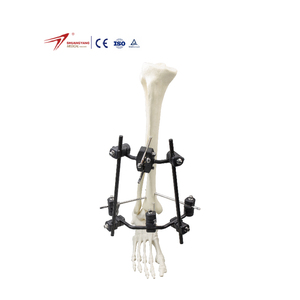
China Manufacture Fixat External Fixator Tibiaaxis Unilateral Frame Femur & Tibia External Fixator Set
Unilateral frame system engineered for tibial and femoral fracture fixation. Features high-grade stainless steel clamps and an anodized sterilization container.
Contact Us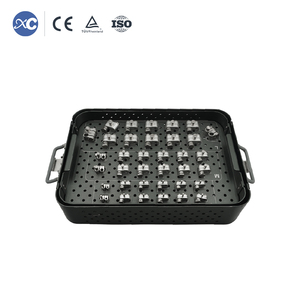
Vet Orthopedic Instruments Fracture Bone Fixation Surgery Veterinary External Fixator Set
Compact veterinary orthopedic fixation assembly packaged in a perforated, heat-resistant sterilization tray with custom silicone holding inserts.
Contact Us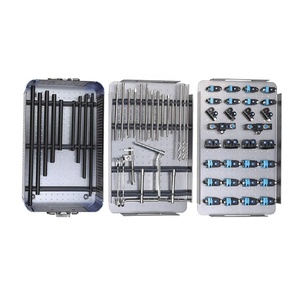
CE Marked Orthopedic External Fixation Instrument Set with Titanium Alloy & Aluminum Sterilization Case
CE-certified orthopedic tool set stored in a dual-layer aluminum alloy container. Engineered for rapid steam penetration and thermal dissipation.
Contact Us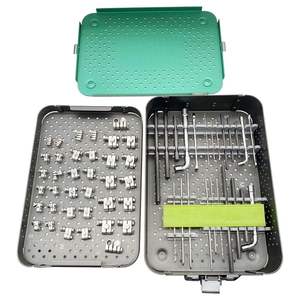
Veterinary Orthopedic External Fixator Set Reusable Metal Clamp Kit & Sterilization Storage Cassette
Reusable surgical clamp kit equipped with laser-marked organizing slots inside a rugged stainless steel mesh sterilization tray.
Contact Us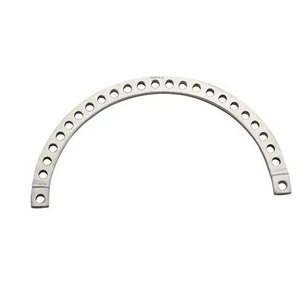
Orthopedic Half Ring External Fixator 5 PCS Stainless Steel Instrument Set with Autoclave Tray
Ilizarov-type half-ring fixation kit crafted from surgical grade AISI 316L stainless steel, housed in a heavy-duty perforated tray system.
Contact Us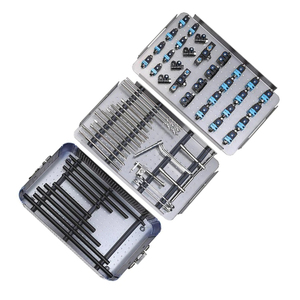
76pcs Large Fragment External Fixator Kit with Carbon Fiber Rods & Deep-Draw Sterilization Box
Comprehensive 76-piece large fragment trauma fixation system. Features radiolucent carbon fiber rods organized in a multi-tiered aluminum tray.
Contact Us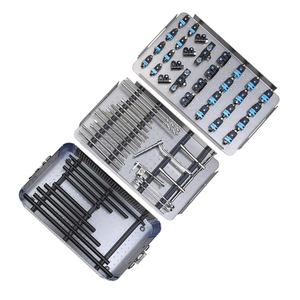
FIDA International External Fixator Orthopedic Manual Surgery Instrument Set & Sterilization Container
Universal surgical manual kit designed for acute bone trauma management. Delivered in a vacuum-heat-treated, corrosion-resistant stainless steel tray.
Contact Us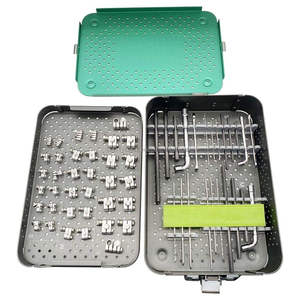
Orthopedic Fracture Bone Fixation Veterinary Surgery Clamp Fixator Set & Wire Basket Tray
Stainless steel veterinary trauma repair suite. Complete with precision-machined pin clamps and an electro-polished wire mesh tray.
Contact UsTechnical Architecture of Medical Sterilization Trays: Material Science & Autoclave Dynamics
In modern healthcare facilities, surgical instrument sterilization containers and trays are not merely passive storage boxes; they are critical thermal dynamic devices engineered to ensure complete biological decontamination. Central Sterile Supply Departments (CSSD) face rigorous compliance mandates under ISO 11607 and DIN EN 868-8. Selecting an inadequate sterilization tray can result in wet packs, non-sterile instrument tips, rapid galvanic corrosion, and catastrophic intraoperative instrument failure.
Technical Information Gain Insight: Standard commercial sterilization containers often suffer from uneven steam distribution due to non-optimized perforation ratios. Advanced medical-grade aluminum trays utilize a 42% open-area honeycomb perforation pattern combined with medical-grade PTFE hydrophobic filters to maintain steam velocity while guaranteeing absolute microbial barrier integrity upon cooling.
Metallurgical Comparison: Stainless Steel vs. Anodized Aluminum vs. PPSU Polymer
Global B2B buyers must navigate complex material specifications when procuring surgical instrument cassettes and external fixator trays. The primary structural materials each possess distinct physical, thermal, and chemical attributes:
Extensively utilized for deep-drawn trauma instrument sets and external fixator containers. Anodization forms a protective 25-micron aluminum oxide skin that resists corrosion from steam condensate while offering high thermal conductivity for rapid drying cycles.
Provides superior structural rigidity and tensile resilience. Stainless steel wire baskets and perforated trays undergo electro-polishing and 24-hour nitric acid passivation, rendering them immune to alkaline detergents (pH > 10.5) used in automated washer-disinfectors.
Polyphenylsulfone (PPSU) transparent lids and molded brackets withstand over 1,000 steam sterilization cycles at 134°C without physical embrittlement. Ideal for fine micro-surgical and ophthalmic tool visibility without lid removal.
Performance Evaluation Matrix: Sterilization Tray Engineering Standards
The following data matrix illustrates critical mechanical and chemical performance metrics gathered from laboratory stress tests across standard sterilization container configurations:
| Material Specification | Max Thermal Tolerance | Corrosion Resistance | Washer-Disinfector pH Limit | Avg. Lifespan (Autoclave Cycles) | Primary Application |
|---|---|---|---|---|---|
| 6061-T6 Hard-Anodized Aluminum | 141°C (285°F) | High (Passivated Layer) | pH 5.0 - 8.5 | 2,500+ Cycles | Trauma & External Fixator Containers |
| AISI 316L Stainless Steel Wire Mesh | 400°C (752°F) | Exceptional (Nitric Passivated) | pH 1.0 - 14.0 (Alkaline Resistant) | 5,000+ Cycles | Heavy Orthopedic & General Surgery Baskets |
| Radel® PPSU Engineering Resin | 138°C (280°F) | Chemical Inertness | pH 2.0 - 12.0 | 1,200+ Cycles | Neurosurgery & Micro-Instrument Trays |
| Carbon Fiber Composite Inserts | 160°C (320°F) | Complete Immunity | pH 4.0 - 10.0 | 3,000+ Cycles | Radiolucent Fixator & Spine Instrument Trays |
Evaluation Criteria for Top 10 Global Sterilization Tray Suppliers & Exporters
When evaluating overseas medical supply partners for surgical instrument tray systems, procurement directors must look beyond surface unit pricing. Hospital Central Sterile Services and medical device OEMs require manufacturers capable of meeting stringent international validation frameworks. Below are the key pillars that define top-tier suppliers:
Leading suppliers maintain full ISO 13485 medical device quality management systems. Certifications must cover both the raw metallurgical processing and the finished container assembly, backed by verifiable audit reports.
Top-tier factories possess multi-axis CNC milling machines and hydraulic deep-draw presses. This ensures precise corner radiuses, seamless welds, and custom silicone bracket slots tailored to specific surgical sets.
Corrosion failure in autoclaves often stems from inadequate post-machining passivation. Reputable exporters employ automated chemical bath lines with copper sulfate testing to verify zero surface free iron.
From GS1 DataMatrix UDI barcode etching to color-coded anodized lid options, leading manufacturers allow medical brand owners to fully customize tray layouts to optimize OR instrument layout workflows.
Sterilization cases undergo violent transit and OR handling. Leading exporters certify their tray latching mechanisms and corner bumpers against 1-meter drop tests while fully loaded with heavy orthopedic implants.
Established suppliers provide complete documentation packages, including Material Test Reports (MTRs), biocompatibility compliance, export custom clearance documentation, and multi-currency payment flexibility.
Future Procurement & Technological Trends in Surgical Sterilization Systems (2026–2030)
The medical device packaging industry is undergoing rapid technological evolution driven by smart tracking requirements, hospital sustainability goals, and surgical automation. B2B procurement teams must align their supply chains with the following emerging industry paradigms:
1. Smart RFID & UDI-Integrated Tray Ecosystems
Hospitals are moving away from manual paper tracking for surgical sets. Modern sterilization trays now incorporate high-temperature RFID chips encased in PEEK resin or direct laser-etched 2D DataMatrix barcodes compliant with FDA Unique Device Identification (UDI) regulations. This enables automated inventory scanning from CSSD washer-disinfectors directly into the operating room theater.
2. Eco-Sustainable & Modular Insert Architecture
Single-use wrap materials generate massive hospital plastic waste. The industry shift toward rigid barrier sterilization containers with reusable PTFE filters drastically reduces operating expenses while offering modular silicone holder inserts that can be reconfigured for updated instrument sets without scrapping the outer metal container.
3. Radiolucent Carbon Fiber Hybrid Trays
For trauma procedures requiring intraoperative C-arm fluoroscopy (such as external fixation alignment), traditional metal trays are being replaced by carbon-fiber-reinforced polymer cassettes. These radiolucent containers allow surgeons to verify instrument completeness and perform alignment verification directly under X-ray imaging without removing tools from the sterile field.
Enterprise Advantage: Warsi Surgical Industries Manufacturing Capabilities
Based in Sialkot, Pakistan—the premier global center for precision surgical instrument manufacturing—Warsi Surgical Industries brings over 30 years of family-owned manufacturing heritage combined with modern CNC precision engineering. We specialize in producing comprehensive orthopedic, neurosurgery, spine, and external fixation instrument systems shipped to healthcare distributors in over 18 countries.
We exclusively import premium-grade stainless steel from Japan and France, and aerospace-grade 6061-T6 aluminum. Every alloy lot undergoes chemical composition lab validation prior to forging.
From initial drop-hammer forging and precision CNC milling to vacuum heat treatment (using imported English furnaces), electro-polishing, 24-hour passivation, and boil testing, zero defects are tolerated.
We offer complete contract manufacturing support for global brands. Our services include CAD/CAM prototype development, custom bracket engineering, and precision laser branding.
All sterilization containers and surgical instruments produced by Warsi Surgical are backed by a comprehensive 6-month product return or replacement guarantee against manufacturing flaws.
With international representation across Pakistan, the United States, and the Philippines, our dedicated export support team handles seamless cross-border customs clearance and logistics.
By controlling 100% of manufacturing in-house in Sialkot without middleman markups, we deliver factory-direct wholesale pricing with flexible payment structures (T/T, L/C, PayPal).
Frequently Asked Questions (FAQ) for B2B Buyers & Distributors
Q1: What are the primary differences between perforated trays and continuous rigid container systems?
Perforated sterilization trays require external sterilization wrap (such as blue polypropylene CSR wrap) to maintain post-autoclave sterility. Rigid container systems feature built-in mechanical latches and replaceable PTFE or paper filter retention plates that eliminate wrapping steps, providing superior protection against sharp instrument puncture and reducing recurring wrap costs.
Q2: How do you prevent galvanic corrosion when storing dissimilar metals in the same sterilization tray?
When titanium implants, stainless steel instruments, and aluminum trays undergo high-temperature steam autoclaving, electrolyte contact can induce galvanic corrosion. We prevent this by integrating medical-grade silicone holding mats and non-conductive PEEK bracket sleeves that isolate metal contact points.
Q3: What passivation standards do your surgical instrument sterilization trays comply with?
Our stainless steel trays and wire baskets undergo 24-hour nitric acid chemical passivation in accordance with ASTM A967 and ISO 16061 standards. This removes free iron particles introduced during CNC machining and forms a continuous chromium oxide surface layer that prevents pitting and rust formation in steam autoclaves.
Q4: Can we request custom tray dimensions and custom silicone bracket layouts for proprietary OEM sets?
Yes. We specialize in full OEM/ODM manufacturing. Our engineering team utilizes 3D CAD modeling to design custom tray dimensions, bracket positioning, color-coded anodized lids, and direct laser-engraved instrument silhouettes to fit your exact tool sets.
Q5: What is the Minimum Order Quantity (MOQ) for custom-branded sterilization containers?
Our standard MOQ for wholesale production is highly flexible. For standard stock configurations, MOQs start as low as 10 to 20 units. For fully customized deep-drawn aluminum containers with custom laser etching, our standard production MOQ typically starts at 50 units per design.
Q6: Are your sterilization cases compatible with all standard hospital autoclave cycles?
Yes. All of our aluminum, stainless steel, and polymer containers are fully validated for Pre-Vacuum Steam Autoclaving at 134°C (273°F) for 18 minutes, as well as Ethylene Oxide (EtO) gas sterilization and low-temperature hydrogen peroxide plasma cycles.
Q7: How do you ensure dry packs and eliminate moisture retention after steam sterilization?
Dry pack prevention is engineered directly into our tray architecture. By maintaining optimal base perforation patterns, sloped interior drainage channels, and lightweight aluminum alloys with high thermal responsiveness, condensation rapidly evaporates during the autoclave vacuum drying phase.
Q8: What documentation is provided with bulk export orders for customs clearance?
Every bulk shipment includes a comprehensive documentation binder containing Certificate of Conformance (CoC), Raw Material Test Reports (MTRs), ISO 13485 quality audit certificates, CE compliance declarations, Commercial Invoices, Packing Lists, and Certificate of Origin (COO).