Featured Orthopedic Fixation & Periosteal Instruments Showcase
Direct-from-factory catalog featuring high-grade surgical titanium alloy and martensitic stainless steel instrument kits certified for human and veterinary orthopedic procedures.
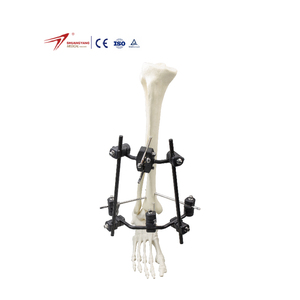
Unilateral Tibial & Femoral External Fixator System
Heavy-duty orthopedic trauma unilateral frame engineered for high rigid stability during complex leg fracture reduction and length correction.
- Material: Titanium / Stainless Steel
- Application: Femur & Tibia Reduction
- Autoclave Cycle: 134°C / 2.1 Bar
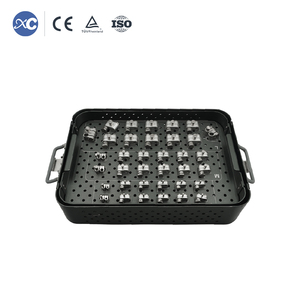
Veterinary Precision External Bone Fixation Instrument Set
Complete modular surgical fixation kit specially scaled for small to large animal fracture stabilization and bone reconstruction.
- Target: Veterinary Trauma Surgery
- Components: Clamps, Rods, Pins
- Certification: CE, ISO 13485
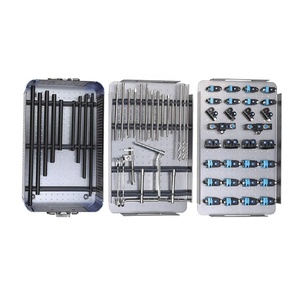
CE-Marked Titanium External Fixation System in Anodized Container
Premium medical titanium alloy modular fixator kit housed in an ultra-durable anodized aluminum sterilization box.
- Container: Aluminum Alloy Steri-Case
- Finish: Anti-Reflective Passivated
- Grade: Medical Grade 5 Titanium
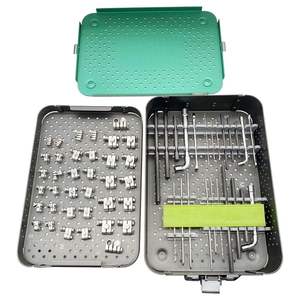
Reusable Multi-Pin Clamp Fixator Kit for Fracture Repair
High-tensile reusable stainless steel bone clamps designed for rapid intraoperative adjustments and secure pin holding.
- Features: Quick-Lock Mechanism
- Steel: AISI 420 Martensitic
- Durability: 500+ Sterilization Cycles
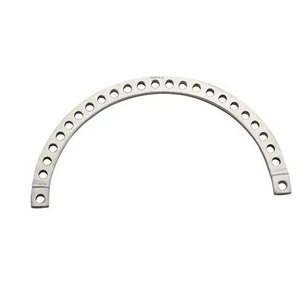
5-Piece Stainless Steel Orthopedic Half-Ring Fixator Set
Ilizarov-compatible surgical half-ring system tailored for limb lengthening, complex non-unions, and multi-planar deformities.
- Design: Circular / Half-Ring Module
- Set Count: 5 Core Instrument Assemblies
- Corrosion Test: Boiling Water ASTM F1089
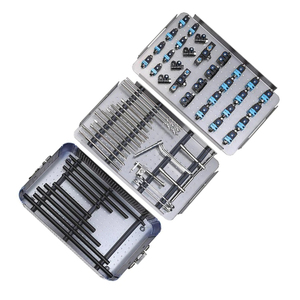
76-Piece Carbon Fiber Large Fragment External Fixator Kit
Ultra-lightweight radiolucent carbon fiber connector system allowing real-time X-ray intraoperative fracture visualization.
- Material: Carbon Fiber + SS316L
- Kit Size: 76 Precision Components
- X-Ray: 100% Radiolucent Rods
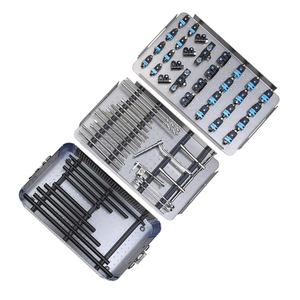
Master Surgical Stainless Steel Manual Fixator & Dissection Set
Comprehensive manual orthopedic assembly kit for emergency trauma care, bone elevation, reduction, and temporary fixation.
- Scope: General Trauma & Orthopedics
- Handle: Ergonomic Non-Slip Knurling
- Passivation: Nitric Acid Bath Passivated
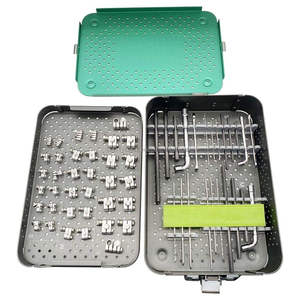
Stainless Steel Orthopedic Fracture Clamp & Elevation Kit
Professional surgical clamp system featuring high torque resistance, sharp periosteal interface stability, and smooth mechanical locking.
- Clamping Range: 2.0mm - 6.0mm Pin Dia
- Finish: Satin Matte Anti-Glare
- Warranty: 6-Month Replacement Guarantee
Surgical Periosteal Elevators: Metallurgical Standards & Biomechanical Mechanics
Surgical periosteal elevators represent an irreplaceable baseline category within the global orthopedic and neurosurgical instrument ecosystem. Designed specifically to strip, elevate, and mobilize the delicate periosteum layer covering osseous tissue without causing collateral soft-tissue laceration, these instruments require an intricate balance of razor-sharp bevel geometry and structural blade rigidity.
As a premiere China surgical periosteal elevators supplier and exporter working in direct manufacturing synergy with international healthcare standards, our engineering framework enforces absolute compliance with ASTM F899 standards for surgical stainless steel alloys. The mechanical efficacy of periosteal elevation relies directly on metallurgical grain structure, blade edge maintenance, and ergonomic tactile feedback delivered to the operating surgeon.
Clinical Insight: Tissue atraumatization during periosteal detachment relies upon a sharp bevel angle maintained between 15° and 25°. Poorly tempered steel results in blade micro-burrs that tear the fibrous cambium layer, triggering prolonged postoperative osteolysis and localized inflammation.
Core Typology & Blade Geometries of Surgical Elevators
Professional procurement teams must evaluate periosteal elevators according to anatomical surgical target sites. Below is an authoritative breakdown of standard surgical patterns manufactured within our high-precision facilities:
- Cobb Periosteal Elevators: Engineered with broad, heavy-duty blades ranging from 6mm to 30mm width, equipped with solid hexagonal or hollow ergonomic handles. Ideal for spine dissection, spinal fusion, and large-fragment orthopedic procedures requiring heavy leverage against dense cortical bone.
- Freer Periosteal Elevators: Featuring double-ended curved and straight blades (typically 4.5mm width). Crucial for micro-surgical, maxillo-facial, nasal, and delicate pediatric orthopedic tissue elevation.
- Key Periosteal Elevators: Designed with distinctive semi-sharp curved square tips, serving as the gold standard for exposing long bone diaphyses during open reduction and internal fixation (ORIF).
- Joseph Periosteal Elevators: Narrow, sharp, specialized elevators (2mm to 5mm blade width) utilized extensively in delicate hand/foot surgery, plastic surgery, and subperiosteal tissue elevation.
- Langenbeck & Matson Elevators: Featuring combined elevator-retractor contours tailored for intercostal and deep-tissue rib/bone segment exposures.
Enterprise Manufacturing Infrastructure & Technical Supremacy
Building upon 30+ years of manufacturing heritage rooted in advanced surgical toolmaking, our manufacturing ecosystem merges the industrial scale of China's high-tech manufacturing supply chains with rigorous international quality assurance protocols. We control every stage of fabrication from raw billet forging to final cleanroom packing.
5-Axis CNC Micro-Milling
State-of-the-art German and Japanese CNC wire EDM systems ensure blade edge tolerances down to ±0.01mm, eliminating batch-to-batch geometrical variance.
Computerized Vacuum Heat Treatment
Equipped with vacuum heat treatment furnaces imported from Europe. Martensitic stainless steel achieves a controlled hardness of 50–56 HRC without surface decarburization.
Automated Chemical Passivation
Full 24-hour ultrasonic cleaning and chemical passivation treatment forming a chromium-oxide protective layer. Tested via ASTM F1089 boiling water and copper sulfate methods.
Full OEM/ODM Prototyping
In-house CAD/CAM engineering team offering 3D blueprint creation, rapid physical prototype turnarounds within 14 days, and custom brand laser-marking.
Direct OEM Factory Pricing
By eliminating intermediate brokerage channels, we deliver up to 35% cost savings for global medical distributors without sacrificing raw material integrity.
6-Month Defect Replacement
Unconditional 6-month product guarantee. Any instrument failing to perform under standardized hospital autoclaving cycles will be replaced free of charge.
Future Trends in Surgical Instrument Sourcing & Development (2026–2035)
The global market for surgical periosteal elevators and bone dissection systems is undergoing rapid technological transformation. Driven by advancements in minimally invasive surgery (MIS), robot-assisted orthopedics, and heightened hospital infection prevention controls, procurement directors must align with suppliers capable of next-generation product innovation.
1. Advanced Surface Engineering: PVD, TiN & Diamond-Like Carbon (DLC) Coatings
Traditional satin-finish stainless steel instruments are increasingly yielding to physical vapor deposition (PVD) surface modifications. Titanium Nitride (TiN) and Diamond-Like Carbon (DLC) coatings provide a non-reflective black or gold finish that boosts micro-surface hardness beyond 70 HRC. These ultra-hard coatings reduce glare under intense operating room light LEDs, prevent tissue adhesion, and dramatically extend sharp edge retention across thousands of surgical uses.
2. Ergonomic Hollow Handle Architecture & Weight Reduction
Surgeon fatigue during multi-hour spinal fusion or pelvic reconstruction procedures has elevated handle ergonomics to a primary purchasing criterion. Modern periosteal elevator designs utilize large-diameter hollow knurled handles. By hollowing out the internal stainless core while expanding external grip diameter (up to 12mm–15mm), manufacturers achieve a 40% reduction in overall instrument mass while drastically improving rotational control and reducing carpal tunnel strain.
3. Material Traceability & Unique Device Identification (UDI) Integration
Regulatory authorities including the US FDA and European MDR 2017/745 mandate strict Unique Device Identification (UDI) for reusable surgical instruments. Next-generation production lines utilize high-precision fiber laser markers capable of etching 2D DataMatrix codes directly onto elevator handles. This enables automated hospital CSSD (Central Sterile Supply Department) tracking, monitoring sterilization cycles, usage counts, and maintenance logs across the instrument's entire life cycle.
4. Shift Towards Direct-From-Manufacturer OEM Partnerships
Healthcare supply chains are actively reducing reliance on regional distributors by forming direct contract manufacturing alliances with certified Asian factories. Direct sourcing provides custom container configuration, custom laser logo branding, batch-specific mill test reports (MTR), and predictable lead times for high-volume tender orders.
Surgical Elevator Metallurgical & Performance Specification Matrix
The following technical matrix outlines the comparative material specifications, hardness indices, and quality compliance metrics governing our manufacturing lines:
| Specification Parameter | Martensitic SS (AISI 420) | Austenitic SS (AISI 316L) | Medical Titanium (Ti6Al4V Grade 5) |
|---|---|---|---|
| Primary Application | Sharp Blades, Elevator Tips | Instrument Handles, Outer Frames | Radiolucent Fixator Plates & Elevators |
| Rockwell Hardness (HRC) | 50 – 56 HRC | 25 – 32 HRC | 36 – 42 HRC |
| Corrosion Resistance | High (Passivated ASTM F1089) | Ultra-High (Acid Resistant) | Immune to Biological Fluids |
| Tensile Strength (MPa) | 1,600 – 1,900 MPa | 550 – 750 MPa | 900 – 1,050 MPa |
| Autoclave Longevity | > 500 Cycles | > 1,500 Cycles | > 2,000 Cycles |
| Regulatory Standards | ASTM F899 / ISO 7153-1 | ASTM F138 / ISO 5832-1 | ASTM F136 / ISO 5832-3 |
Frequently Asked Procurement Questions (FAQ)
Detailed technical and commercial answers tailored for hospital purchasing managers, medical device distributors, and OEM brand buyers.