Featured Spine & External Fixation Systems
Explore our CE & ISO-certified orthopedic and spinal surgical kits, manufactured from Japanese AISI 420 stainless steel and Titanium Grade 5 (Ti-6Al-4V ELI) with ultra-precise tolerances.
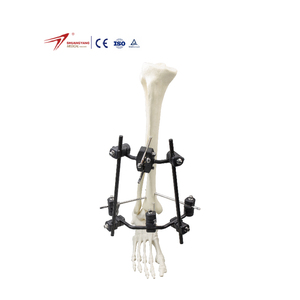
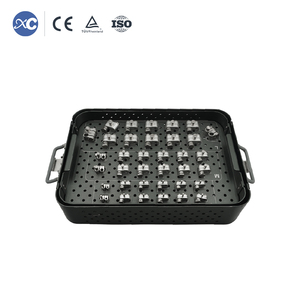
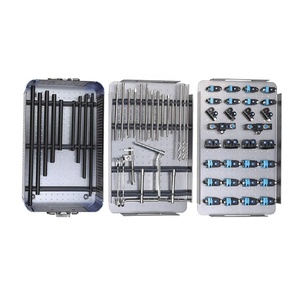
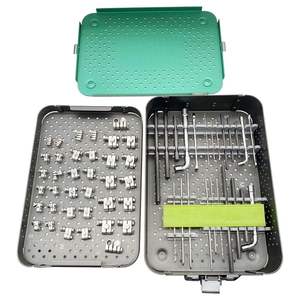
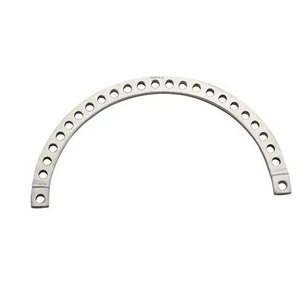
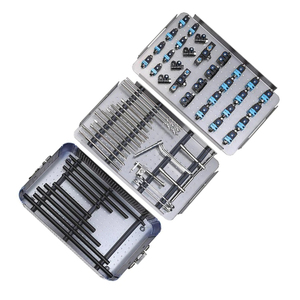
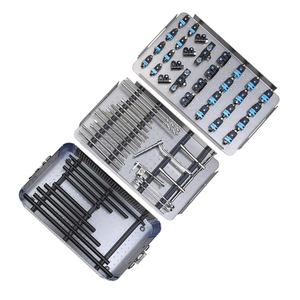
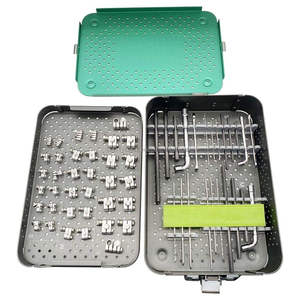
Micro Lumbar Discectomy (MLD) System Engineering Specifications
Micro Lumbar Discectomy (MLD) represents the surgical gold standard for treating symptomatic lumbar disc herniation resistant to conservative therapeutic modalities. Performing microsurgical nerve root decompression through minimal operative windows requires surgical instrumentation capable of combining extreme structural rigidity with ultra-slender shaft geometries. Modern MLD sets must empower spine surgeons to work under high-magnification operating microscopes or high-definition endoscopes without obscuring visual pathways or compromising tactile feedback.
As a premier global exporter and OEM manufacturer, our production framework integrates metallurgical excellence with ergonomic shaft bayoneting. Each instrument within our specialized Micro Lumbar Discectomy tray—including Caspar Micro Retractors, Kerrison Punch Rongeurs, Micro Pituitary Discectomy Forceps, Nerve Root Retractors, and Micro Ball-Tipped Probes—is crafted to eliminate mechanical flexure and eliminate tissue trauma during high-stakes spinal procedures.
Critical MLD Instrument Performance Metrics
-
✓
Metallurgical Grade: AISI 420 (1.4021) Stainless Steel & Titanium Ti-6Al-4V ELI.
-
✓
Hardness Threshold: Rockwell C (HRC) 48–52 post vacuum heat-treatment.
-
✓
Surface Finish: Non-reflective PVD Black Nitride or Matte Satin Anti-Glare Coating.
-
✓
Cleaning/Autoclave Integrity: Cleanable ejector-pin Kerrison designs rated for 500+ steam sterilization cycles.
Bayonet-Shaft Ergonomics
Offset shaft architecture shifts the surgeon’s hand outside the line of sight under magnification, ensuring complete micro-field visualization during ligamentum flavum resection and discectomy.
Flush-Clean Kerrison Mechanism
Engineered with detachable or slide-out ejector bars enabling effortless removal of bio-burden and bone debris during hospital central sterile supply department (CSSD) processing.
ASTM F1089 Corrosion Shield
Processed through ultrasonic passivation baths using chemical formulation compliant with ASTM A967, offering complete protection against intergranular pitting and rusting.
Key Trends Reshaping the Micro Lumbar Discectomy Market
Analyzing global clinical shifts, tubular retractor integration, and advanced coating technologies impacting B2B procurement choices.
| Technology Vector | Legacy Discectomy Systems | Next-Gen Micro Lumbar Discectomy Sets | Procurement & Clinical Advantage |
|---|---|---|---|
| Illumination & Vision | Straight-shaft instruments creating visual shadowing | Bayonet-curved shafts with ultra-thin work tips | Unobstructed visualization under 10x-20x micro-magnification |
| Surface Treatment | Standard polished or electro-polished mirror finish | Physical Vapor Deposition (PVD) TiN or Black Aluminum Titanium Nitride | Zero specular glare under intense LED microscope light sources |
| Retraction Mechanics | Static self-retaining open incision blade retractors | Modular Caspar & Tubular Retractors with variable depth blades | Minimizes paraspinal muscle ischemia and operative wound size |
| Material Selection | Standard 300/400-series stainless steel forgings | High-yield Ti-6Al-4V Titanium and hardened German AISI 420 | 40% weight reduction and superior fatigue endurance strength |
| Sterilization Efficiency | Fixed, non-dismantlable Kerrison & rongeur mechanisms | Hinged "Take-Apart" and ceramic-coated slide channels | 100% bio-burden clearance meeting ISO 17664 CSSD protocols |
1. Transition Toward Black Nitride PVD Coatings
High-intensity operating theater lighting often produces blinding glare when bounced off traditional mirror-polished stainless steel instruments. Next-generation MLD sets feature Physical Vapor Deposition (PVD) ceramic coatings. Black Titanium Aluminum Nitride (TiAlN) coatings not only absorb 99.2% of incident glare but also raise the surface micro-hardness to over 2,500 Vickers (HV), dramatically extending edge sharpness on micro rongeurs and nerve retractors.
2. Integration with Minimally Invasive Tubular Retractor Portals
As spine surgery shifts away from open posterior exposures toward tubular muscle-sparing access, MLD instrument sets must feature working lengths tailored to tubular retractor depths (ranging from 40mm to 90mm). Working tips are scaled down to working diameters as small as 1.5mm to maneuver within tight 14mm–18mm tubular portals without impinging on surrounding soft tissue structures.
Future Procurement Trends in Hospital & OEM Sourcing
Navigating total cost of ownership, regulatory compliance (MDR/FDA), and manufacturing resilience in global medical device supply chains.
Global healthcare systems and surgical instrument distributors are shifting their vendor evaluation metrics from basic purchase price per unit toward Total Cost of Ownership (TCO). Low-cost surgical instruments manufactured from inferior steel alloys frequently fail during repeated autoclave cycles, suffering from stress-corrosion cracking, jaw misalignment, and premature edge dulling.
Leading hospital purchasing networks in the US, Europe, and Asia-Pacific now mandate robust vendor audits confirming compliance with ISO 13485:2016 quality management standards, EU Medical Device Regulation (MDR 2017/745), and US FDA 21 CFR Part 820 requirements. Key procurement trends shaping 2026–2030 include:
- ► Direct Factory OEM Partnerships: Bypassing multi-tier brokers to partner directly with primary manufacturers offering custom laser etching, UDI tracking, and custom tray configurations.
- ► Modular Kit Customization: Sourcing modular trays where surgeons can select exact tip geometries (up-bite, down-bite, straight 45°/90°) matching regional surgical preferences.
- ► Sustainable Autoclave Performance: Demanding 5-year guarantees against corrosion based on validated 24-hour boiling water tests and passivation certifications.
Global B2B Supply Chain Metrics
When evaluating B2B manufacturing partners, establishing clear key performance indicators (KPIs) ensures uninterrupted clinical supply and zero-defect hospital operations.
Why Top Global Medical Brands Partner With Us
Combining 30+ years of master craftsman forging with high-speed CNC EDM machining and rigorous laboratory testing.
Premium Raw Material Traceability
We exclusively source surgical grade stainless steel forging stock from certified mills in Japan and France. Every batch of steel undergoes optical emission spectrometry testing to verify carbon, chromium, and nickel content before forging.
Precision CNC & EDM Wire Machining
Our state-of-the-art facility features computer-controlled wire Electrical Discharge Machining (EDM) systems. This guarantees micro-racks, pinions, and biting jaws achieved tolerances of ±0.02mm for buttery-smooth cutting feel.
Vacuum Heat Treatment Kilns
Thermal hardening is executed using computer-monitored vacuum furnaces imported from the UK. This process prevents surface decarburization, ensuring that cutting edges retain their sharpness after hundreds of clinical uses.
Multi-Point QC & Passivation Testing
Every individual instrument undergoes a rigorous 8-stage quality assurance protocol including copper sulfate corrosion testing, 24-hour water boil immersion tests, micro-hardness checks, and visual alignment inspection.
OEM Contract Manufacturing & Branding
We provide complete OEM/ODM contract manufacturing services. From fiber-laser UDI marking and custom product labeling to customized sterilization tray design, we empower medical distributors to expand their brand portfolios seamlessly.
Global Logistics & Regional Hub Support
With headquarters in Sialkot, Pakistan, and regional distribution offices in the United States and the Philippines, we provide agile global delivery, rapid sample prototyping, and localized customer support across 18+ nations.
Procurement FAQ: Micro Lumbar Discectomy Instrumentation
Technical answers to common engineering, quality, order, and customization questions from hospital buyers and medical supply distributors.