Featured Neuro & Orthopedic Surgical Systems
Precision-engineered surgical scissors, external fixator sets, and fracture fixation instrumentation supplied directly to international healthcare distributors and surgical centers.
Engineering Metallurgy & Precision Mechanics in Neurosurgical Scissors Export
In microsurgical disciplines—most notably neurosurgery, peripheral nerve reconstruction, and delicate cerebrovascular procedures—the structural integrity and tactile responsiveness of surgical cutting instruments directly impact operative outcomes. As a premier neuro surgical scissors exporter, Warsi Surgical Industries bridges the gap between ultra-fine metallurgical forging and the exacting demands of neurosurgeons worldwide. Modern neurosurgical procedures require tools capable of executing precise tissue transections within anatomical fields measured in millimeters. The distinction between standard general surgery scissors and specialized neurosurgical scissors lies in the microscopic tolerance of blade alignment, shear force delivery, and surface friction control.
Neurological dissecting scissors, including renowned configurations such as Yasargil Micro Scissors, Kelly Neuro Scissors, Strully Vascular Scissors, and Mayo-Stille Dissecting Scissors, are constructed to perform under optical magnification up to 40x. When operating under a surgical microscope, any micro-burr, blade deviation, or light reflection can obscure the operative field or cause unintended tissue drag. Consequently, top-tier exporters must implement advanced manufacturing protocols including 5-axis CNC micro-grinding, electrical discharge machining (EDM), vacuum heat treatment, and specialized surface passivations to eliminate micro-fractures and optical glare.
AISI 420 Martensitic Steel
High-carbon chromium martensitic alloy providing tensile strength up to 1800 MPa. Offers optimal flexural resilience needed for spring-action micro-scissors during prolonged craniotomy procedures.
Tungsten Carbide (TC) Gold-Handle
Sintered tungsten carbide inserts vacuum-brazed onto blade cutting edges achieve a hardness of 68-70 HRC, extending edge sharp life by up to 500% compared to standard stainless steel tools.
SuperCut Micro-Serration
Features one razor-sharp edge paired with a micro-serrated opposing blade that holds slippery dura mater, arachnoid membrane, and neurovascular bundles securely without tissue slippage.
Comparative Engineering Specs: Neuro Surgical Scissors Grade Analysis
Comprehensive comparison of raw metallurgical formulations, hardness ratings, and autoclave tolerance for international procurement officers and B2B hospital buyers.
| Material Specification Grade | Rockwell Hardness (HRC) | Shear Edge Longevity | Autoclave Cycle Endurance | Primary Surgical Application |
|---|---|---|---|---|
| Standard Japanese AISI 420J2 | 52 - 54 HRC | ~350 Surgical Cycles | 1,200+ Cycles (134°C) | General Tissue Dissection, Training Laboratories |
| German High-Carbon AISI 440C | 56 - 58 HRC | ~750 Surgical Cycles | 1,500+ Cycles (134°C) | Craniotomy, Tumor Debulking, Muscle Layering |
| Tungsten Carbide (TC) Inlay Seamless | 68 - 70 HRC | ~2,500+ Surgical Cycles | 2,500+ Cycles (134°C) | Microsurgical Nerve Grafting, Dura Cutting |
| Titanium Alloy (Ti-6Al-4V) Micro-Spring | 36 - 40 HRC (Non-Magnetic) | ~600 Surgical Cycles | 3,000+ Cycles (Ultra-Light) | MRI-Guided Intraoperative Neurosurgery |
Why Leading Hospital Networks & Global Importers Partner with Warsi Surgical
With over three decades of operational history rooted in Sialkot, Pakistan—the undisputed global hub for precision surgical instrument manufacturing—Warsi Surgical Industries represents the ideal convergence of traditional artisan craftsmanship and 21st-century computerized precision. As an established neuro surgical scissors exporter and OEM manufacturer, our enterprise maintains complete end-to-end control over the supply chain, eliminating third-party markups and ensuring strict compliance with international medical device regulations.
1. In-House Forging & Vacuum Heat Treatment
Unlike basic assembly vendors, our facility houses drop-hammer forging units utilizing D-2 steel precision dies. Raw materials are hardened in computerized vacuum furnaces imported from Europe to achieve exact metallurgical phase transformations without scale or surface decarburization.
2. 24-Hour Chemical Passivation Protocol
To guarantee absolute corrosion resistance, every instrument undergoes a multi-stage ultrasonic bath followed by a 24-hour passivation cycle in accordance with ASTM A967 and ISO 16061 standards. Boil testing and copper sulfate testing are routinely conducted to ensure zero free iron remnants.
3. Global Distribution & Regulatory Compliance
Maintaining active export offices in Pakistan, the Philippines, and North America, we supply certified products to over 18 countries. Our manufacturing standards strictly adhere to ISO 13485:2016, CE marking requirements, and cGMP guidelines for seamless custom import approval.
Future Procurement Trends in Micro-Neurosurgical & Orthopedic Hardware
The landscape of neurosurgical instrumentation and orthopedic fixation is undergoing a paradigm shift driven by minimally invasive neurosurgery (MIN), intraoperative magnetic resonance imaging (iMRI), and robotic-assisted surgical platforms. Procurement officers and B2B medical supply directors must align their multi-year purchasing strategies with these advancing technological benchmarks:
A. Non-Reflective PVD Black Ceramic Coatings
As high-definition 4K surgical 3D exoscopes replace traditional optical microscopes, standard shiny stainless steel causes distracting light flare. Future procurement favors neuro scissors treated with Physical Vapor Deposition (PVD) Titanium Nitride (TiN) or Diamond-Like Carbon (DLC) black ceramic coatings. These ultra-thin coatings reduce optical reflection by 95% while increasing surface hardness to over 80 HRC.
B. Hybrid Radiolucent Carbon Fiber Fixation Systems
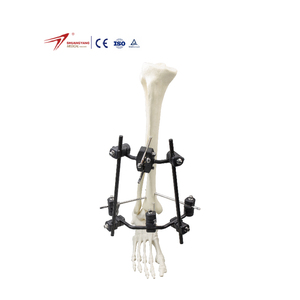
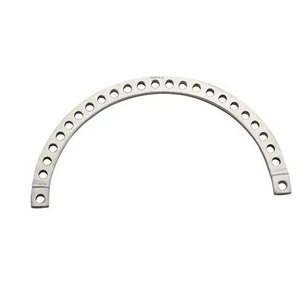
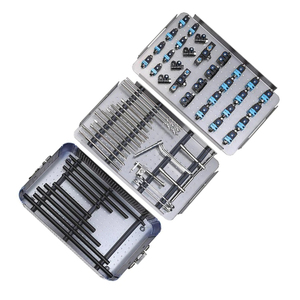
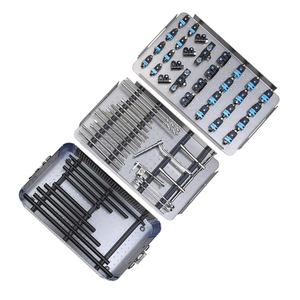
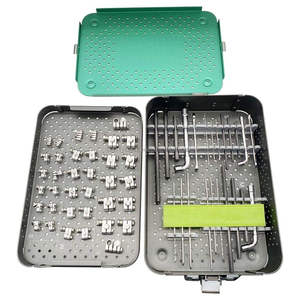
In complex orthopedic and spinal trauma cases requiring postoperative CT or MRI monitoring, conventional stainless steel external fixators generate severe metal artifacts. Modern trauma centers are rapidly adopting hybrid carbon-fiber half-ring and unilateral external fixators (as shown in our featured product catalog). These radiolucent systems enable clear postoperative radiological assessment without artifact interference.
C. Ergonomic Micro-Spring Mechanism Integration
Surgeon fatigue during long 8-to-12-hour neurosurgical resections is a recognized critical risk factor. Traditional ring handle scissors are giving way to flat, contoured spring-action handles (such as Vannas, Castroviejo, and Yasargil designs) featuring tactile knurling. These designs allow effortless thumb-and-forefinger control, lowering muscular strain by up to 40%.
D. Sustainable Multi-Cycle Autoclave Durability
Hospital sustainability initiatives are driving a move away from single-use plastic/disposable micro-instruments toward high-durability reusable tools capable of surviving 2,000+ intense steam sterilization cycles without mechanical joint loosening or blade corrosion. Investing in premium tungsten carbide neuro scissors delivers a significantly lower Total Cost of Ownership (TCO).
Essential FAQ for International Surgical Instrument Procurement
Partner with a Trusted Global Neuro Surgical Scissors Exporter
Contact our direct sales engineers today to request technical product specs, wholesale export price lists, or custom OEM prototype quotes. Experience 30+ years of manufacturing precision built for life-saving surgical outcomes.