Executive Summary: Addressing the Technical & Strategic Demands of Neurosurgical Procurement in Ho Chi Minh City
The healthcare ecosystem in Southern Vietnam, centered around Ho Chi Minh City (HCMC), is undergoing a profound structural modernization. As tier-1 tertiary centers—including Chợ Rẫy Hospital, 115 People’s Hospital, University Medical Center HCMC, and international facilities such as Vinmec Central Park—expand their specialized neurotrauma and craniomaxillofacial surgical capacities, the procurement criteria for surgical instrumentation have fundamentally shifted. Purchasing directors and clinical department heads no longer evaluate suppliers solely on unit costs; they demand high-precision engineering, absolute metallurgical traceability, strict compliance with Vietnam’s Ministry of Health (MoH Decree 98/2021/NĐ-CP), and proven durability under continuous autoclave sterilization cycles.
As a leading medical device OEM/ODM manufacturer and global exporter with over 30 years of specialized metallurgy experience, our production infrastructure bridges the gap between premium Western performance specifications and Asian cost-efficiencies. This technical whitepaper analyzes the mechanical engineering standards, material choices, clinical application scenarios in HCMC's high-density urban environment, regulatory compliance pathways, and supply chain logistics required to supply cranial surgical instruments and specialized external fixation systems to Vietnam's rapidly growing medical sector.
Metallurgical Excellence & Manufacturing Standards for Cranial & Trauma Instrumentation
Cranial surgery demands zero-margin-for-error mechanical execution. Whether performing decompressive craniectomy, cranioplasty reconstruction, brain tumor resection, or skull fracture stabilization, neurosurgeons require ergonomic control, tactile sensitivity, and uncompromising cutting-edge integrity. To achieve these characteristics, our manufacturing plant incorporates imported raw materials and aerospace-grade machining protocols.
Japanese & French Stainless Steel
We strictly source AISI 420, 440C martensitic stainless steel and Grade 5 Eli Titanium (Ti-6Al-4V) from verified mills in Japan and France to prevent micro-pitting, corrosion, and structural fatigue during high-torque cranial procedures.
CNC Machining & UK Vacuum Furnace
Utilizing Japanese 5-axis CNC milling machines and Wire Cut EDM systems, our components maintain tolerances down to ±0.05mm. Heat treatment is conducted in imported British vacuum furnaces to lock in optimal Rockwell hardness (HRC 48–54).
24-Hour Passivation & Boil Testing
To combat the high ambient humidity of Ho Chi Minh City, all surgical instruments undergo a 24-hour chemical passivation protocol and rigorous copper sulfate boil testing to ensure total oxidation barrier defense.
Comprehensive Cranial & Neurosurgical Product Spectrum
Our export portfolio tailored for Ho Chi Minh City hospital tenders and private medical supply distributors covers the complete neurosurgical spectrum:
- Cranial Perforators & High-Speed Drill Bits: Auto-stopping cranial drill bits designed to disengage immediately upon penetrating the inner table of the skull, preventing dural laceration.
- Kerrison Rongeurs & Bone Punches: Engineered with micro-finished thin footplates (1mm to 6mm, 45° and 90° ejecting angles), coated in Titanium Nitride (TiN) or Black Diamond-Like Carbon (DLC) for reduced friction during delicate laminectomies and craniotomies.
- Cranial Retractor Systems (Leyla & Yasargil Styles): Flexible, self-retaining arm assemblies with micro-blade attachments for precise cerebral cortex exposure with minimal tissue traction ischemia.
- Dural Scissors & Micro-Forceps: Micro-polished spring scissors and bayonet forceps designed for operation under high-magnification surgical microscopes, allowing fine handling of dural membranes and micro-vascular structures.
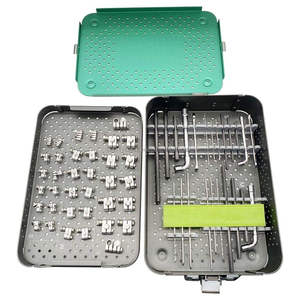
- Titanium Mesh & Cranial Fixation Plates: Ultra-low-profile 1.5mm and 2.0mm titanium mini-plate systems, self-tapping screws, and malleable mesh kits for reconstructive cranioplasty following traumatic skull fractures.
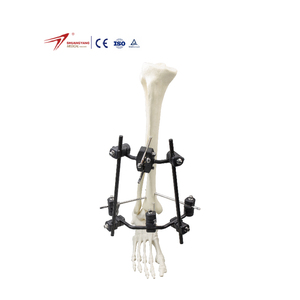
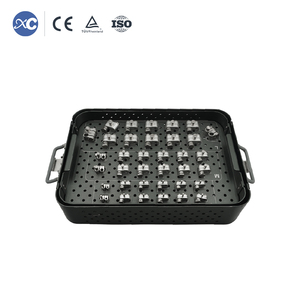
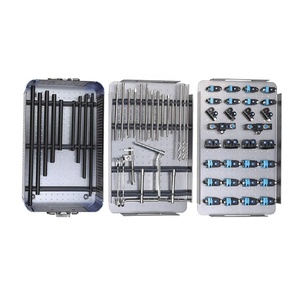
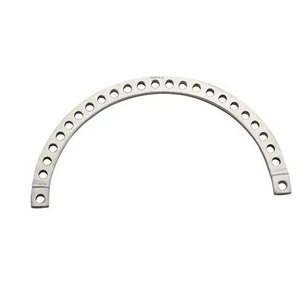
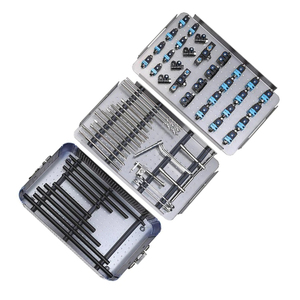
- Large Fragment & Carbon Fiber External Fixator Systems: Radiolucent carbon fiber connecting rods, transfixion pins, and multi-pin clamps for orthopedic emergency stabilization, trauma-induced compound fractures, and damage control orthopedics.
Clinical & Localized Application Scenarios across Ho Chi Minh City Healthcare Infrastructure
Understanding the clinical realities of Ho Chi Minh City's medical sector is critical for optimizing product design and supply chain execution. HCMC serves as the medical gateway for over 30 million residents across Southern Vietnam, including the Mekong Delta and Southeast regions.
1. Emergency Neuro-Trauma & Road Traffic Accident (RTA) Interventions
Due to high motorcycle density across HCMC's urban arterials (such as Xa Lộ Hà Nội, Nguyễn Văn Linh, and Quốc Lộ 1A), emergency departments at Chợ Rẫy Hospital and 115 People's Hospital manage some of Asia’s highest volumes of acute traumatic brain injuries (TBI) and compound long-bone fractures.
In emergency decompressive craniectomies, surgical surgical tools must perform flawlessly under continuous heavy load. Our heavy-duty cranial rongeurs, Hudson braces, and unilateral tibial/femoral external fixators (featured in Product Card #1 & #6 above) allow trauma teams to achieve rapid cranial decompression and limb stabilization within the critical "golden hour."
2. Pediatric Neurosurgery & Hydrocephalus Management
Specialized pediatric centers like Children's Hospital 1 & Children's Hospital 2 in HCMC require delicate, micro-instrumentation for congenital cranial deformities, craniosynostosis repair, and ventricular shunt placements. Our stainless steel and titanium micro-forceps, curettes, and fine-tip needle holders offer lightweight balance, reducing surgeon hand fatigue during intricate 6-to-10-hour pediatric neurosurgical reconstructions.
3. Tropical Climate Resiliency & Central Sterile Supply Department (CSSD) Operations
Ho Chi Minh City’s tropical climate presents high humidity and ambient saline moisture. Furthermore, high patient turnover in public hospitals subjects surgical instruments to intense CSSD processing—frequent ultrasonic cleaning, enzymatic baths, and high-temperature steam autoclaving (134°C at 2.1 bar).
Instruments manufactured with inferior steel quickly exhibit surface staining, hinge stiffness, or micro-rusting. By employing electrolytic polishing and automated passivation chemistry, our tools resist pitting corrosion and mineral scale deposition, ensuring a service life exceeding 5+ years of active clinical rotation in Vietnamese hospitals.
Macro Market Trends & Regulatory Procurement Landscape in Vietnam (2024–2030)
Navigating the medical device import landscape in Vietnam requires a clear understanding of market dynamics, legal regulations, and trade policy updates.
Regulatory Compliance: MoH Decree 98/2021/NĐ-CP
Under Vietnam Ministry of Health regulations, cranial surgical instruments and orthopedic fixators are classified as Class B or Class C medical devices. Importers must hold a valid Public Registration Number (Số Lưu Hành). Our manufacturing facility provides complete technical dossiers (CSDT), ISO 13485:2016 certificates, Certificates of Free Sale (CFS), and 100% material test reports (MTRs) to streamline registration with the MoH.
Public Hospital Tendering & Universal Health Insurance Expansion
With Vietnam's Social Health Insurance (VSHI) covering over 92% of the population, public hospital budgets are optimized for high-durability, cost-effective surgical tools. Direct factory wholesale pricing from China gives local HCMC distributors a significant competitive edge during public tender bidding processes.
Private Healthcare Infrastructure Growth
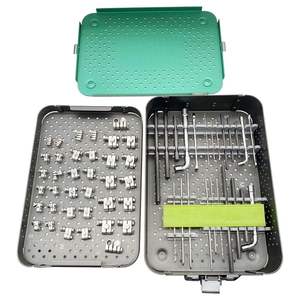
Private healthcare networks (Vinmec, Hoan My, Tam Anh, FV Hospital) are heavily investing in advanced neurosurgery and spine suites. These institutions demand custom laser-etched branding, ergonomic gold-plated instrument handles, and premium modular storage cases—services we fully support via our dedicated OEM production lines.
Enterprise Manufacturing Advantages: Why Leading HCMC Distributors Partner With Us
Building a resilient medical device supply chain between China and Ho Chi Minh City requires direct factory integration. As an established manufacturer based in Sialkot with dedicated export hubs, we offer strategic advantages that trading intermediaries cannot match:
- In-House End-to-End Production: From raw forging billets to final laser marking, every manufacturing step is conducted under one roof, guaranteeing strict quality control and lot-to-lot consistency.
- Comprehensive 6-Month Replacement Warranty: We stand behind our engineering quality. Any instrument demonstrating functional defects, premature dulling, or material failure within 6 months of delivery is replaced free of charge.
- OEM/ODM Customization & Private Labeling: We provide custom fiber laser marking (hospital names, distributor logos, catalog codes, and UDI barcoding) and manufacture custom instrument geometries according to physical samples or CAD blueprints.
- Optimized Shipping to HCMC Sea & Air Ports: Efficient logistics routes via air freight to Tân Sơn Nhất International Airport (SGN) for urgent surgical kits (3–5 days transit) or ocean freight to Cát Lái / Lái Thiêu Ports for bulk container orders (7–10 days transit).
Ho Chi Minh City Procurement FAQ: Technical & Supply Chain Guidance
Partner with a Trusted Cranial & Orthopedic Instrument Manufacturer
Upgrade your surgical tool catalog, win hospital tenders in Ho Chi Minh City, and benefit from direct factory wholesale pricing with zero compromise on quality. Request a custom quotation, engineering drawing, or sample kit today.
Send an Inquiry