Featured OEM/ODM Orthopedic & Trauma Systems
Explore our ISO-certified external fixation assemblies, bone reamer instrumentation kits, and trauma surgical tools manufactured for hospital networks and distributors across Russia.
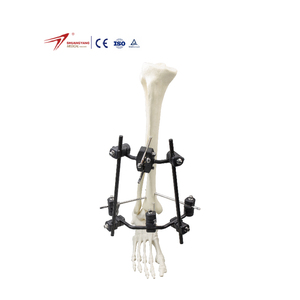
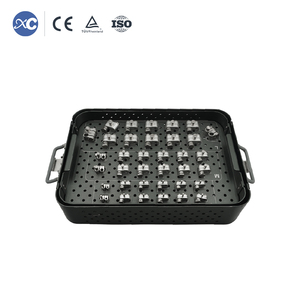
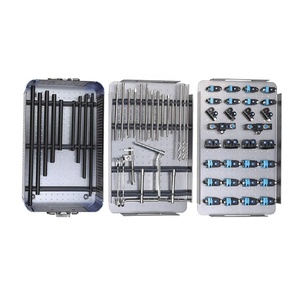
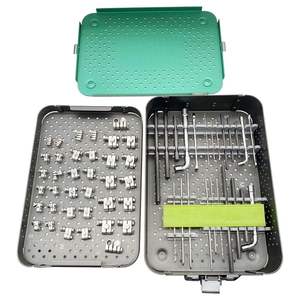
1. The Strategic Landscape of Orthopedic Bone Reamers in the Russian Federation
The Russian market for traumatology, joint reconstruction, and orthopedic surgical instrumentation is undergoing a profound structural evolution. Driven by national healthcare initiatives aimed at upgrading regional trauma centers across key federal districts—including Central (Moscow), Northwestern (St. Petersburg), Siberian (Novosibirsk), and Ural (Ekaterinburg)—there is an escalating demand for high-precision flexible and rigid intramedullary bone reaming systems and modular external fixation assemblies.
Orthopedic bone reamers are indispensable mechanical tools designed to prepare the diaphyseal and metophyseal intramedullary canal prior to the insertion of intramedullary nails, joint prostheses, or corrective deformity hardware. In complex surgical operations managing femoral, tibial, or humeral shaft fractures, precise reaming expands the canal, enhances the mechanical contact area between the bone cortex and the implant, and promotes biological healing through osteogenic reaming debris dispersal.
For Russian B2B medical supply companies, surgical tool brands, and hospital procurement departments, sourcing directly from audited OEM (Original Equipment Manufacturer) and ODM (Original Design Manufacturer) factories represents the most financially sustainable strategy to maintain uninterrupted surgical supply lines, mitigate supply chain volatility, and ensure strict compliance with federal regulatory requirements.
Clinical Versatility
Flexible cannulated reamers engineered for precise curve tracking in long-bone intramedullary shaft preparation.
Thermal Protection
Cutting edge tooth geometry mitigates frictional heat, keeping cortical temperatures below the critical 47°C osteonecrosis threshold.
Biocompatible Alloys
Manufactured using medical-grade AISI 420, 316L, and Titanium Alloy (Ti6Al4V) imported from Japan and France.
2. Technical Engineering Specifications & OEM/ODM Customization Capabilities
Precision reaming demands rigorous metallurgical control, intricate tool geometry, and exact tolerance execution. As a premier surgical instrument factory, our manufacturing infrastructure combines automated Swiss CNC lathe machining, wire EDM erosion, multi-axis flute grinding, and computer-controlled thermal treating processes to supply custom bone reamer heads, flexible drive shafts, and passivated surgical drill adapters.
A. Flexible vs. Rigid Bone Reaming Mechanics
Depending on surgical indication, Russian orthopedic surgeons utilize two distinct reaming topologies:
- Cannulated Flexible Reamer Systems: Designed to slide seamlessly over a nitinol guide wire (typically 2.5mm to 3.0mm diameter). The flexible drive shaft consists of multi-wound stainless steel wire coils or laser-cut flexible tubing that transmits high rotational torque (up to 4.5 Nm) while conforming to the natural anatomical curvature of the femur or tibia without causing cortical wall perforation.
- Rigid Cylindrical & Tapered Reamers: Applied primarily in total hip arthroplasty (acetabular reaming) and shoulder reconstruction. These rigid tools require extreme radial concentricity (tolerance within ±0.01mm) to ensure uniform hemispherical bone resection.
| Technical Feature | OEM Standard Specification | ODM Customization Options for Russia Market |
|---|---|---|
| Raw Material Grade | Martensitic Stainless Steel AISI 420 / 440C | Titanium Alloy Grade 5 (Ti-6Al-4V) / Custom Custom 455 SS |
| Reamer Head Diameters | 6.0mm to 19.0mm (0.5mm incremental steps) | Custom Russian standard sizing (e.g., GOST fractional steps) |
| Drive Shaft Coupling Connection | AO Quick-Connect / Hudson Shank | Synthes-Compatible / Custom Russian Power Tool Adapters |
| Flute Cutting Geometry | Straight 4-Flute / Spiral 3-Flute Geometry | Deep-Clearance Debris Flutes (Anti-Clogging Engineering) |
| Surface Passivation & Coating | ASTM A967 Chemical Citric/Nitric Passivation | Titanium Nitride (TiN) Gold / Diamond-Like Carbon (DLC) |
| Sterilization Compatibility | Autoclave 134°C Steam / Gamma Irradiation | Custom Molded Sterilization Trays & Laser Etched UDI Logos |
B. Thermal Osteonecrosis Prevention Engineering
One of the paramount clinical concerns in intramedullary reaming is thermal injury to the bone cortex. Excessive friction can elevate cortical temperature beyond 47°C, resulting in local tissue necrosis, impaired bone healing, and potential postoperative infection. Our engineering team optimizes the cutting rake angle (12° to 15°) and relief angles of our reamer heads. Furthermore, wide chip clearance flutes are integrated to facilitate continuous evacuation of reamed bone slurry, reducing hydraulic pressure spikes within the intramedullary canal.
3. Localized Application Scenarios Across Russian Clinical Centers
Understanding local clinical workflows in Russia is essential for engineering medical devices that seamlessly fit into local operating room environments. Our OEM/ODM products are tailored for specific medical scenarios commonly encountered across Russian municipal and private healthcare facilities:
A. High-Energy Trauma & Fracture Fixation in Regional Trauma Centers
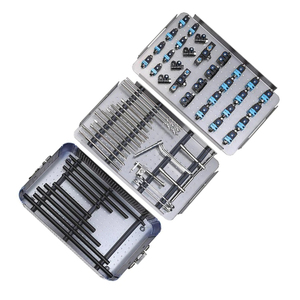
Due to harsh winter conditions, heavy industrial operations, and extensive transport infrastructure across Russia, municipal hospitals receive a substantial volume of high-energy polytrauma cases involving severe long-bone fractures. Surgical teams utilize our Modular External Fixation Kits and Unilateral Tibial/Femoral Frames alongside intramedullary reamers for temporary damage-control stabilization followed by definitive reamed intramedullary nailing.
B. Pediatric & Deformity Correction (Ilizarov Techniques)
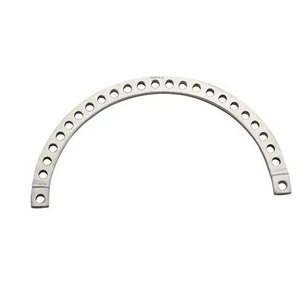
Russia is historically recognized as the birthplace of the Ilizarov method for limb lengthening and complex deformity correction (pioneered in Kurgan, Siberia). Our factory manufactures high-grade stainless steel half-ring fixators, carbon fiber ring frames, and precision bone reamers compatible with Ilizarov ring constructs. The lightweight carbon fiber component options provide low radiopacity, allowing clear intraoperative X-ray visualization during complex reconstructive procedures.
C. Veterinary Trauma Surgery & Orthopedic Research
Beyond human healthcare, Russia's veterinary orthopedic sector in major metropolitan hubs like Moscow and St. Petersburg is experiencing rapid expansion. Veterinary surgeons frequently require scaled-down, highly durable external clamps, mini-bone reamers, and fixation assemblies specifically designed for canine and feline fracture management.
4. Russia Local Market Trends & Regulatory Procurement Framework
Entering or scaling operations in the Russian medical device sector requires navigating dynamic market conditions and rigorous state regulatory mechanisms.
Import Substitution Trends
Russian federal policies prioritize local manufacturing or contract OEM partnerships that offer high cost-efficiencies and predictable supply agreements.
Roszdravnadzor Compliance
All surgical instruments destined for clinical use must undergo toxicological, technical, and clinical testing to receive state registration in Russia.
Optimized Logistics
Streamlined rail and sea cargo routes via Vladivostok, St. Petersburg, and overland corridors ensure reliable door-to-door delivery schedules.
Key Market Dynamics Driving Russian Demand:
- Growth of State Tender Procurement: Russian public hospitals procure medical hardware through structured government tender portals (under Federal Laws No. 44-FZ and 223-FZ). Vendors offering high-durability reamer sets and fixators with competitive OEM pricing hold a significant advantage in winning multi-year supply tenders.
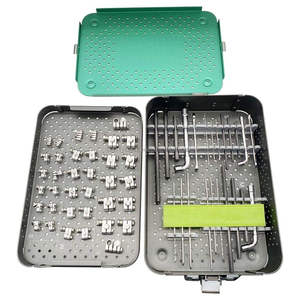
- Demand for Private Label OEM Partnership: Russian medical companies increasingly seek overseas contract manufacturing factories to produce branded surgical trays, customized under their own corporate name and logo, ensuring local brand equity while leveraging foreign factory scale.
- Requirement for EAC (Eurasian Conformity) Markings: Products traded within the Eurasian Economic Union (EAEU) must meet unified safety and quality standards, making factory-level ISO 13485 certification and technical dossier support imperative.
5. Factory Manufacturing Supremacy & Quality Control Workflow
Rooted in a 30+ year family legacy of surgical craftsmanship from Sialkot—the world-renowned capital of medical instrument manufacturing—our factory operates under strict ISO 13485 and CE quality management frameworks. We combine traditional metallurgical mastery with modern computer-integrated production lines.
Step-by-Step Manufacturing & Quality Assurance Process:
- Raw Material Metallurgical Auditing: Stainless steel bars (AISI 420, 316L, 17-4PH) and titanium rods undergo lab spectro-analysis to verify carbon, chromium, and nickel content before forging.
- Precision Drop Forging & CNC Machining: Heavy-duty drop hammers shape rough instrument blanks. High-precision CNC milling machines cut reamer shaft flutes and locking quick-connect ends with tolerances up to ±0.01mm.
- Vacuum Heat Treatment: Instruments are hardened in imported computer-controlled vacuum furnaces (reaching temperatures above 1050°C), achieving an optimal Rockwell Hardness of 48-52 HRC for sharp, long-lasting cutting edges without brittleness.
- 24-Hour Chemical Passivation & Electro-Polishing: To eliminate free iron atoms from the surface and build a thick chromium-oxide protective layer, every reamer and fixator undergoes chemical passivation followed by electro-polishing to achieve a mirror-like finish.
- Boil & Autoclave Corrosion Testing: Batch samples undergo a 30-minute boil test and repeated high-pressure autoclave cycles to ensure 100% resistance against pitting, rusting, or stress corrosion cracking.
- Laser Engraving & Custom Packaging: Private label branding, serial numbers, LOT codes, and UDI matrix codes are etched onto instruments prior to final inspection and cleanroom packaging.
Partner with a Leading OEM/ODM Surgical Instrument Factory
Looking to manufacture custom bone reamer sets, external fixator assemblies, or specialized trauma tools for the Russian market? Connect directly with our engineering team for instant OEM quotes and CAD prototypes.
Send an Inquiry